 Save
Save I discovered this salad on a Wednesday afternoon when the farmers market had an almost embarrassing abundance of peppers, and I couldn't resist the colors. There was something about the way the vendor had stacked them that made me want to do something bold rather than just eat them raw. I went home, turned up the oven, and the whole kitchen filled with this sweet, caramelized smell that made me forget I was supposed to be making something light. That's when I realized roasting vegetables until they're almost charred transforms them into something entirely different—no longer the supporting act, but the main character.
I made this for my sister's surprise birthday dinner last summer, and she stood in the kitchen watching the vegetables roast, asking if we were making jam because of how good it smelled. By the time everything came together on her plate, she forgot to be mad that we'd interrupted her book. That's the moment I knew this wasn't just a salad—it was something that could make people linger at the table.
Ingredients
- Zucchini: Cut into thick half-inch slices so they don't disappear into nothing while roasting; thinner slices tend to collapse into soggy regret.
- Red and yellow bell peppers: The two colors matter because they taste slightly different when roasted—red gets deeper and sweeter, yellow stays a bit brighter.
- Red onion: Slice into wedges so the layers stay intact during roasting; they'll caramelize into something almost candy-like.
- Eggplant: One-inch cubes prevent it from turning into mush, and the larger surface area gets those gorgeous crispy edges.
- Cherry tomatoes: Halve them so they roast through but don't dry into little raisins; their bursts of acidity balance the sweetness of everything else.
- Olive oil: Two tablespoons coats everything without making it greasy; don't skimp here because it's what creates the caramelization.
- Dried Italian herbs: A teaspoon is barely a whisper, just enough to hint at the Mediterranean without overpowering the vegetables' natural flavors.
- Mixed salad greens: Use whatever is freshest at your market; peppery arugula adds bite, spinach is mild, spring mix is the safe choice.
- Extra virgin olive oil for dressing: This is where you splurge on something good because it's the only oil in the dressing and deserves to shine.
- Balsamic vinegar: Two tablespoons provides the tangy backbone that holds everything together and prevents the salad from feeling one-dimensional.
- Dijon mustard: Just a teaspoon acts as an emulsifier and adds a subtle sharpness that keeps the dressing from being cloying.
- Garlic: Mince it fine and let it sit for a minute before whisking into the dressing; that brief pause awakens its flavor.
- Honey or maple syrup: A half-teaspoon rounds out the acidity with just a kiss of sweetness that tastes like you know what you're doing.
- Optional pine nuts or walnuts: Toast them yourself if you can; store-bought toasted ones are fine, but fresh-toasted nuts taste like a small luxury.
- Cheese: Shaved Parmesan adds saltiness and texture, feta adds creaminess and tang, but honestly either one feels like a privilege rather than a necessity.
Tired of Takeout? 🥡
Get 10 meals you can make faster than delivery arrives. Seriously.
One email. No spam. Unsubscribe anytime.
Instructions
- Heat your oven like you mean it:
- Preheat to 425°F and line a large baking sheet with parchment paper so cleanup doesn't steal your joy later. The high heat is what creates that magic caramelization instead of steamed vegetables.
- Build the flavor foundation:
- Toss your vegetables in a large bowl with the olive oil, herbs, salt, and pepper until every piece is glistening and coated. This is where you taste as you go and adjust seasoning—nobody wants an underseasoned roasted vegetable.
- Spread and roast:
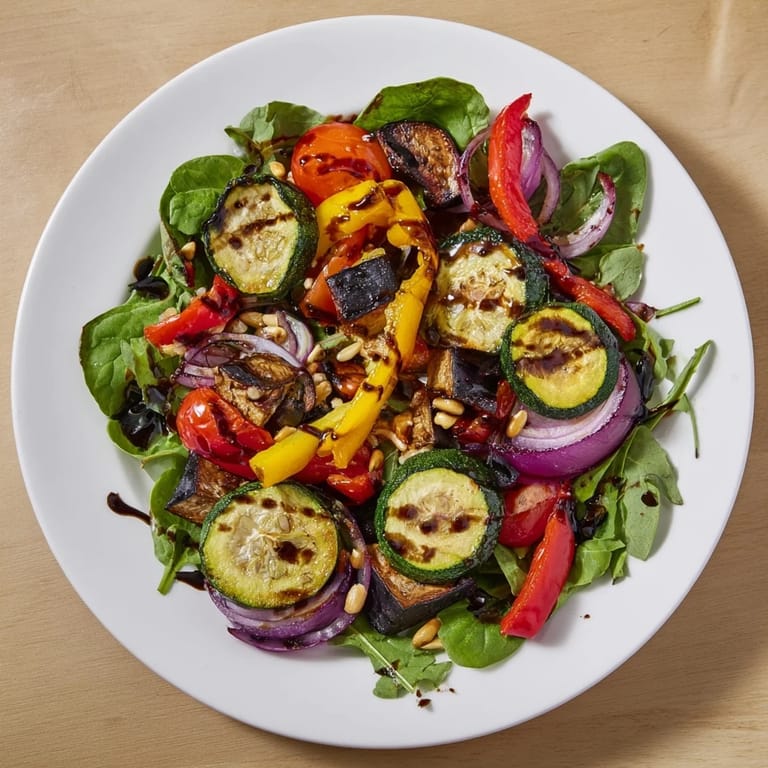
- Arrange vegetables in a single layer on the baking sheet and roast for 25 to 30 minutes, stirring halfway through so nothing burns and everything caramelizes evenly. You'll know they're done when the edges are slightly blackened and the vegetables are tender enough to pierce with a fork.
- Whisk the dressing while vegetables roast:
- In a small bowl, combine olive oil, balsamic vinegar, Dijon mustard, minced garlic, and honey, whisking constantly until the mixture emulsifies and turns slightly creamy. This takes about a minute of real attention, not half-hearted stirring.
- Assemble with intention:
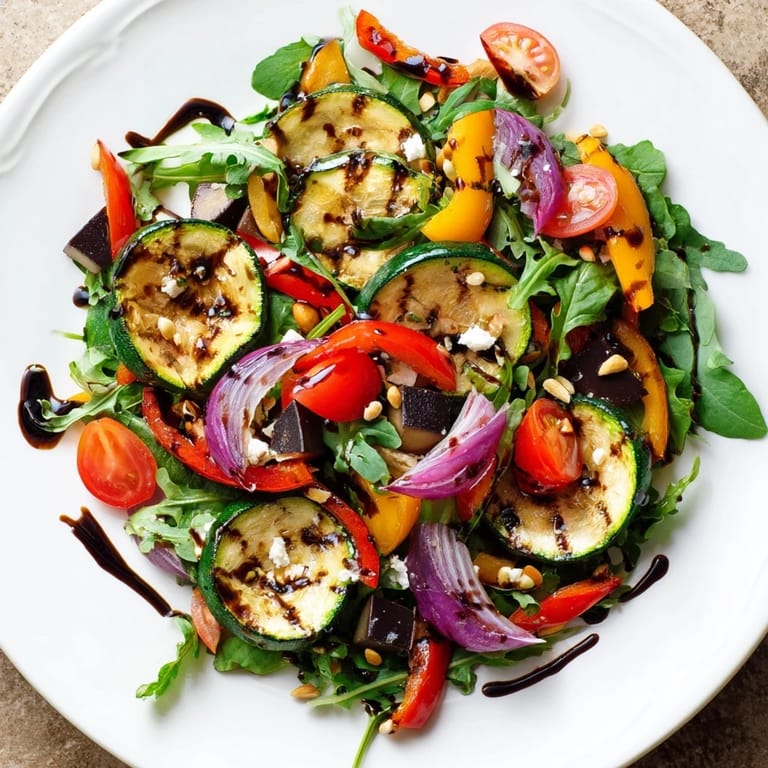
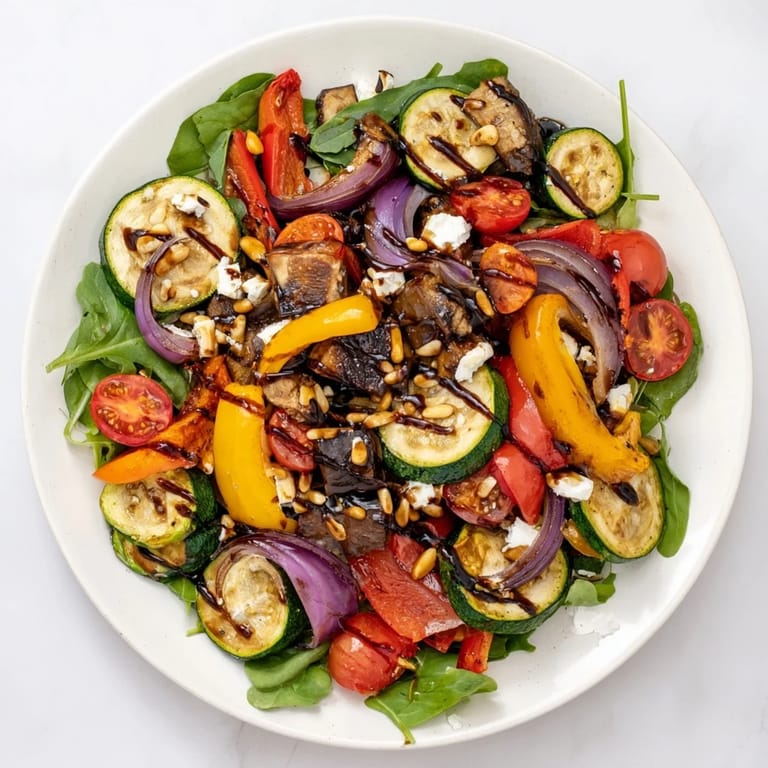
- Arrange your salad greens on a platter or individual plates, then top with the roasted vegetables while they're still warm—the heat slightly wilts the greens and makes everything taste connected. Drizzle generously with dressing, scatter pine nuts and cheese if using, and serve immediately before the vegetables cool too much.
 Save
Save There's a particular kind of quiet that happens when people eat something they weren't expecting to love—no performance, just genuine satisfaction. This salad creates that moment. It's become the dish I bring to potlucks when I want to prove that vegetable-forward food can be exciting rather than obligatory.
The Secret of Roasting
Roasting is a kind of alchemy that happens when you apply dry heat to vegetables, coaxing out their natural sugars and creating flavors that simply don't exist in the raw ingredient. The Maillard reaction—that fancy term for browning—is what turns a red pepper into something almost caramel-like, with depth and complexity that makes people ask what you did to make it taste so good. The key is high heat and patience; rushing it with moderate temperature just dehydrates everything without building flavor.
Building a Better Vinaigrette
A good dressing is about balance, and balsamic vinegar in particular benefits from a touch of sweetness and some body from an emulsifier like mustard. When these elements work together, something shifts—the acidity becomes less aggressive, the flavors meld, and suddenly you have something that tastes intentional rather than sour. The garlic matters too because it needs a moment to release its oils into the oil, which is why whisking it all together creates something better than just stirring separate components.
Timing and Temperature
The beauty of this salad is how flexible it is about temperature, which makes it perfect for cooking without anxiety. Warm vegetables on cool greens create an elegant textural and temperature contrast that feels restaurant-quality, but you can also let everything cool and eat it at room temperature or even cold, and it still tastes good because the roasting has already done all the heavy lifting.
- If you're making this ahead, roast the vegetables and prepare the dressing earlier in the day, then assemble just before serving so the greens stay crisp.
- The roasted vegetables keep for three days in an airtight container in the refrigerator and can be reheated gently in a 300-degree oven for five minutes if you want them warm again.
- Double the dressing and save any extra in a jar—it works on almost any salad, grilled fish, or even as a finishing drizzle for soups.
 Save
Save This salad taught me that sometimes the best meals come from simplicity, good ingredients, and the willingness to let heat and time do the work. It's the kind of dish that makes you feel like you're cooking something that matters.
Recipe Q&A
- → What vegetables are best for roasting in this salad?
Zucchini, bell peppers, red onion, eggplant, and cherry tomatoes roast beautifully, offering a balance of tenderness and flavor.
- → Can the salad be served cold?
Yes, it tastes delicious warm or at room temperature, making it versatile for any season.
- → What alternatives exist for the dressing?
You can swap balsamic vinegar with red wine vinegar or lemon juice for a different tang.
- → Are nuts necessary in this salad?
Nuts add a crunchy contrast but are optional; pine nuts or walnuts work well if included.
- → How can I adapt this for a dairy-free option?
Simply omit cheeses or replace them with vegan alternatives to keep it dairy-free.
- → What herbs enhance the roasted vegetables?
Dried Italian herbs like thyme, oregano, and basil provide aromatic depth when tossed with the veggies before roasting.