 Save
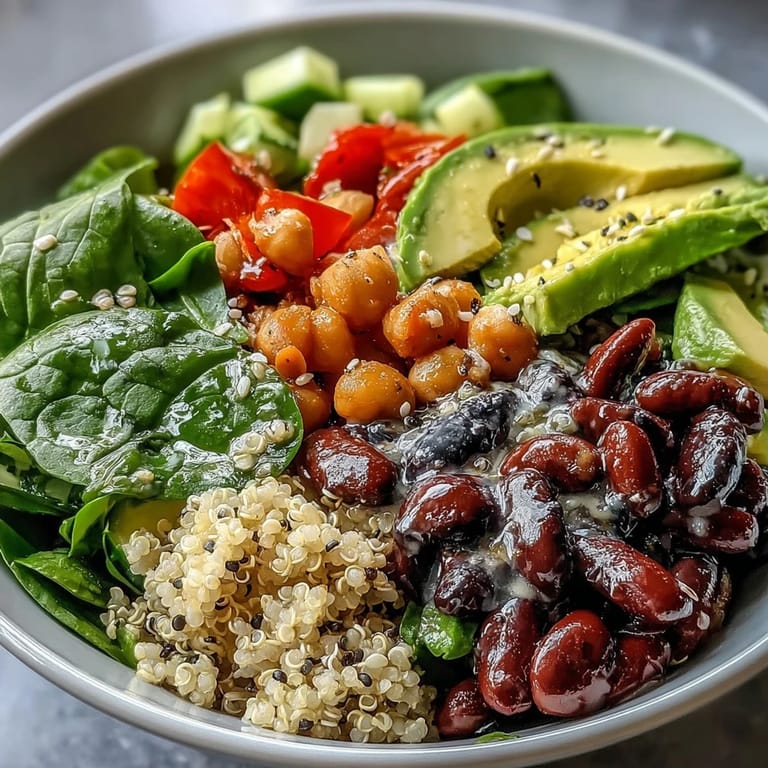
Save I stumbled onto this bowl during a particularly uninspired Tuesday afternoon when my fridge felt full yet empty at the same time. There was leftover quinoa from meal prep, three different cans of beans I'd been meaning to use, and a pile of vegetables that were reaching their prime. Instead of ordering takeout, I decided to throw it all together with a quick lemon dressing, and something magical happened—textures collided beautifully, flavors sang, and suddenly lunch felt intentional instead of obligatory.
My coworker Maya spotted this bowl on my desk and asked for the recipe right then and there. Turns out she'd been feeling sluggish mid-afternoon and needed something that wouldn't leave her hungry by 3 PM. When she made it that weekend, she called to say she'd doubled the batch for meal prep and felt genuinely energized for days. That's when I realized this wasn't just a recipe—it was a quiet answer to something people were looking for.
Ingredients
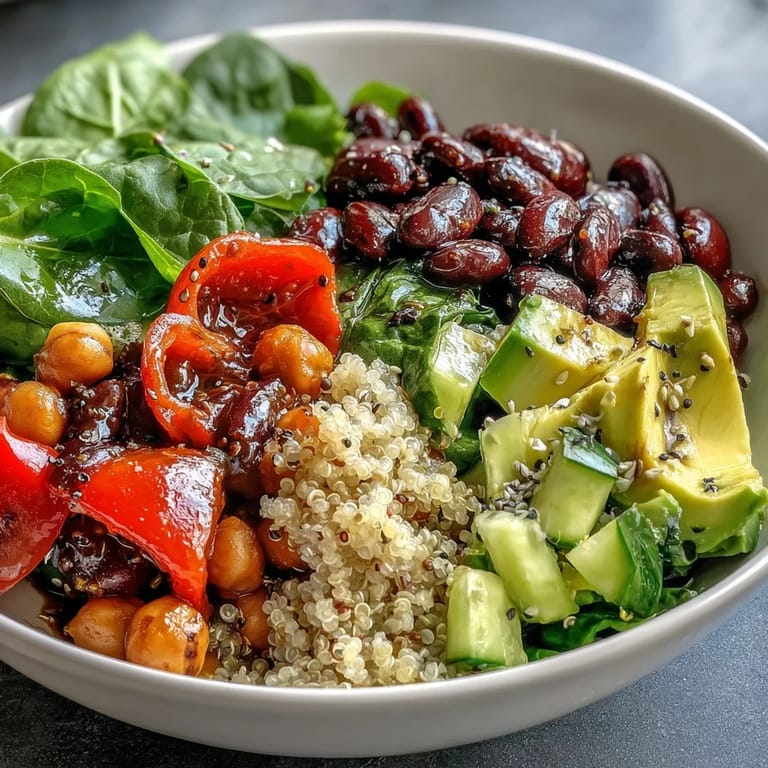
- Black beans: They hold their shape beautifully and bring an earthiness that balances the bright citrus dressing.
- Chickpeas: These add a buttery texture and are packed with fiber to keep you grounded throughout the day.
- Kidney beans: Their slight sweetness rounds out the trio and prevents the bowl from tasting too monotonous.
- Quinoa: A complete protein on its own, it absorbs the dressing without getting mushy if you give it time to cool first.
- Cherry tomatoes: Halving them releases their juices into the dressing, creating natural flavor depth you can't achieve with large tomato chunks.
- Cucumber: Keeps everything cool and refreshing—the textural contrast is essential, so don't skip it even if you're in a rush.
- Red bell pepper: Choose one with thin walls rather than thick ones, and it'll stay crisp even after sitting in the dressing.
- Baby spinach or mixed greens: A gentle base that softens just enough to absorb dressing while maintaining structure.
- Avocado: Wait to slice this until just before serving, or toss it gently at the very end so it doesn't become guacamole.
- Red onion: The sharpness is crucial—thin slicing and a quick soak in the lemon juice mellows it beautifully.
- Olive oil: Quality matters here since it's the backbone of your dressing and won't be cooked off.
- Lemon juice: Freshly squeezed is non-negotiable; bottled just doesn't have the same brightness and balance.
- Apple cider vinegar: This brings a subtle sweetness that straight vinegar would miss, rounding out the flavor profile.
- Dijon mustard: Acts as an emulsifier to keep the dressing cohesive and adds a sophisticated edge.
- Maple syrup or honey: A touch of sweetness that plays against the acid and prevents the dressing from tasting too sharp.
- Garlic clove: One is enough—minced fine so it dissolves into the dressing rather than sitting as harsh chunks.
- Fresh cilantro or parsley: Cilantro if you love that herbal brightness, parsley if you prefer something gentler and more neutral.
- Toasted seeds: Pumpkin or sunflower seeds add crunch and grounding richness, but they're optional if you're in a minimalist mood.
Tired of Takeout? 🥡
Get 10 meals you can make faster than delivery arrives. Seriously.
One email. No spam. Unsubscribe anytime.
Instructions
- Mise en place with intention:
- Wash and prep all your vegetables first, arranging them on a cutting board in the order you'll use them. This rhythm becomes meditative and prevents the scramble of grabbing things mid-toss.
- Build the dressing:
- In a small bowl, whisk the olive oil, lemon juice, and apple cider vinegar together first until they start to emulsify, then add the mustard, maple syrup, and minced garlic. Taste as you go—you want the balance of acid and oil to feel bright but not aggressive.
- Unite the beans:
- Pour all three types of beans into a large mixing bowl along with the tomatoes, cucumber, red bell pepper, red onion, and spinach. The mix should feel abundant and colorful at this point.
- Add your grain foundation:
- Stir in the cooled quinoa gently, letting it distribute throughout rather than settling at the bottom. If your quinoa is still warm, let it cool slightly first so the dressing doesn't get absorbed unevenly.
- Dress and toss with care:
- Pour the dressing over everything and toss gently but thoroughly, making sure the greens get coated and every bean gets kissed with flavor. The tossing should take about one full minute—deliberate and thorough.
- Compose your bowl:
- Divide the mixture into serving bowls, leaving a slight well in the center for the avocado slices. This presentation detail makes it feel intentional rather than just thrown together.
- Crown with fresh elements:
- Top each bowl with avocado slices arranged like petals, then scatter cilantro or parsley and toasted seeds across the top. Serve immediately while everything still has energy and texture.
 Save
Save I made this bowl for a friend who was recovering from a rough week and couldn't quite find her appetite. She came over hesitantly, and we sat quietly eating straight from the serving bowl, talking about nothing in particular. Halfway through, she admitted it was the first meal that felt both nourishing and gentle at the same time, like the food was taking care of something deeper than just hunger.
The Art of Bean Combining
Using three different beans instead of one might seem overthinking, but it's actually a technique borrowed from cooking traditions across Latin America and the Mediterranean. Each bean brings its own texture and nutritional profile—black beans are grounding and mineral-rich, chickpeas add creaminess and protein density, and kidney beans bring subtle sweetness and structure. Together they create complexity without requiring fancy techniques, which is exactly what makes this bowl feel both simple and sophisticated.
Why Cold Grains Matter
Warm grains absorb dressing differently than cool ones, potentially making your bowl soggy or unevenly dressed. I learned this the hard way when I rushed a batch straight from the stove into the bowl and ended up with mushy, over-saturated quinoa within ten minutes. Now I let it cool to room temperature first, which helps it stay distinct and bouncy even after sitting dressed for a day or two in the refrigerator.
Stretching This Bowl Further
What makes this recipe endlessly practical is how it stretches across different moods, seasons, and dietary adjustments. In spring you might swap spinach for tender pea shoots and add shredded radishes for crunch. Come fall, roasted sweet potato chunks replace avocado for warmth. It's the kind of blueprint that teaches you to cook intuitively rather than following rigid instructions every single time.
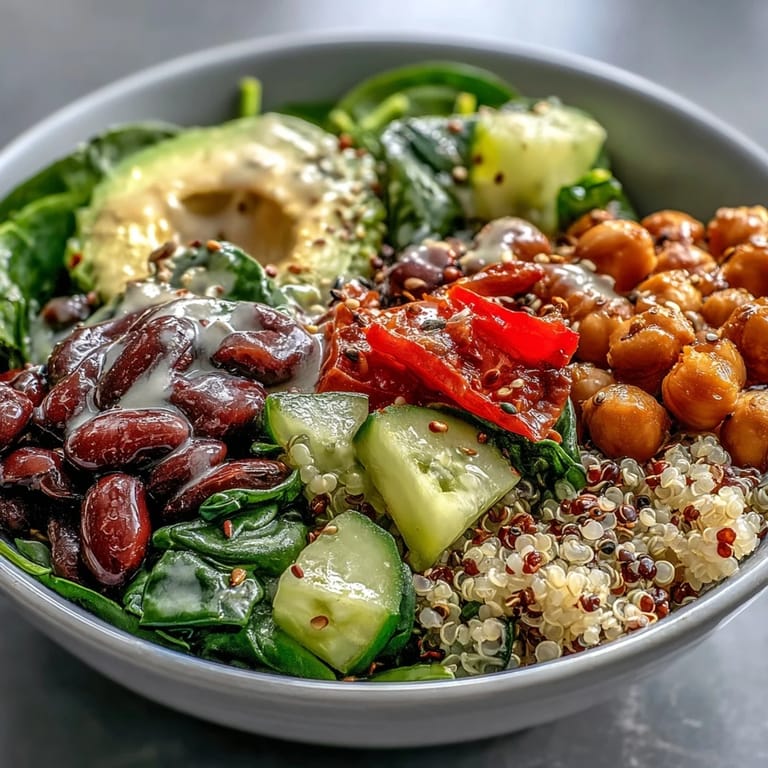
- Add grilled chicken, baked tofu, or crispy chickpeas for extra protein if meat is on the menu.
- Drizzle with tahini or a nut butter to deepen the dressing and add creaminess without using more oil.
- A small pinch of chili flakes or cayenne pepper in the dressing brings subtle heat that rounds out all the fresh elements.
 Save
Save This bowl has become my quiet answer to busy days and uncertain appetites alike. It's proof that simple ingredients, when chosen with intention and combined with care, become something far more nourishing than the sum of their parts.
Recipe Q&A
- → Can I use canned beans?
Yes, canned beans work perfectly. Just drain and rinse them thoroughly before adding to remove excess sodium and canning liquid.
- → How long does this keep in the refrigerator?
This bowl stores well for up to 2 days when refrigerated in an airtight container. Add avocado just before serving to prevent browning.
- → What grain alternatives work best?
Brown rice, bulgur, or farro make excellent substitutes for quinoa. Cook according to package instructions and let cool slightly before assembling.
- → Is this suitable for freezing?
Not recommended. The fresh vegetables and avocado become mushy when frozen. Best enjoyed fresh or refrigerated within 2 days.
- → Can I add extra protein?
Grilled chicken, baked tofu, or even hard-boiled eggs complement this bowl beautifully. Add about 4 ounces per serving if desired.