 Save
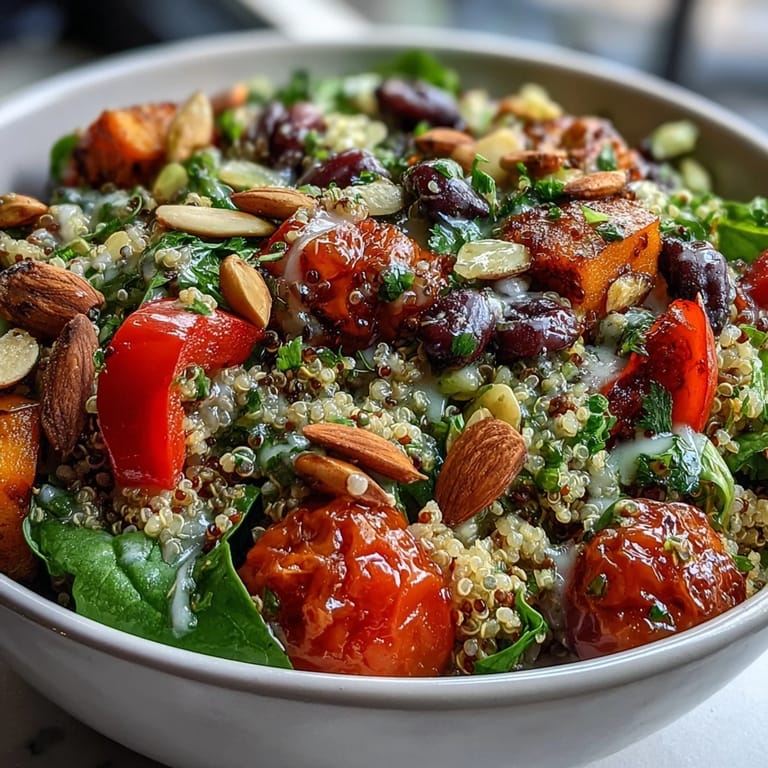
Save Last summer, my friend showed up to a potluck looking exhausted, and I asked what was wrong. She said she'd been meal-prepping all week but kept reaching for takeout because nothing felt exciting. That conversation stuck with me, and I started thinking about how to build bowls that actually taste as good as they look. This veggie and quinoa power bowl became my answer, the kind of dish that proves nutritious food doesn't have to be boring or feel like punishment.
I made this for my partner on a random Tuesday evening when they were feeling rundown, and watching them light up after that first bite reminded me why I love cooking. The colors alone seemed to lift the mood in the kitchen, and suddenly we were talking about making it a regular thing instead of saving it for special occasions.
Ingredients
- Quinoa, rinsed: This ancient grain cooks up fluffy and light, and rinsing it removes the bitter coating that nobody talks about until it ruins their first batch.
- Water or vegetable broth: Broth adds subtle flavor, but water works perfectly fine if that's what you have.
- Red bell pepper, diced: Sweet and slightly charred at the edges after roasting, it becomes the star ingredient.
- Zucchini, sliced: Cut into half-moons so they caramelize properly instead of turning into mush.
- Carrot, sliced: Thin enough to cook through but thick enough to keep their texture and snap.
- Red onion, cut into wedges: Wedges don't fall apart like smaller pieces, and the slight sweetness they develop in the oven balances the whole bowl.
- Cherry tomatoes, halved: They burst slightly during roasting, releasing juice that flavors everything around them.
- Olive oil for roasting: Two tablespoons is enough to coat everything without making it greasy.
- Dried oregano: A teaspoon brings Mediterranean warmth without overpowering the vegetables.
- Black beans or chickpeas, drained and rinsed: Both work beautifully, though chickpeas give a slightly heartier texture.
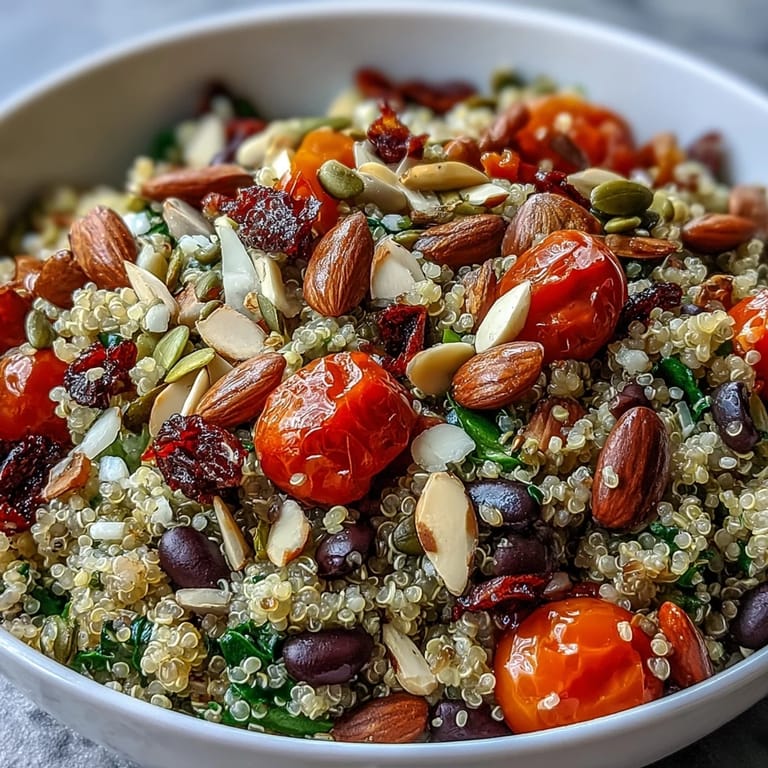
- Roasted almonds or walnuts, chopped: The crunch is essential, and roasted nuts have more flavor than raw ones.
- Pumpkin seeds: These add nutrition and a subtle earthiness that rounds out the bowl.
- Extra virgin olive oil for vinaigrette: Don't skip this ingredient—the quality matters.
- Fresh lemon juice: Bottled works, but fresh lemon brings brightness that makes everything taste alive.
- Dijon mustard: Just a teaspoon acts as an emulsifier and adds complexity without tasting like mustard.
- Maple syrup or honey: A touch of sweetness balances the acidity and brings harmony to the dressing.
- Garlic clove, minced: One small clove is plenty—garlic vinaigrette can quickly become aggressive.
Tired of Takeout? 🥡
Get 10 meals you can make faster than delivery arrives. Seriously.
One email. No spam. Unsubscribe anytime.
Instructions
- Heat your oven and prep the vegetables:
- Preheat to 425°F and arrange all your vegetables on a baking sheet. The high heat will coax out their natural sweetness and create those caramelized edges that make roasted vegetables so irresistible.
- Dress and roast:
- Drizzle with olive oil, scatter the oregano, salt, and pepper over everything, then toss until each piece is lightly coated. Roast for 20 to 25 minutes, stirring halfway through, until the vegetables are tender and the edges turn golden.
- Cook the quinoa:
- While vegetables roast, combine rinsed quinoa with water or broth in a saucepan. Bring to a boil, then lower the heat, cover, and simmer for 15 minutes until all the liquid absorbs.
- Let it rest:
- Once the quinoa is done, remove it from heat and let it sit covered for 5 minutes. This helps it finish cooking gently and keeps each grain separate and fluffy.
- Make the vinaigrette:
- Whisk together olive oil, lemon juice, Dijon mustard, maple syrup, minced garlic, salt, and pepper in a small bowl. Taste and adjust—this dressing is your chance to make the whole bowl sing.
- Build your bowl:
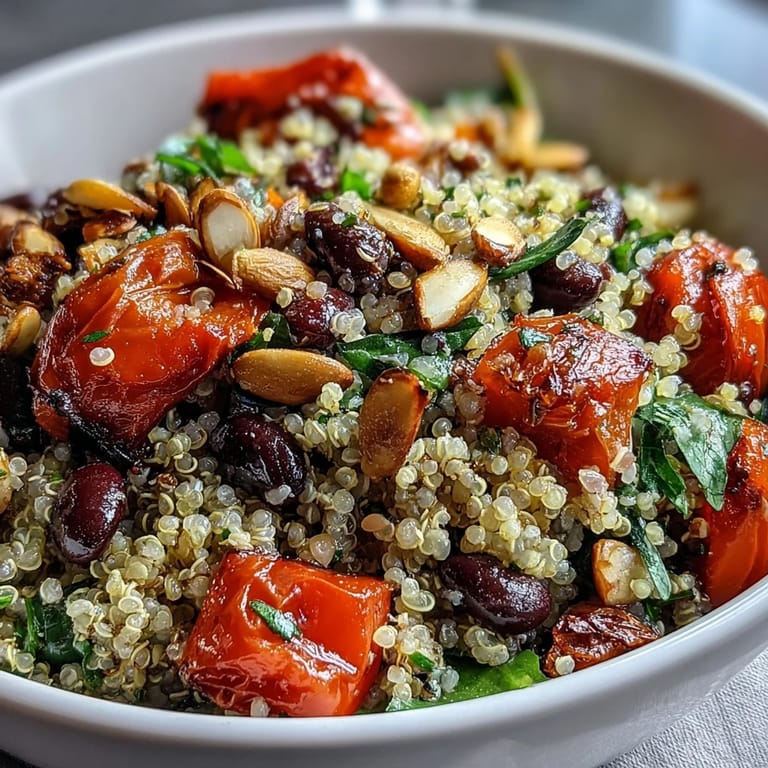
- Divide the fluffy quinoa among four bowls, then layer on the warm roasted vegetables, beans, nuts, and seeds. A generous drizzle of vinaigrette brings everything together into something you'll actually look forward to eating.
- Serve warm or chilled:
- Eat it immediately while everything is warm, or cover and refrigerate for a refreshing cold meal the next day.
 Save
Save My coworker mentioned she'd been trying to eat better but found meal-prep boring, so I brought her one of these bowls the next day. She texted me a photo that evening of her attempting to make it herself, and now it's become our thing—we swap vegetable combinations and vinaigrette variations like we're in some kind of food club. That's when I knew this recipe had become more than just dinner.
Vegetables You Can Swap In
The beauty of this bowl is that it adapts to whatever looks good at the market that week. Sweet potato chunks roasted until they're caramelized, broccoli florets crisped at the edges, cauliflower steaks that somehow taste indulgent, eggplant slices, asparagus spears, Brussels sprouts halved and browned—all of these work beautifully. Roasting time might shift by a few minutes depending on thickness, but the basic method stays the same.
Making It Work for Your Diet
This bowl is naturally vegetarian and gluten-free as written, which makes it genuinely inclusive instead of feeling like a restricted version of something else. If you want to add protein, a poached egg on top brings richness, or grilled tofu cubes add substance without overpowering the other flavors. Feta cheese is optional but wonderful if you eat dairy—it adds a salty, tangy note that complements the lemon vinaigrette.
Storage and Make-Ahead Tips
This bowl is one of the most forgiving dishes for meal prep because the components stay fresh and separate in the refrigerator. Keep the vinaigrette in a separate container so it doesn't make the vegetables soggy overnight, and store everything in glass containers if you can. Assemble the morning you want to eat it, and you'll have a nourishing lunch that tastes just as good as if you'd made it fresh.
- The quinoa keeps for five days refrigerated and can even be made the night before.
- Roasted vegetables stay fresh for up to four days in an airtight container.
- Vinaigrette lasts a week in the fridge and actually tastes better the next day once the flavors meld.
 Save
Save This bowl taught me that healthy eating doesn't require sacrifice—it requires intention and color on your plate. Make one this week and you'll understand why it became my go-to answer whenever someone asks how to eat well without cooking the same thing twice.
Recipe Q&A
- → Can I use different vegetables?
Absolutely. Swap in any seasonal vegetables you enjoy such as sweet potato, broccoli, cauliflower, or butternut squash. Just adjust roasting time as needed for harder vegetables.
- → How long does this keep in the refrigerator?
This bowl stores well for 3-4 days when kept in an airtight container. Store the vinaigrette separately and drizzle just before serving to maintain freshness.
- → Can I make this vegan?
Yes. Simply use maple syrup instead of honey in the vinaigrette. The rest of the ingredients are naturally plant-based.
- → What can I substitute for the nuts?
If you have nut allergies, omit the almonds or walnuts and increase the pumpkin seeds. Sunflower seeds or toasted hemp seeds also work well for added crunch.
- → Can I use other grains instead of quinoa?
Certainly. Brown rice, farro, wheat berries, or bulgur make excellent substitutes. Just adjust the cooking liquid and time according to the grain you choose.
- → Is this served hot or cold?
You can enjoy this bowl warm right after assembling, or refrigerate it for a refreshing cold version. Both ways are delicious.