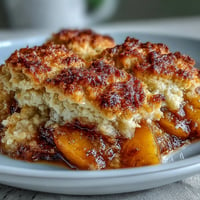
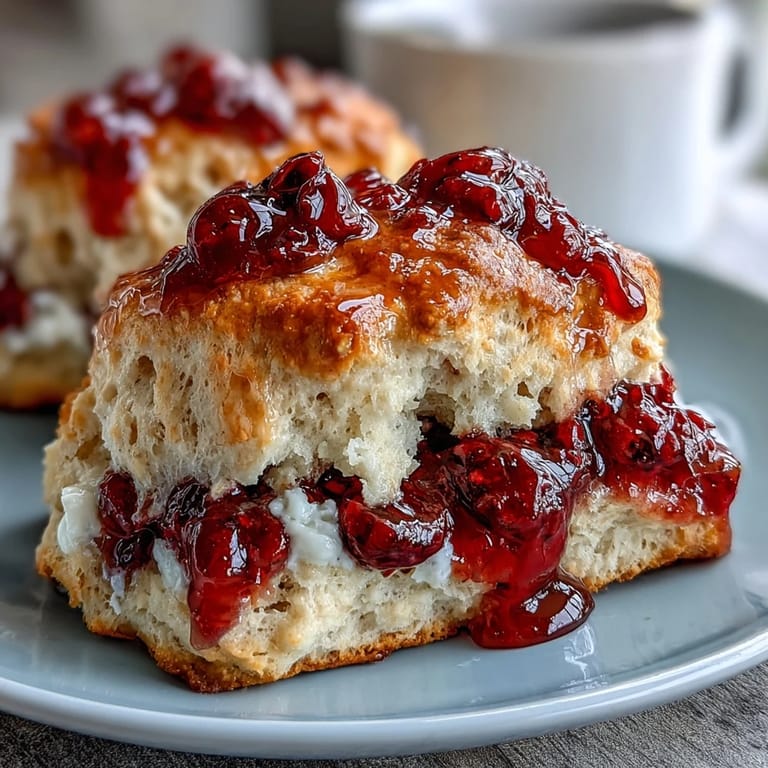
 Save
Save I discovered the magic of sourdough discard scones on a Wednesday morning when my starter had gotten rowdy overnight and I couldn't bear to throw it away. A friend mentioned adding it to her scone dough for tang, and I thought why not layer that with blueberries and lemon for something bright and spring-ready. The first batch came out impossibly tender with this subtle fermented note underneath the berry sweetness, and suddenly I understood why she'd been hoarding her discard.
My neighbor knocked on the door while these were cooling, drawn in by the smell of buttery pastry and bright citrus. She grabbed one warm from the rack, bit into it, and just closed her eyes for a moment, which felt like the highest compliment. We ended up sitting on the porch with tea and the whole batch between us, talking about nothing important while the morning warmed up around us.
Ingredients
- All-purpose flour (2 1/4 cups): The base that creates structure; whisk it together with the other dry ingredients so the baking powder and soda distribute evenly, or you'll get weird dense pockets.
- Granulated sugar (1/4 cup): Sweetness without overpowering; it keeps the scones tender and not cloying.
- Baking powder (1 tablespoon) and baking soda (1/2 teaspoon): These work together to lift the dough; baking soda reacts with the acidity in the sourdough discard, so don't skip it.
- Fine sea salt (1/2 teaspoon): Brings all the flavors into focus and prevents flatness.
- Lemon zest (from 1 large lemon): Add it to the dry ingredients so the oils are evenly distributed; this is where half your brightness comes from.
- Unsalted butter, cold and cubed (1/2 cup): Keep it truly cold straight from the fridge; this creates those tender layers you're after, and warm butter makes dense scones.
- Sourdough discard, room temperature (1 cup): The secret weapon that adds complexity and keeps everything impossibly moist; use unfed discard for best results.
- Heavy cream (1/4 cup plus more for brushing): Richness and moisture; the extra bit for brushing gives you that gorgeous golden sheen.
- Egg (1 large): Binds everything together and helps with browning on top.
- Vanilla extract (1 teaspoon): A small anchor that deepens all the other flavors without announcing itself.
- Freshly squeezed lemon juice (2 tablespoons): Brightens the wet mixture and activates the baking soda; bottled won't give you the same lift.
- Fresh blueberries (1 cup): Use them straight from the fridge or even frozen; the cold keeps them from staining your pale dough.
- Coarse sugar for topping (2 tablespoons, optional): Adds a little textural surprise and catches the light beautifully when baked.
Tired of Takeout? 🥡
Get 10 meals you can make faster than delivery arrives. Seriously.
One email. No spam. Unsubscribe anytime.
Instructions
- Set your oven and prep:
- Heat to 400°F and line your sheet with parchment; this matters because it prevents sticking and allows air to circulate underneath.
- Combine your dry team:
- Whisk flour, sugar, baking powder, baking soda, salt, and lemon zest together in a large bowl, really getting air into the flour. The zest should be scattered throughout, not clumped in one spot.
- Cut in the butter:
- Add those cold cubes and work them in with a pastry blender or your fingertips until you get pea-sized pieces throughout; this is the texture that creates flakiness, so don't rush it or overmix.
- Build your wet base:
- In a separate bowl, whisk together the sourdough discard, cream, egg, vanilla, and lemon juice until it's totally smooth with no lumps. This is your binding agent, and you want it cohesive.
- Bring it together gently:
- Pour the wet mixture into the dry ingredients and stir just until combined; stop the second you don't see dry flour anymore because overmixing develops gluten and makes tough scones. Gently fold in the blueberries, keeping them mostly whole.
- Shape and cut:
- Turn the dough onto a lightly floured surface and pat it into a 1-inch thick circle about 7 inches across; you're aiming for even thickness so everything bakes at the same rate. Cut it into 8 wedges like a pie.
- Arrange and finish:
- Transfer the wedges to your parchment-lined sheet with a little space between each one, brush the tops with cream, and sprinkle with coarse sugar if you're using it. This will bake into a subtle sweetness and crunch.
- Bake until golden:
- Bake for 18 to 22 minutes until the tops are deep golden and a toothpick inserted into the center comes out clean. Let them cool on the sheet for 5 minutes to firm up, then move them to a wire rack.
 Save
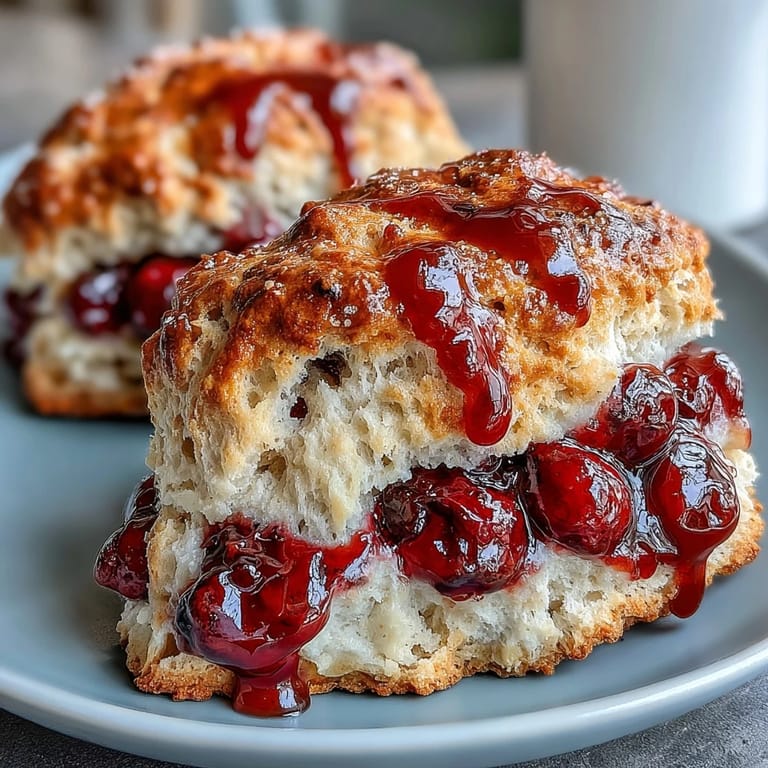
Save There's a moment when fresh scones cool just enough to eat but are still warm enough to taste like they were meant to be eaten right now, and that's when these truly shine. The crumb is tender enough that you can tear them apart with your fingers, and the little burst of blueberry with the bright lemon feels like springtime decided to show up in your mouth.
The Sourdough Secret
Using sourdough discard instead of buttermilk or regular milk is one of those small decisions that changes everything about a recipe. The discard brings this subtle fermented complexity that makes people stop mid-bite and ask what you did differently, and when you tell them it's literally something you were about to throw away, they look at you like you've cracked some kind of code. It keeps the scones impossibly moist even the next day, which is miraculous given how quickly they usually go stale.
Why Fresh Blueberries Matter Here
I learned the hard way that frozen blueberries release too much liquid during baking, leaving you with wet spots in your scones and a batter that's turned slightly purple. Fresh ones hold their shape better and stay bright and juicy without staining the pale dough, though if you're in a pinch, you can use frozen ones straight from the freezer as long as you don't thaw them first. The cold acts like a barrier between the berry and the batter, minimizing seeping.
Making Them Your Own
The beauty of this recipe is how forgiving it is once you understand the technique. I've made these with raspberries when blueberries weren't in season, swapped the lemon for orange zest and juice, and even added a tiny pinch of cardamom for a different kind of bright. The sourdough discard is flexible enough that it plays well with other flavors as long as you keep the ratios the same and respect the cold butter rule.
- A simple glaze of powdered sugar and fresh lemon juice drizzled over cooled scones takes them from lovely to absolutely showstopping.
- If you don't have sourdough discard on hand, you can substitute buttermilk one-to-one, though you'll lose that subtle tang and moistness that makes these special.
- These are best eaten the same day, but wrapped tightly they'll keep for two days and can be gently warmed in a 300°F oven before serving.
 Save
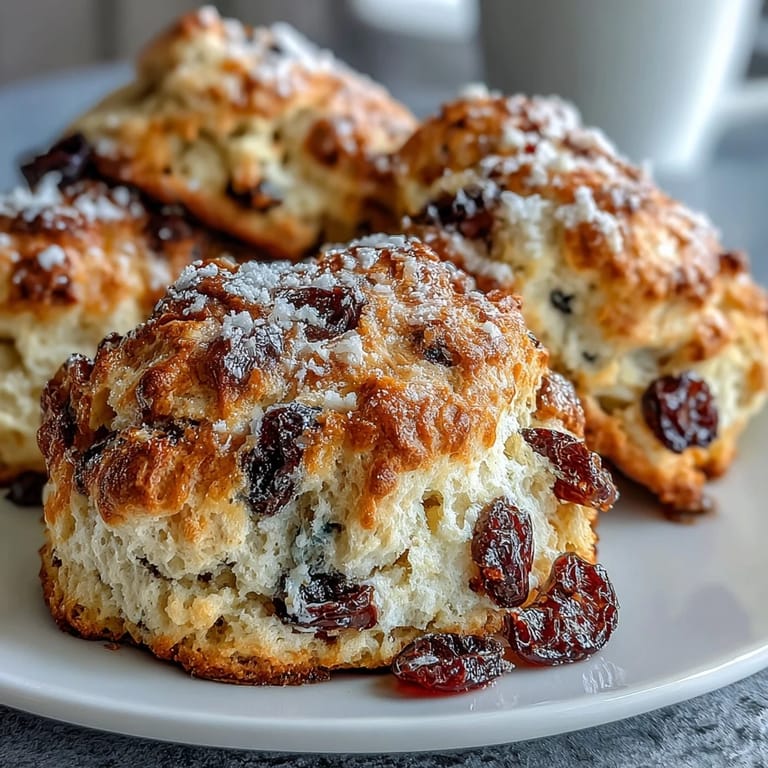
Save These scones have become my go-to offering when I want to give someone something made with actual care and intention. They're elegant without trying too hard, and the fact that they exist partly because you didn't want to waste sourdough discard feels like a small kitchen victory every single time.
Recipe Q&A
- → How do I incorporate the blueberries without breaking them?
Gently fold the blueberries into the dough using a spatula to avoid crushing them and releasing too much juice.
- → Can I use frozen blueberries instead of fresh?
Yes, fold frozen blueberries directly into the dough to prevent color bleeding and keep the dough from becoming too wet.
- → What is the role of sourdough discard in the mix?
Sourdough discard adds a subtle tang and moisture, enhancing the scones’ flavor and texture with a slight chewiness.
- → How can I achieve a flaky texture in these scones?
Use cold butter cut into the dry ingredients until crumbly, and avoid overmixing once wet ingredients are added to maintain flakiness.
- → Is it necessary to brush the tops with cream?
Brushing with cream adds a golden color and helps the optional coarse sugar adhere, creating a slight crunch on top.
- → Can I substitute buttermilk for the cream?
Yes, buttermilk can be used instead of cream for a slightly tangier flavor and tender crumb.