 Save
Save There's something quietly powerful about arranging food with intention. I discovered this watching a friend prepare a board not for feeding a crowd, but for two people sharing a moment. She placed items with deliberate spacing, creating a visual conversation between ingredients rather than a haphazard pile. That simple act—choosing balance over abundance—changed how I think about presenting food.
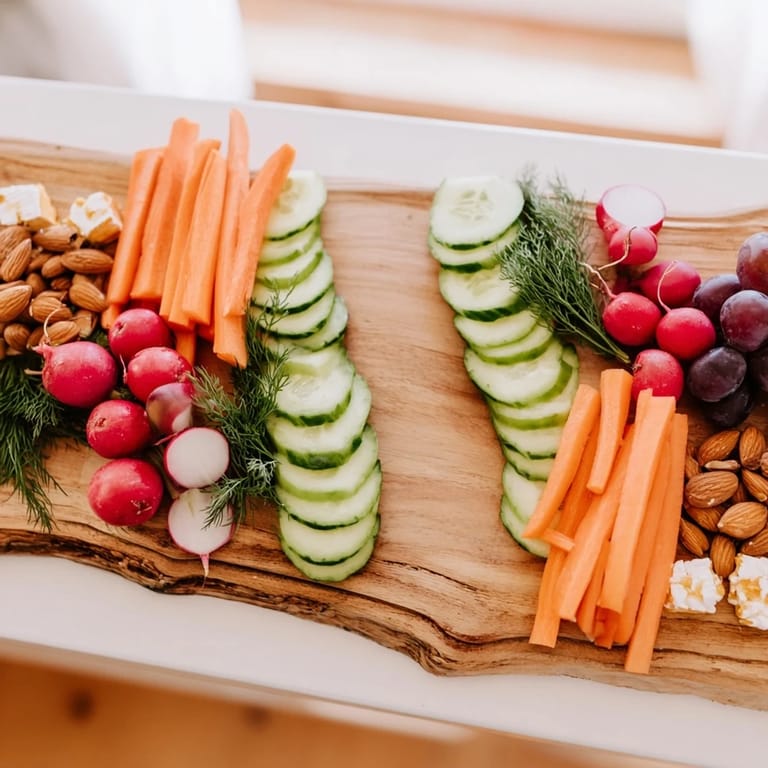
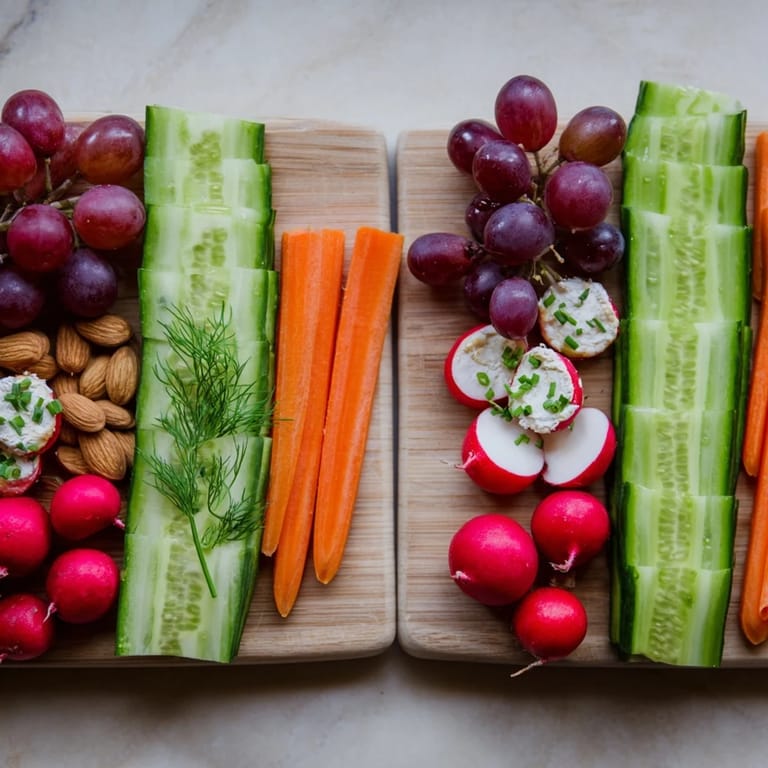
I made this for someone who'd been stressed all week. They walked in, saw the symmetrical board waiting on the table, and just stopped. No explanation needed. The empty space in the middle seemed to speak louder than anything I could say. We sat there for twenty minutes before either of us ate anything, just looking at it.
Ingredients
- Fresh cucumbers: Choose crisp, firm ones and slice them at a slight angle—it catches light differently and looks intentional.
- Baby carrots: These are already small and sweet, so pick ones that are similar in size for visual cohesion.
- Radishes, halved: Their pink-white contrast is half the beauty, so don't peel them completely—let the skin show.
- Goat cheese: Soften it slightly at room temperature before shaping into small rounds with your hands or a small spoon; cold cheese cracks.
- Gluten-free crackers: Pick ones with interesting texture or color that won't blend into the background.
- Roasted almonds: Their warmth against cool vegetables creates a sensory balance; toast them yourself if you want more control over the flavor.
- Seedless red grapes: They add sweetness and a jewel-like quality—choose ones that feel firm when you hold them gently.
- Fresh herbs: Chives and dill add aroma without competing; use them as the final flourish, placing sprigs where they'll be noticed.
Tired of Takeout? 🥡
Get 10 meals you can make faster than delivery arrives. Seriously.
One email. No spam. Unsubscribe anytime.
Instructions
- Find your canvas:
- Lay out your board—wood or slate, something substantial that won't shift under your hands. Step back and imagine an invisible line down the middle; this is your guide.
- Build the first side:
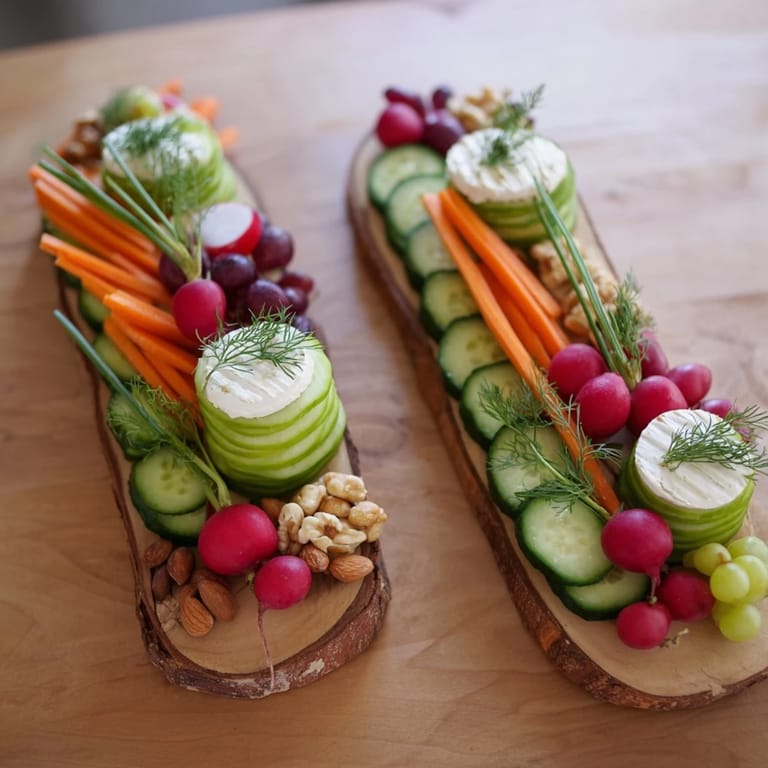
- Start at one end with the base layer: cucumber slices fanned slightly, crackers standing at angles. Layer the softer elements next—carrots, radishes, grapes—then nestle the goat cheese rounds where they catch attention, finishing with almonds scattered like intentional accidents.
- Mirror with precision:
- Now do the exact same thing at the opposite end with your remaining ingredients. This isn't about perfection; it's about creating a rhythm your eye can follow from one end to the other.
- Finish with life:
- Tuck fresh herb sprigs into each pile—one or two per side. This is where the plate shifts from still life to something living.
- Honor the space:
- Leave the middle empty. That void is as important as what you've arranged. It's what makes someone pause.
 Save
Save This dish taught me that presentation isn't vanity—it's respect. Respect for ingredients, for someone's time, for the idea that how food looks shapes how it tastes. The person I made this for told me later they felt seen.
The Philosophy of Two
Making something for two people changes everything. It's not about feeding; it's about connecting. A board made for a crowd feels different—louder, more chaotic. This one is quiet. It suggests conversation, shared tasting notes, the kind of eating where you notice flavors instead of just refueling. When you know exactly who's sitting across from you, what they like, what they need, your hands move differently as you arrange.
Seasonal Shifts
The beauty of this format is how it adapts. In summer, load it with heirloom tomatoes and stone fruits. In autumn, switch to roasted beets, figs, and candied nuts. Winter calls for pomegranate seeds, persimmons, harder cheeses. Spring brings asparagus tips, fresh peas, softer lettuces. The structure stays the same; the story changes with the season. You're not following a recipe—you're responding to what's alive right now.
Creating Ritual
This arrangement works because it forces presence. You can't make it while scrolling. You can't rush it. The emptiness in the middle acts as a visual reminder to breathe, to notice. Some nights, this becomes a meditation as much as a meal. The act of making it mindfully sets the tone for eating it the same way. Everything slows down.
- Arrange this board no more than thirty minutes before serving so ingredients stay crisp and colors stay vibrant.
- If you're nervous about symmetry, use small pieces of parchment or herb sprigs as dividers while you build each side.
- Serve this with nothing but water or a very light white wine—anything heavy will overwhelm the delicate balance you've created.
 Save
Save This is food stripped down to its essence: freshness, balance, and presence. Make it when you want someone to feel like you chose them.
Recipe Q&A
- → What ingredients create the balance in this platter?
The balance is achieved using fresh cucumber, baby carrots, radishes, seedless red grapes, goat cheese rounds, roasted almonds, gluten-free crackers, and fresh herbs.
- → How long does preparation take?
This dish requires approximately 15 minutes of preparation with no cooking involved, making it quick and easy to assemble.
- → Can this platter accommodate dietary restrictions?
Yes, it suits vegetarian and gluten-free diets; plant-based cheese can be used for a vegan option.
- → What type of serving board is recommended?
A long wooden or slate serving board, at least 60 cm in length, is ideal to display the symmetrical arrangement effectively.
- → How does this dish emphasize balance and harmony?
Ingredients are arranged in two identical piles on opposite ends of the board, leaving the center empty to visually highlight symmetry and contrast.
- → What garnishes are suggested for this presentation?
Fresh herbs such as chives or dill are used to add color and aroma, enhancing the overall presentation.