 Save
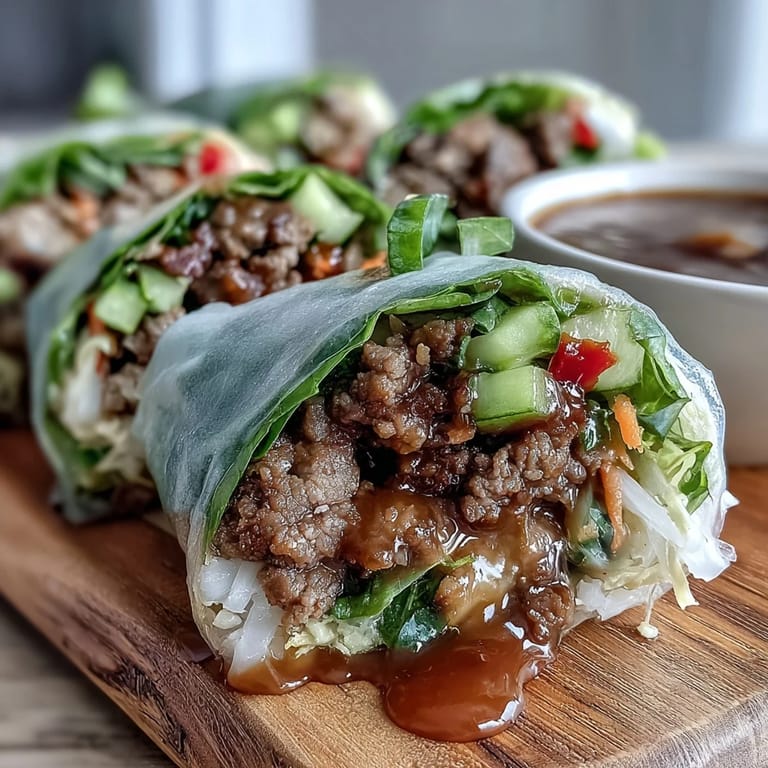
Save The first time I attempted rice paper rolls, my kitchen looked like a disaster zone. Stuck together wrappers, filling everywhere, and what were supposed to be elegant rolls looked like sad burritos. But there is something so satisfying about mastering the technique—when you get that perfect tight roll and take that first bite of crisp vegetables, fragrant beef, and fresh herbs all at once.
I made these for a summer potluck last year, watching skeptics turn into converts after their first taste. The beef filling, warm with spices and basil, creates such a welcoming aroma that people were gathering around my kitchen before I even finished rolling. Something about fresh spring rolls just makes people slow down and really enjoy their food.
Ingredients
- Ground beef: I use 85 to 90% lean because you want enough fat to keep the filling juicy and flavorful, but not so much that it makes your rolls greasy
- Thai basil: This is non-negotiable for authentic flavor with its slight anise notes, though in a pinch I have used sweet basil with extra mint
- Rice paper wrappers: Buy the larger 8.5 inch size because smaller ones will frustrate you with tearing and overstuffing
- Fish sauce: This provides that essential salty umami base—you cannot substitute it with soy sauce and expect the same depth
- Fresh herbs: Do not skimp here because the combination of basil, cilantro, and mint is what makes these taste bright and alive
Tired of Takeout? 🥡
Get 10 meals you can make faster than delivery arrives. Seriously.
One email. No spam. Unsubscribe anytime.
Instructions
- Mix the sauce seasoning:
- Whisk together the soy sauce, fish sauce, oyster sauce, dark soy sauce, and sugar until completely dissolved, adding just enough water to make it pourable
- Cook the aromatics:
- Heat oil in a wok over medium-high heat and stir-fry the garlic and shallot until just golden, about 30 to 45 seconds
- Add heat and aromatics:
- Toss in the minced chilies and white parts of the green onions, cooking until the kitchen fills with that spicy fragrance
- Brown the beef:
- Add the ground beef, breaking it apart with your spatula and cooking until browned with some crispy spots, 4 to 6 minutes
- Soften the peppers:
- Stir in the diced red bell pepper and let it cook for a couple of minutes until it starts to soften
- Season the beef:
- Pour in your sauce mixture and toss everything together, letting it reduce until it clings beautifully to the meat
- Finish with basil:
- Reduce heat to low, add the chopped Thai basil and green onion tops, and toss just until the basil wilts
- Add brightness and cool:
- Stir in the fresh lime juice, then remove from heat and let the filling cool completely—this is crucial for preventing torn wrappers
- Make the dipping sauce:
- Combine fish sauce, lime juice, sugar, and water, stirring until dissolved, then add garlic, chilies, and any optional garnishes
- Set up your station:
- Arrange all your prepared vegetables, herbs, cooled rice or noodles, and beef filling in separate bowls within reach
- Soften the rice paper:
- Dip each wrapper in warm water for 3 to 5 seconds, turning it to moisten all sides, then place it on your board
- Layer your fillings:
- Pile rice or noodles on the bottom third, add beef, then arrange your vegetables and herbs in a neat line
- Roll it up:
- Fold the bottom over the filling, tuck in the sides, and roll tightly away from you, keeping everything snug
- Serve:
- Cut diagonally if you want to show off the beautiful layers inside, or leave whole and serve with the dipping sauce
 Save
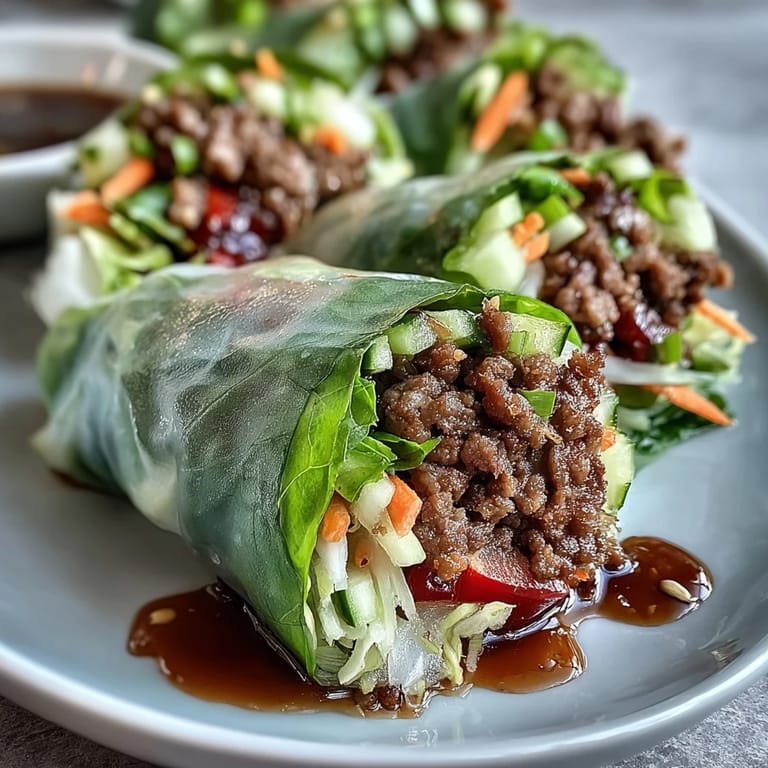
Save These rolls have become my signature contribution to gatherings because they look impressive but are actually quite forgiving once you understand the rhythm. I love watching people is face light up when they bite through that soft wrapper into all those layers of flavor and texture.
Mastering the Rice Paper
The biggest mistake I see with rice paper is over-soaking. You want to dip quickly and let it continue softening on your board as you work. If it is still slightly stiff when you start rolling, that is actually perfect—it will finish softening as you add fillings and fold.
Assembly Efficiency
I have learned to set up an assembly line with everything in order of use. The first few rolls might be awkward, but by the third or fourth you will develop a rhythm and suddenly these become almost meditative to make.
Make-Ahead Strategy
The beef filling actually tastes better the next day as the flavors meld together. You can cook it up to 2 days ahead and store it in the refrigerator. Just bring it back to room temperature before rolling so it does not make condensation inside your wrappers.
- Roll these no more than 3 hours before serving or the rice paper starts to toughen
- Keep finished rolls under a barely damp towel and plastic wrap to prevent drying out
- Let refrigerated rolls sit at room temperature for 15 minutes before serving for the best texture
 Save
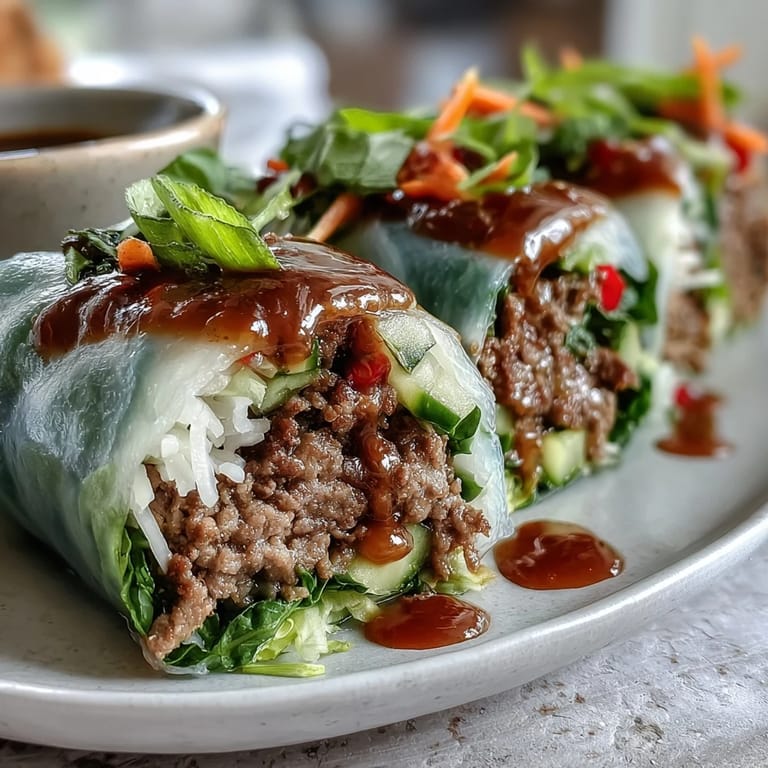
Save There is something so rewarding about biting into a roll you have made yourself—crisp, fresh, and packed with layers of flavor. These Thai Basil Beef Rolls might take a little practice, but they are worth every minute.
Recipe Q&A
- → Can I make these rolls ahead of time?
Yes, you can prepare the beef filling up to 2 days in advance and store it refrigerated. Assembly is best done within 2-3 hours of serving for optimal texture. If storing assembled rolls, cover with a damp towel and plastic wrap to prevent drying. Let them sit at room temperature for 10-15 minutes before serving.
- → What can I substitute for Thai basil?
Thai basil has distinct anise-like notes, but you can use sweet Italian basil combined with a hint of mint to approximate the flavor. Fresh mint leaves work well as a partial substitute. The flavor profile will shift slightly but remains delicious.
- → Are these rolls gluten-free?
Yes, they can be made gluten-free by using tamari instead of soy sauce and ensuring your oyster sauce is certified gluten-free. Rice paper wrappers are naturally gluten-free. Always check labels on fish sauce and condiments to verify they meet your dietary needs.
- → How do I prevent rice paper from tearing?
Use warm—not hot—water and dip briefly for 3-5 seconds. The paper continues softening as you work. Place on a lightly oiled surface to prevent sticking. Don't overfill, and roll firmly but gently. If papers feel too stiff, let them sit 30 seconds longer before filling.
- → Can I use a different protein?
Ground turkey, chicken, or pork work excellently with these seasonings. For a vegetarian version, use crumbled tofu or textured vegetable protein, adjusting cooking time accordingly. The sauce flavors pair well with various proteins.
- → What vegetables work best in these rolls?
Julienne carrots, cucumber, and cabbage provide classic crunch. You can add bean sprouts, sliced radishes, red bell pepper strips, or shredded green papaya. Keep pieces uniform for even rolling and consistent texture throughout.