 Save
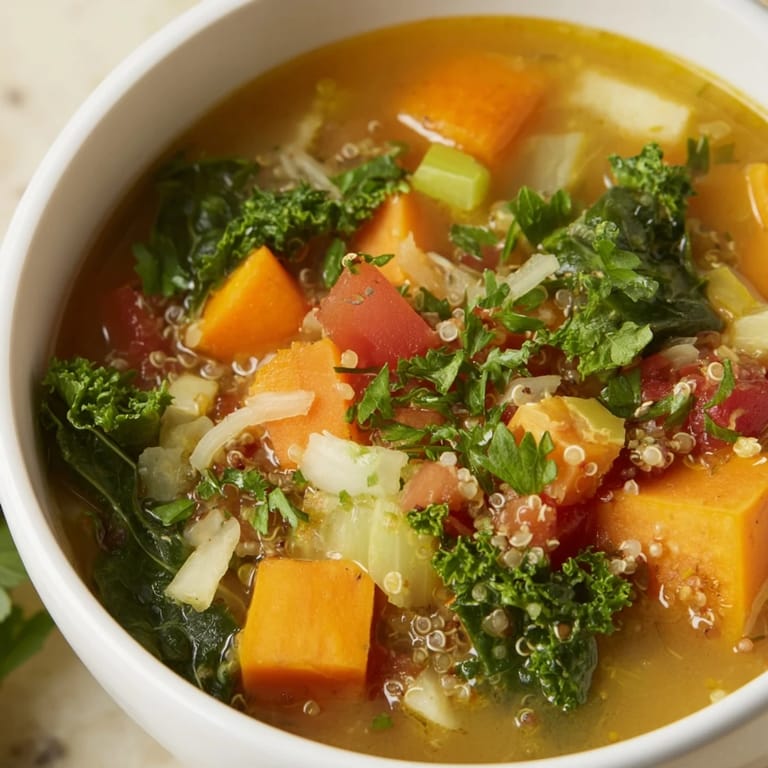
Save There's something quietly satisfying about stirring a pot of soup on a gray afternoon when the world outside feels too cold to explore. I discovered this version years ago when a friend mentioned offhandedly that quinoa belonged in winter soups, and I spent weeks perfecting the balance of vegetables until the broth tasted like comfort itself. The first time I ladled it into bowls for family, no one spoke for those first few spoonfuls—just the sound of spoons clinking gently against ceramic. That's when I knew this soup had become something I'd make again and again.
I made this soup for my partner one January when we were both recovering from a rough week, and it became the thing that seemed to actually help. There's no magic in it, really—just vegetables and broth and time—but somehow that made it matter more. The simplicity felt like an honest gesture.
Ingredients
- Olive oil: Use good quality if you can; it carries flavor through the entire pot and makes the aromatics sing.
- Onion and garlic: These are your foundation—don't rush them, and you'll notice the difference in every spoonful.
- Carrots, celery, and parsnip: Parsnip adds a subtle sweetness that makes people ask what the secret ingredient is.
- Sweet potato: Adds natural sweetness and a creamy texture as it breaks down slightly.
- Kale or Swiss chard: Choose tender leaves and remove the tough stems—they cook down beautifully and add earthiness.
- Cabbage: Adds texture and a gentle, mineral note that brightens the broth.
- Diced tomatoes: Canned works perfectly well and adds acidity to balance the sweetness of the root vegetables.
- Quinoa: Rinse it first to remove any bitterness; it thickens the broth naturally as it cooks.
- Vegetable broth: Low-sodium gives you control over the final seasoning and tastes cleaner than heavily salted versions.
- Thyme and oregano: Dried herbs work reliably here; add them early so they infuse the entire pot.
- Bay leaf: Adds subtle complexity—don't forget to fish it out before serving.
- Fresh parsley and lemon: These finish the soup with brightness that pulls everything into focus at the last moment.
Tired of Takeout? 🥡
Get 10 meals you can make faster than delivery arrives. Seriously.
One email. No spam. Unsubscribe anytime.
Instructions
- Heat and soften the aromatics:
- Warm the oil over medium heat, then add onion and garlic. Watch as they turn translucent and fragrant—this usually takes about 3 minutes. You'll smell when it's ready.
- Build your vegetable base:
- Add the carrots, celery, parsnip, and sweet potato. Stir them into the oil and cook for 5 to 6 minutes, letting them start to soften at the edges. This step deepens their natural sweetness.
- Add the greens and tomatoes:
- Pile in the kale or chard and cabbage, then add the tomatoes. The greens will seem like too much at first, but they collapse quickly as they hit the heat. Stir and cook for another 2 minutes.
- Pour in the broth and seasonings:
- Add the rinsed quinoa, broth, thyme, oregano, bay leaf, salt, and pepper. Stir everything together and bring it to a boil—you'll see the surface ripple and steam rise. This should take about 5 minutes.
- Simmer until everything is tender:
- Lower the heat, cover the pot, and let it bubble gently for 25 to 30 minutes. The vegetables will become soft, the quinoa will plump and turn translucent, and the flavors will deepen into something cohesive and warm.
- Finish with brightness:
- Remove the bay leaf, stir in the fresh parsley, and add lemon juice if you like. Taste a spoonful and adjust the salt and pepper until it feels right to your palate.
- Serve and savor:
- Ladle the soup into bowls while it's hot, and take a moment to notice the colors and aromas rising in the steam. That's your signal to sit down and eat slowly.
 Save
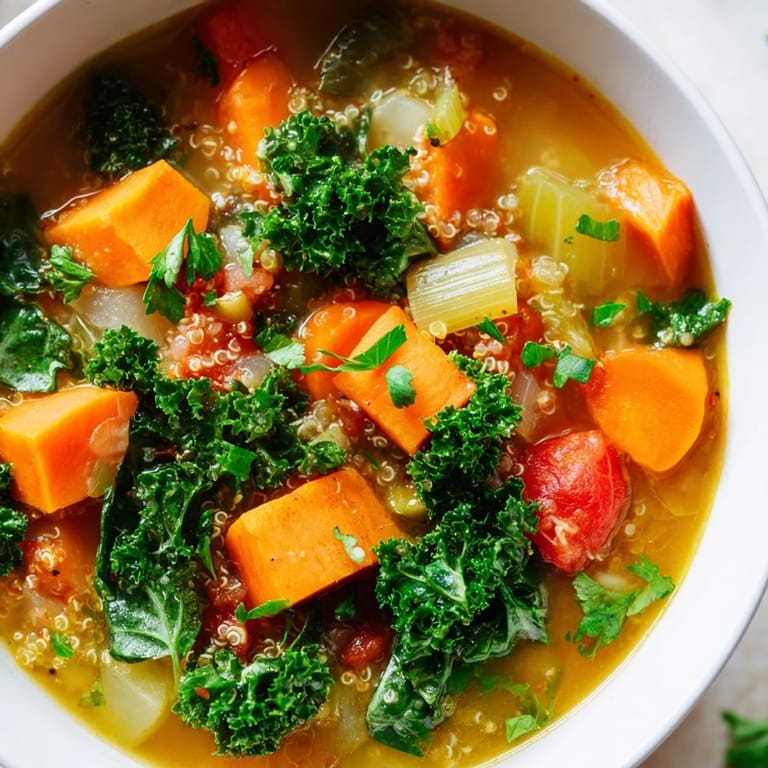
Save One winter night, I made this soup and left the pot simmering while I sat at the kitchen table writing something I'd been avoiding for months. By the time I realized the time had passed, the soup was done, the kitchen smelled like home, and somehow I'd worked through whatever had been stuck. I'm not sure if it was the soup or the quiet, but I'll always remember them together.
How to Adapt This Soup to What You Have
The beauty of vegetable soup is its flexibility. If you don't have parsnip, add more carrot. If kale isn't available, spinach or even shredded cabbage works perfectly. Don't have quinoa? Brown rice or farro will give you that same heartiness and substance. The core of the recipe—sautéed aromatics, root vegetables, leafy greens, broth, and time—remains the same no matter what you swap in.
Make It Your Own with Simple Additions
This soup welcomes additions without complaint. A can of drained chickpeas or white beans adds protein and heartiness. A pinch of red pepper flakes stirred in at the end brings gentle heat. Some people swirl in a spoonful of tahini or coconut milk for richness, and they're not wrong. I've also made it with a splash of balsamic vinegar and a handful of fresh basil in the warmer months, which tastes like a completely different soup while using almost the same ingredients.
- For extra earthiness, add a handful of mushrooms—sliced and sautéed with the onions—and you'll barely recognize how much depth they bring.
- A wedge of Parmesan rind simmered in the broth (then removed before serving) adds umami that seems impossible from something so simple.
- If you want richness without dairy, add a drizzle of good olive oil and a squeeze of fresh lemon juice just as you ladle it into bowls.
Why This Soup Keeps Getting Made in Winter
Soups have a way of fitting into life when other meals feel complicated. This one costs very little, asks for ingredients that are usually on hand, and produces something that feels both nourishing and sincere. The act of making it—chopping, stirring, waiting—becomes as important as eating it.
 Save
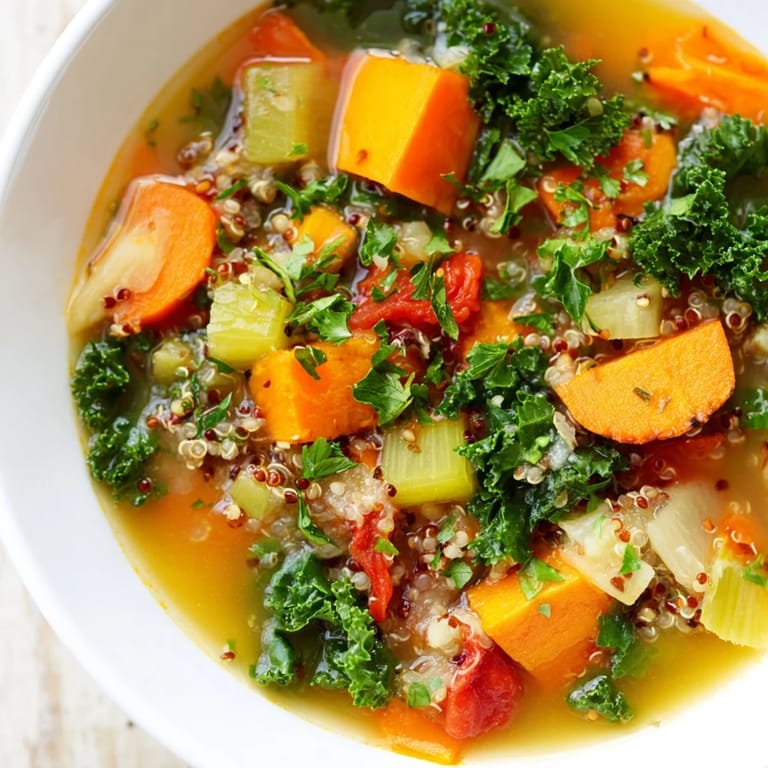
Save This soup has become the thing I make when I want to feed people something that says I'm thinking of them. It never fails.
Recipe Q&A
- → What vegetables are used in this soup?
It features carrots, celery, parsnip, sweet potato, kale or Swiss chard, cabbage, and diced tomatoes.
- → How is the quinoa incorporated?
Quinoa is rinsed and added to the simmering broth with the vegetables to cook until tender and fluffy.
- → Can this soup be made gluten-free?
Yes, all ingredients are naturally gluten-free, including the vegetable broth, ensuring a safe meal.
- → What herbs enhance the flavor?
Dried thyme, oregano, and a bay leaf provide aromatic depth, complemented by fresh parsley at the end.
- → Are there options to increase protein content?
Adding drained chickpeas or white beans boosts protein without altering the soup's natural taste.