 Save
Save I stumbled onto this bowl concept during a particularly uninspired Tuesday afternoon when my fridge held more promise than my meal ideas. What started as throwing together whatever vegetables needed rescuing turned into something so satisfying that I made it three times the following week. The magic happened when I drizzled that warm peanut sauce over everything—suddenly, simple ingredients transformed into something that felt both comforting and exciting. My partner actually asked for the recipe, which rarely happens with my experiments.
My roommate watched me assemble the first bowl skeptically—she was convinced that anything without meat couldn't be a real meal. Twenty minutes later, she was asking if I could teach her how to make it because she'd devoured half of hers while standing at the counter. That moment when someone tries something that challenges their assumptions and loves it anyway, that's when you know you've created something special.
Ingredients
- Extra-firm tofu (400 g): Pressing it thoroughly removes excess moisture so it actually crisps up instead of steaming—this step changed everything for me.
- Cornstarch (2 tbsp): This creates that satisfying crunch on the outside; all-purpose flour works but cornstarch gives a superior texture.
- Olive oil (2 tbsp): Just enough to coat and help the tofu brown evenly in the oven.
- Brown rice or quinoa (200 g uncooked): Choose based on your mood—rice feels comforting, quinoa feels lighter and adds a subtle nuttiness.
- Vegetables (carrot, bell pepper, cabbage, edamame, cucumber, spring onions): The colors matter as much as the taste—purple cabbage and red pepper against the golden grains is visually stunning.
- Creamy peanut butter (60 g): Use one without added sugars if possible; it lets the other flavors shine while keeping everything cohesive.
- Soy sauce or tamari (2 tbsp): Tamari is your friend if anyone at your table has gluten concerns.
- Maple syrup or agave (1 tbsp): This balances the salt and umami, creating a sauce that feels complete.
- Rice vinegar or lime juice (1 tbsp): The acid brightens everything; I prefer lime juice because it adds a fresh edge.
- Toasted sesame oil (1 tsp): A little goes a long way—don't skip this, it's the secret warmth in the sauce.
- Garlic and ginger (1 clove and 1 tsp): Fresh ginger makes a noticeable difference compared to dried.
Tired of Takeout? 🥡
Get 10 meals you can make faster than delivery arrives. Seriously.
One email. No spam. Unsubscribe anytime.
Instructions
- Start your grains first:
- Measure out your rice or quinoa and get it cooking according to package directions—this should be your first move since everything else comes together quickly while it simmers. The grains become your foundation.
- Prepare and press the tofu:
- Wrap your block of tofu in paper towels or clean kitchen cloth and place it on a plate with something heavy on top for at least 15 minutes. You'll be surprised how much liquid comes out; this dryness is what creates crispness later.
- Coat the tofu cubes:
- Cut your pressed tofu into cubes about the size of sugar cubes, then toss them gently in a bowl with cornstarch and a pinch of salt until each piece is lightly dusted. This coating is what creates that satisfying exterior texture.
- Get your tofu golden:
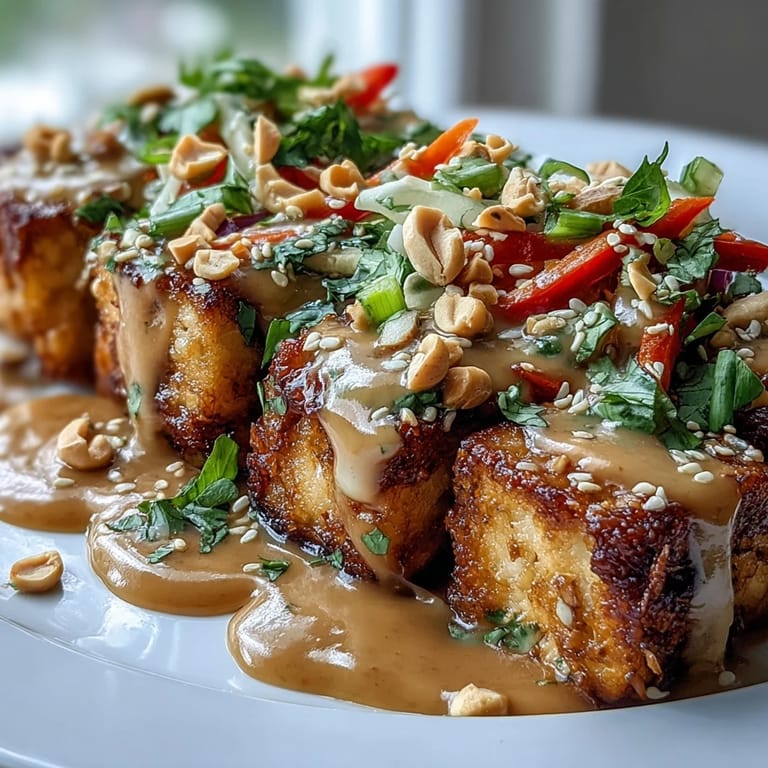
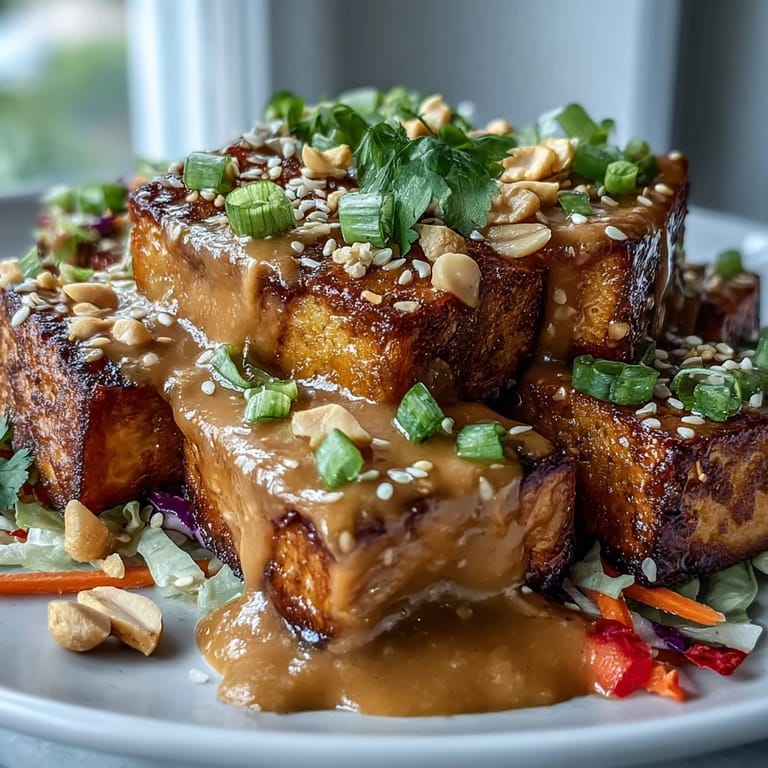
- Either spread the cubes on a peanut oil-drizzled baking sheet and roast at 200°C for 20-25 minutes (flipping halfway through) or pan-fry them in a hot skillet until all sides turn golden brown. The oven method requires less monitoring, but both yield incredible results.
- Build your peanut sauce:
- While the tofu crisps up, whisk together your peanut butter, soy sauce, maple syrup, rice vinegar, sesame oil, minced garlic, and grated ginger in a bowl, adding water gradually until you reach a pourable consistency that coats a spoon. Taste and adjust—add more salt if it feels flat, more acid if it feels heavy.
- Prepare vegetables with intention:
- Julienne your carrots, slice your bell pepper into thin strips, shred your cabbage, shell your edamame if frozen, slice your cucumber, and thinly slice your spring onions. Mise en place—everything prepped and ready—makes assembly feel like a celebration rather than work.
- Assemble your bowls:
- Divide the cooked grains among four bowls, then arrange all your vegetables and crispy tofu on top in a way that pleases your eye. There's something about the visual arrangement that makes the eating experience feel intentional.
- Drizzle and garnish:
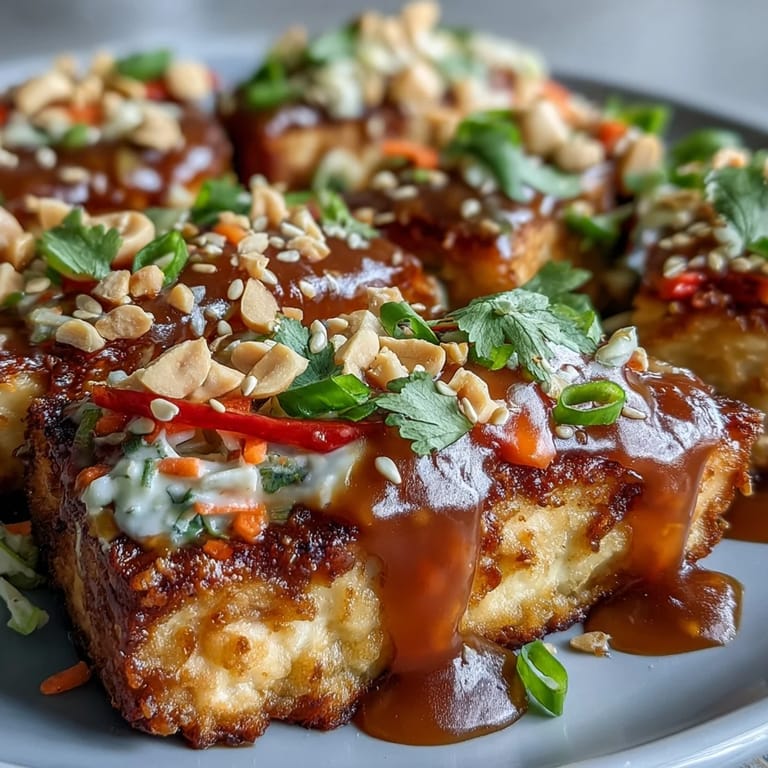
- Pour that peanut sauce generously over everything—it should pool slightly in the center—then top with chopped roasted peanuts, sesame seeds, and fresh herbs if you have them. Serve immediately while the tofu is still warm and the vegetables still have their crunch.
 Save
Save The bowl became our thing after that first week—every time friends came over tired and hungry, I'd make these without asking, and somehow they always felt like exactly what people needed. It's funny how something so simple can become a comfort, maybe because someone put care into arranging the colors and drizzling the sauce with intention.
Customizing Your Bowl
This recipe thrives on flexibility, which is part of why I return to it constantly. Roasted sweet potato slices add earthiness and natural sweetness, steamed broccoli brings a different green element, and creamy avocado slices make it feel more indulgent on days when you need that. The grain base can shift too—cauliflower rice for lower carb days, farro for a chewier texture, or even buckwheat groats if you want something with more personality than white rice offers.
Sauce Variations That Change Everything
Once you master the basic peanut sauce, you can play with it endlessly. Adding sriracha or chili flakes turns it from comforting to exciting, a squeeze of lime instead of rice vinegar brightens the whole bowl, and sometimes I'll add a spoonful of tahini to make it richer and more interesting. I've learned that adjusting sauce is easier than adjusting other components—taste as you go and let your instincts guide you.
Making It Ahead and Storage
This bowl lives beautifully in meal prep containers for 3-4 days, though I recommend storing the sauce separately so the grains don't absorb all the liquid and become mushy. The tofu actually gets firmer as it sits, which some people prefer, and the vegetables keep their color and mostly their crunch. Reheat gently in the microwave, add fresh herbs right before eating, and drizzle with room-temperature sauce for the best experience.
- Keep sauce in a separate container and stir it well before using, as the peanut butter can settle at the bottom.
- Pack vegetables in one compartment and grains and tofu in another if you want to keep everything fresh tasting.
- Make a double batch of sauce because it keeps well and you'll want it on everything for the rest of the week.
 Save
Save This bowl became my anchor recipe, the one I return to when I need to feel grounded or when someone needs proof that plant-based eating can be genuinely delicious. It's nourishing and satisfying without being fussy, which feels like the highest compliment a recipe can receive.
Recipe Q&A
- → How do I get crispy tofu?
Press your tofu to remove excess moisture, then cube and toss with cornstarch. Bake at 200°C (400°F) for 20-25 minutes, flipping halfway, or pan-fry until golden brown on all sides. The cornstarch creates a light, crispy coating that holds up beautifully under the sauce.
- → Can I make this gluten-free?
Yes, simply substitute regular soy sauce with tamari in the peanut sauce. Ensure your other ingredients, particularly the cornstarch and any garnishes, are certified gluten-free. The rest of the ingredients are naturally gluten-free.
- → What grains work best?
Brown rice and quinoa are excellent choices for their nutty flavor and protein content. For a lighter option, try cauliflower rice. For faster preparation, use pre-cooked rice or quinoa, though cooking from scratch yields the best texture.
- → How long does the peanut sauce keep?
The peanut sauce stores well in an airtight container in the refrigerator for up to one week. It may thicken when cold—simply whisk in a small amount of warm water to reach your desired consistency before serving.
- → Can I prepare this in advance?
Absolutely. Cook the grains and roast the tofu up to 3 days ahead. Store components separately in the refrigerator. Slice vegetables fresh or store in water to maintain crispness. Assemble bowls just before serving and add sauce at the last minute to prevent sogginess.
- → How can I add more protein?
Increase the tofu amount, add more edamame, or incorporate shelled hemp seeds into the sauce. For variety, swap edamame with chickpeas or add a scoop of cooked lentils to the grain base.