 Save
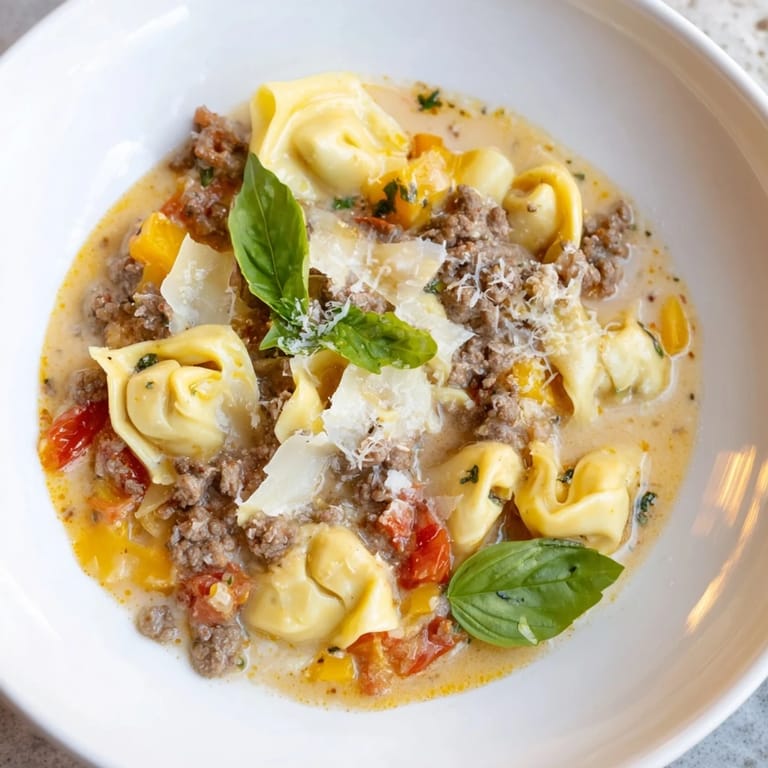
Save There's something about the way a kitchen fills with the smell of browning beef and garlic that makes you forget you're cooking on a Tuesday night instead of planning some elaborate meal. I discovered this tortellini soup almost by accident, actually, when I was staring at a package of cheese tortellini in my freezer and a can of diced tomatoes on the shelf, wondering what could bridge them. Twenty minutes later, I had a bowl that tasted like someone had been simmering it for hours, creamy and rich and impossibly comforting.
I made this for my sister on a cold Saturday when she was dealing with one of those weeks where everything felt off. She showed up tired, and by the time she finished her second bowl, she was laughing and asking for the recipe. That's when I knew it wasn't just soup—it was one of those dishes that quietly takes care of people.
Ingredients
- Ground beef: One pound of lean ground beef creates a hearty base without leaving a greasy film on top; brown it until it's just cooked through, not gray and overworked.
- Yellow onion: Medium dice, not too fine, so each piece stays distinct and adds texture rather than disappearing into mush.
- Garlic: Two cloves minced fine is the sweet spot where you taste it without it becoming harsh or overwhelming.
- Diced tomatoes: Use the canned variety with juices because that liquid adds depth and saves you from reaching for extra broth.
- Baby spinach: Optional, but it adds a mineral quality and makes you feel virtuous without actually changing the flavor profile.
- Beef broth: Low-sodium is essential here because you'll be reducing and concentrating flavors, and salt becomes aggressive if you're not careful.
- Heavy cream: Don't skip it or substitute it lightly; the cream is what transforms this from vegetable soup into something that feels special enough for guests.
- Tomato paste: Two tablespoons concentrated means serious tomato flavor without needing to add more liquid.
- Cheese tortellini: Fresh or refrigerated works better than dried because the cooking time is shorter and the pasta stays tender instead of developing a tough exterior.
- Dried basil and oregano: Together they create that unmistakable Italian-American comfort note that makes everything feel intentional.
- Salt and pepper: Taste as you go and adjust at the end; soup is forgiving but only if you don't season blind.
- Red pepper flakes: Optional but recommended because one small pinch wakes up the whole dish without making it spicy.
- Parmesan cheese: Freshly grated matters here because it melts slightly and becomes creamy rather than sitting in hard clumps.
- Fresh basil: A small pile torn by hand right before serving adds brightness and a reminder that this came from someone's kitchen, not a factory.
Tired of Takeout? 🥡
Get 10 meals you can make faster than delivery arrives. Seriously.
One email. No spam. Unsubscribe anytime.
Instructions
- Brown the beef:
- Heat your pot over medium and add the ground beef, breaking it apart with a wooden spoon as it hits the pan. You'll hear it sizzle and gradually turn from pink to brown; this is the sound of flavor developing. If there's a puddle of fat at the bottom when you're done, pour most of it off, but leave a little behind because that's where the taste lives.
- Build your base:
- Toss in the diced onion and let it soften for a few minutes until the pieces turn translucent and start to smell sweet. Add the garlic and stir constantly for about 60 seconds so it perfumes the oil without burning.
- Add the tomato element:
- Stir in the tomato paste first and let it cook for a minute, coating everything in deep red. Then add the canned tomatoes with their juice, the dried herbs, salt, pepper, and red pepper flakes if you're using them, stirring to combine.
- Simmer and blend:
- Pour in your beef broth and bring the whole thing to a gentle boil, then lower the heat and let it bubble softly for about 10 minutes. This isn't rushing; it's giving the flavors time to know each other and meld into something greater than their individual parts.
- Introduce the cream:
- Stir in the heavy cream slowly, watching the soup transform from russet to pale and luxurious. Bring it back to a gentle simmer; you want tiny bubbles, not a rolling boil, or the cream can break.
- Add the tortellini:
- Slide in your cheese tortellini and cook for the time listed on the package, usually 4 to 6 minutes. You'll see them float up to the surface when they're nearly done, and that's your signal to check if they're tender.
- Finish with greens:
- If you've chosen to use spinach, stir it in now and wait just long enough for it to wilt into the broth, which takes maybe a minute.
- Taste and adjust:
- Before you serve, take a spoonful and really taste it. Does it need more salt? A grind of pepper? This is your moment to make it exactly right.
 Save
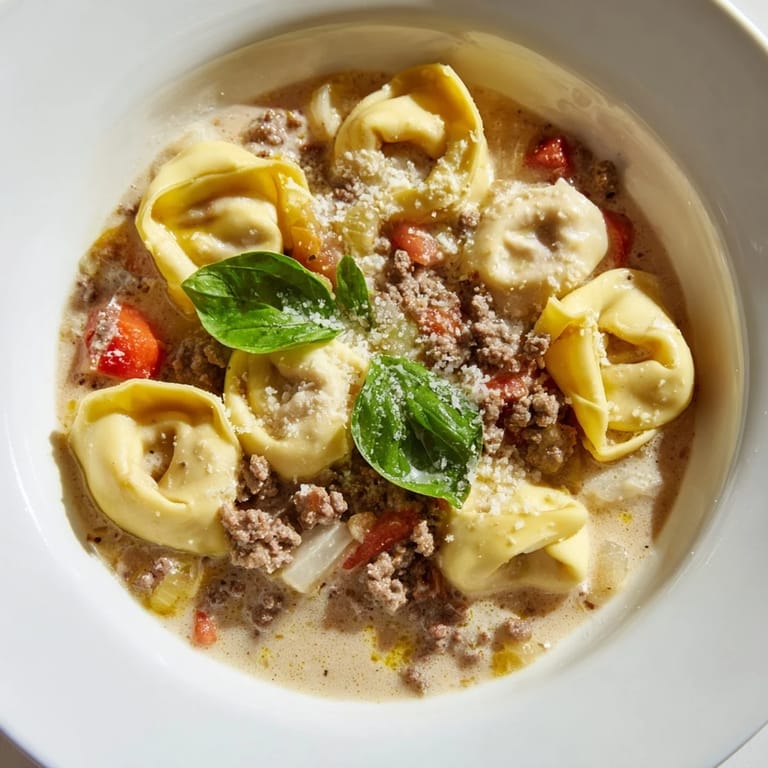
Save There's a moment in cooking when you're just standing there with a spoon in your hand, watching steam rise from a pot, and you know you've made something right. For me, that moment happens every time I make this soup, usually around the point where the cream swirls into the tomato broth and creates that marble effect. It's simple, but it feels like magic.
Why This Soup Tastes Like Home
Growing up, my family's version of comfort food was always soup. It didn't have to be fancy or require hours of tending; it just needed to taste like someone cared enough to layer flavors and stir slowly. This tortellini soup captures that feeling without demanding any special skills or rare ingredients. The combination of beef, cream, and tomato is Italian at its heart, but the execution is so straightforward that it feels like your own invention the moment you make it. I think that's why people keep coming back to it.
The Flexibility Factor
One of the best things about this recipe is how willing it is to accommodate what you have on hand or what you're craving. The spinach is optional because sometimes you want pure richness, and other times you want a whisper of something green. You can add diced zucchini or shredded carrots if you want more vegetables, and the soup will welcome them without complaint. Even the red pepper flakes are an invitation rather than a mandate; you include them if you want a subtle kick, skip them if you prefer gentle heat. This flexibility is what makes a recipe feel less like a rule and more like a conversation.
Serving and Pairing
The best way to serve this soup is in warmed bowls because cold ceramic will steal the heat faster than you'd expect, and there's something about lifting a spoon to your mouth and feeling the steam that makes soup taste better. A slice of crusty Italian bread is practically mandatory, something you can use to wipe the sides of the bowl and not feel guilty about it. If you're pairing it with a drink, Chianti works beautifully, but honestly, a glass of cold white wine or even just water does the job.
- Let the soup cool slightly before serving if anyone in your household is sensitive to heat.
- You can make a full batch and freeze half in individual containers for those nights when you need dinner in 10 minutes.
- Fresh basil scattered on top isn't just garnish; it's the final note that says this came from someone who was paying attention.
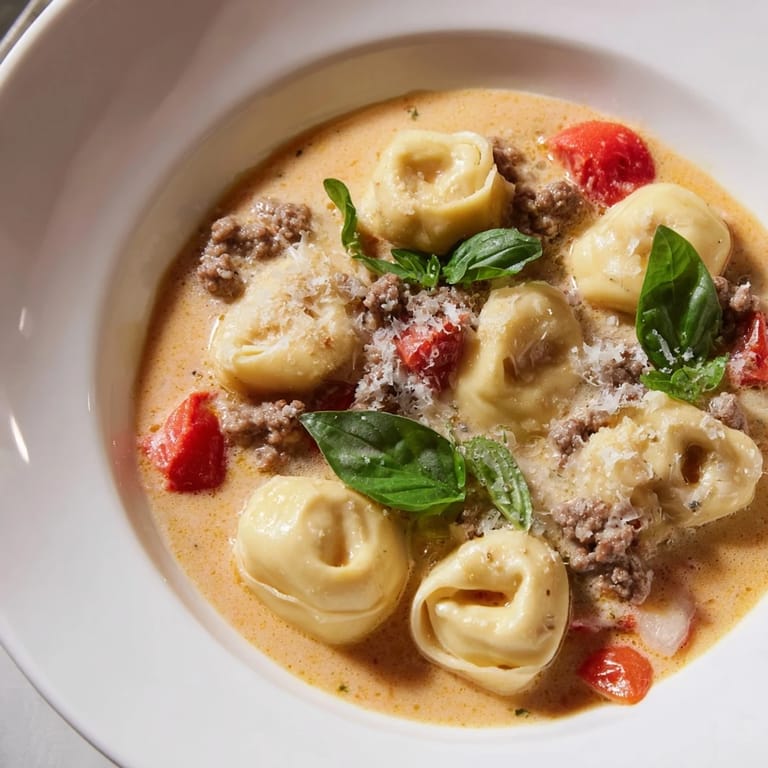 Save
Save This soup has become my go-to when I want to cook something that feels substantial but doesn't demand your entire evening. It's the kind of meal that sits warm in your stomach and reminds you why you love cooking in the first place.
Recipe Q&A
- → Can I substitute the heavy cream for a lighter option?
Yes, half-and-half can be used instead of heavy cream to lighten the broth while maintaining a creamy texture.
- → How do I prevent tortellini from overcooking in the soup?
Add tortellini towards the end of cooking and simmer just until they float and become tender, usually 4–6 minutes.
- → Can I add extra vegetables to this dish?
Absolutely. Vegetables like zucchini or carrots can be added for more texture and nutrition.
- → What herbs complement the flavors in this broth?
Dried basil and oregano are used for warmth and aroma, while fresh basil leaves garnish for a bright finish.
- → Is it necessary to drain the beef fat before simmering?
Draining excess fat after browning the beef helps keep the broth from becoming greasy and preserves the soup’s balance.