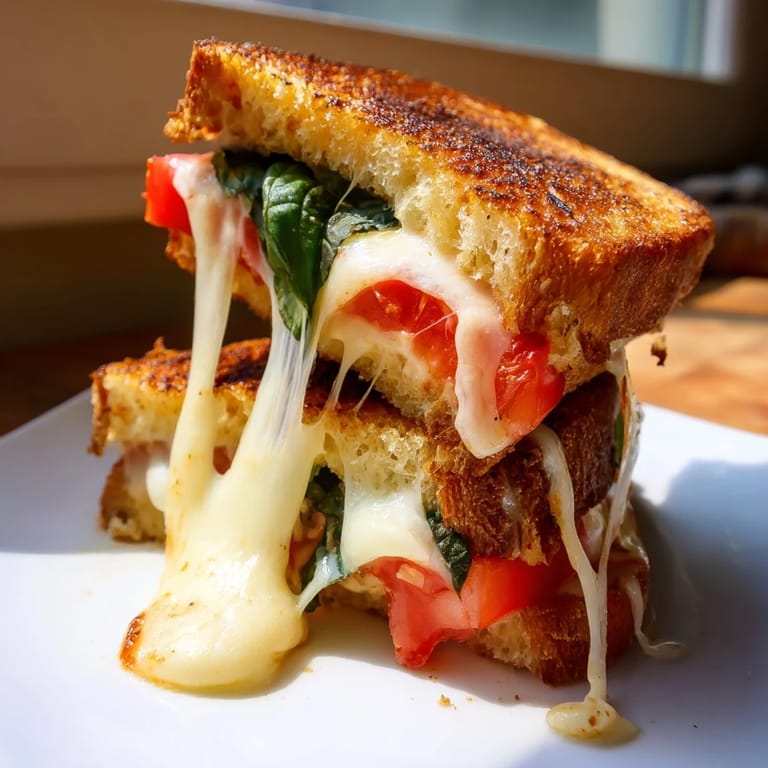
 Save
Save There was a Tuesday afternoon when I had nothing but some bread going stale and a tomato that needed using. I tossed in basil from the windowsill and mozzarella I'd bought for pizza that never happened. What came out of that pan wasn't just lunch, it was proof that comfort doesn't need a plan. Sometimes the best meals come from what's already there, waiting to be noticed.
I made this for my neighbor once when she came over frazzled from a long day. She sat at my kitchen counter, and I didn't say much, just buttered bread and heated the pan. When I handed her the plate, she took one bite and her shoulders dropped. She said it tasted like someone cared, which might be the best compliment food can get.
Ingredients
- Rustic or sourdough bread: The structure matters here because it holds up to moisture from the tomato without turning soggy, and it crisps beautifully with butter.
- Unsalted butter, softened: Softened butter spreads evenly without tearing the bread, and using unsalted lets you control the seasoning since cheese can be salty.
- Fresh mozzarella, sliced: Fresh mozzarella melts into creamy pockets instead of forming a rubbery layer like pre-shredded cheese, and it has a mild flavor that doesn't overpower the basil.
- Ripe tomato, sliced: A ripe tomato brings sweetness and acidity that cuts through the richness of cheese, but make sure it's not too juicy or it'll make the bread wet.
- Fresh basil leaves: Fresh basil adds a peppery, aromatic note that dried basil simply can't replicate, and it perfumes the whole sandwich as it warms.
- Salt and black pepper: Just a pinch of each wakes up the tomato and balances the creamy elements without taking over.
Tired of Takeout? 🥡
Get 10 meals you can make faster than delivery arrives. Seriously.
One email. No spam. Unsubscribe anytime.
Instructions
- Prep the Bread:
- Lay out all four slices and spread softened butter on one side of each, going all the way to the edges so every bite gets that golden crust. This step sets up the texture you're aiming for.
- Assemble the Layers:
- Place two slices buttered side down, then layer mozzarella, tomato, and basil on top, seasoning lightly with salt and pepper. Top with the remaining bread slices, buttered side up, pressing gently so everything holds together.
- Heat the Pan:
- Set a non-stick skillet or griddle over medium heat and let it warm for about a minute. Too hot and the bread burns before the cheese melts, too low and it turns pale and sad.
- Cook the Sandwiches:
- Place the sandwiches in the pan and cook for 3 to 4 minutes per side, pressing gently with a spatula to help the cheese melt and the bread crisp evenly. You'll know it's ready when the bread is deep golden and the cheese starts peeking out the sides.
- Rest and Serve:
- Remove from heat and let the sandwiches sit for a minute before slicing so the cheese sets just enough to not slide out. Slice diagonally because it looks better and tastes better, somehow.
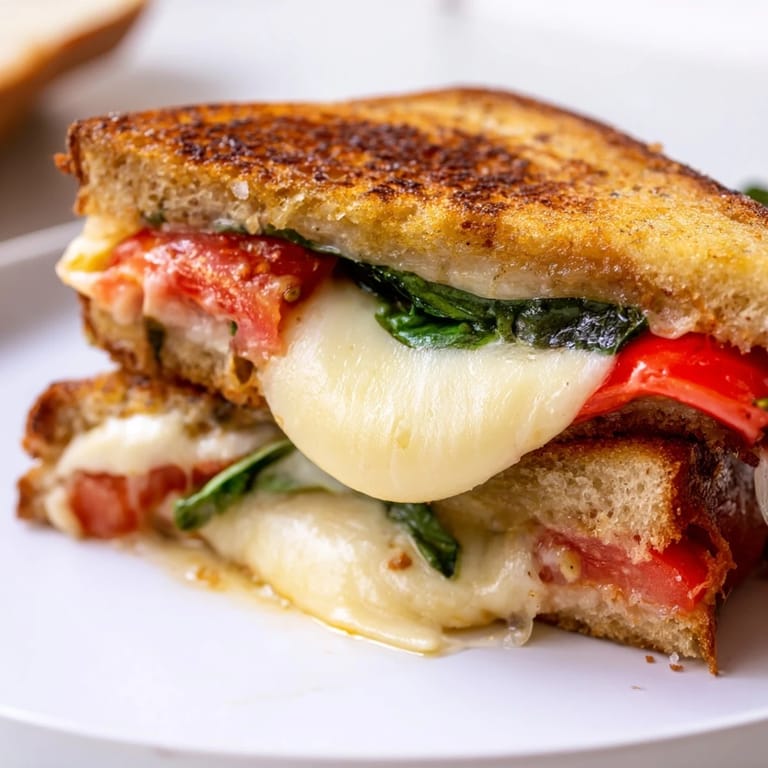 Save
Save One evening I made a small batch for myself and ate it standing by the stove, still warm from the pan. No plate, no planning, just me and that first bite where the cheese stretched and the basil released its smell. It wasn't fancy, but it felt like taking care of myself in the simplest, most immediate way.
Choosing Your Bread
I used to grab whatever was on sale until I realized the bread is half the experience. Sourdough brings tang, rustic loaves add chew, and even a good Italian bread works if it has structure. Avoid anything too soft or pre-sliced sandwich bread because it won't crisp, it'll just compress. The right bread holds everything together and becomes part of the flavor, not just a vehicle.
Getting the Cheese Right
Fresh mozzarella melts differently than the low-moisture kind, turning creamy instead of stretchy. If you can only find the pre-shredded stuff, it'll still work, but add a tiny splash of cream or a extra butter to help it along. I once tried it with burrata and it was almost too rich, so mozzarella really is the sweet spot here.
Serving and Pairing Ideas
This sandwich doesn't need much, but it loves being dipped into tomato soup or served with a handful of greasy chips on the side. A drizzle of balsamic glaze right before serving adds a sweet-tart finish that makes it feel a little more special. Sometimes I'll add a smear of pesto on the inside or a few red pepper flakes if I want a kick.
- Serve it with a simple green salad dressed in lemon and olive oil to cut the richness.
- Pair it with a cold glass of iced tea or lemonade on a warm day.
- Wrap half in foil and pack it for lunch, it reheats surprisingly well in a toaster oven.
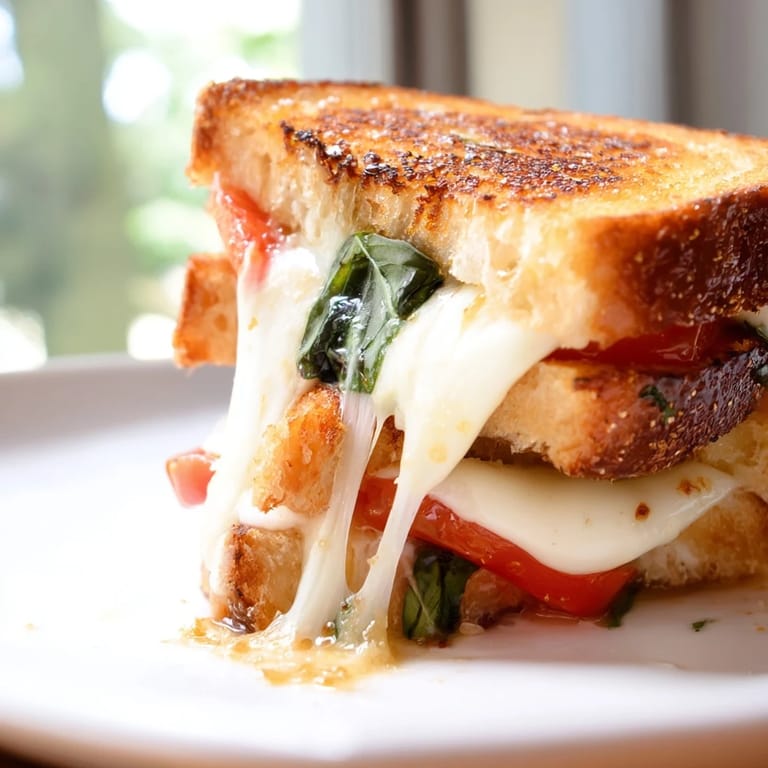 Save
Save This sandwich has pulled me out of more uninspired lunch moments than I can count. Keep the ingredients around, and you'll always have something warm and satisfying within reach.
Recipe Q&A
- → What type of tomato works best?
Use a large, ripe tomato that's firm but yields slightly to pressure. Heirloom varieties offer excellent flavor. Slice it about 1/4-inch thick and pat dry with paper towels to prevent sogginess in the sandwich.
- → Can I prepare this ahead of time?
Assemble the sandwiches up to 2 hours before cooking and wrap in parchment. Store at room temperature. Butter and cook just before serving for the best texture and melted cheese.
- → Why is my cheese not melting?
Ensure your skillet is at medium heat and give it adequate time to preheat. Cover the skillet with a lid during cooking to trap heat and help the cheese melt faster while the bread toasts.
- → What bread is ideal for this?
Rustic sourdough, ciabatta, or hearty whole wheat breads hold up best. Avoid thin sandwich bread, which tears easily. Thicker slices (about 1/2-inch) provide better structure and texture.
- → How do I get a crispy exterior?
Use softened butter and spread it generously and evenly on both outer surfaces. Press gently with a spatula during cooking to ensure even contact with the skillet. Cook at medium heat for golden-brown results.
- → Can I substitute the mozzarella?
Yes, provolone, cheddar, or fontina all work wonderfully. Each brings different flavor profiles. Avoid pre-sliced cheeses when possible, as fresh-sliced varieties melt more smoothly and creamily.