 Save
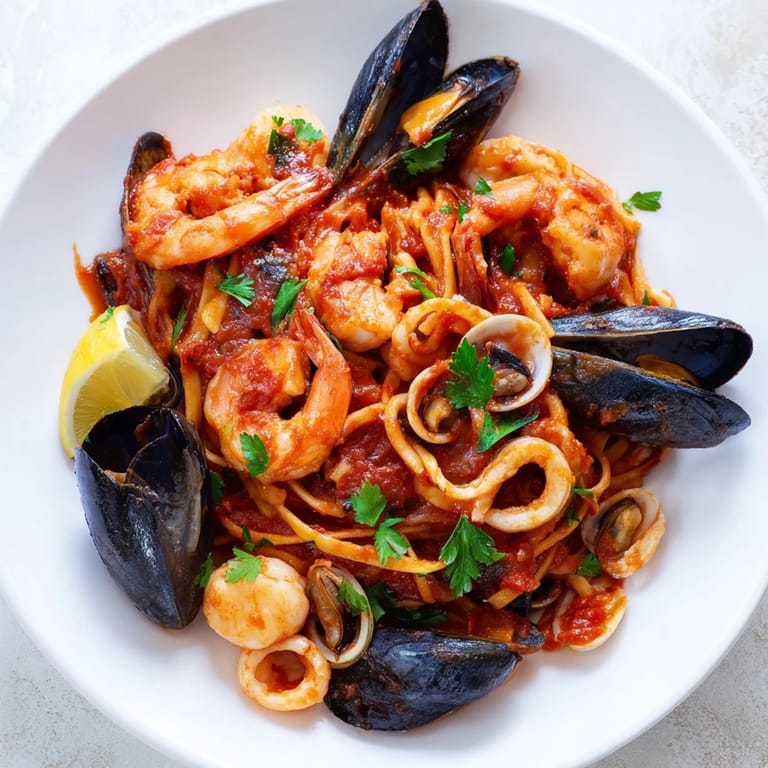
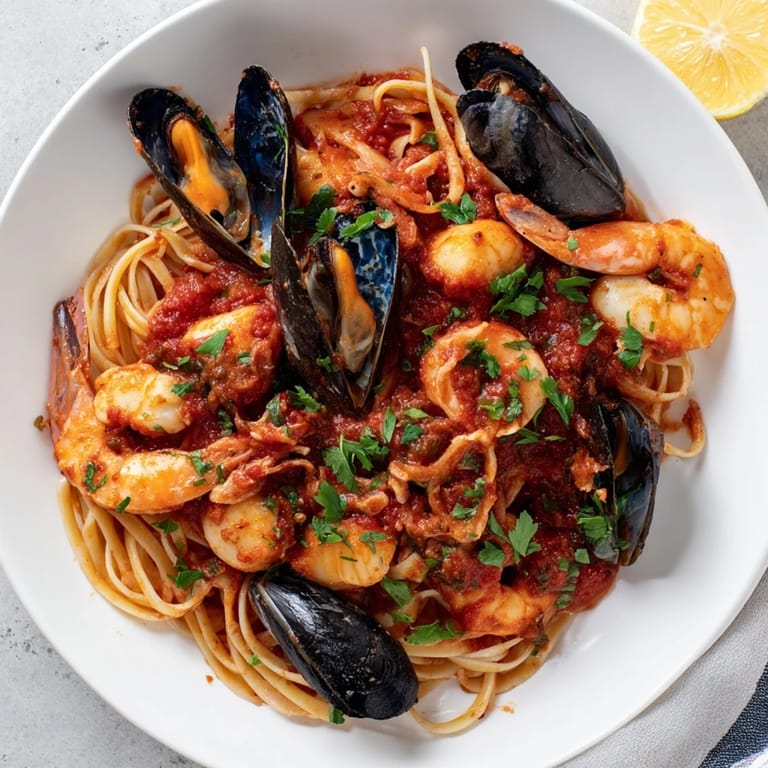
Save There's a particular magic that happens when you're cooking seafood on a weeknight and the kitchen fills with that briny, garlicky steam. I found myself making this marinara pasta almost by accident one evening, pulling what I had from the freezer and the pantry, and somehow it became the dish I'd make again and again. The sauce came together faster than I expected, and before I knew it, I was tossing tender squid and pink shrimp into a bubbling tomato base that smelled like the best Italian seaside trattoria.
I remember cooking this for my sister when she visited in the spring, and she kept sneaking spoonfuls of sauce while I wasn't looking. By the time we sat down to eat, she'd already decided it was her new favorite dish. That meal turned into one of those kitchen moments where the food mattered less than the conversation, though the food was absolutely perfect.
Ingredients
- Large shrimp: The sweetness of fresh shrimp is what anchors this dish, and peeling them yourself makes a noticeable difference in flavor.
- Mussels: They add a subtle briny depth that makes the sauce taste like the sea itself, and they're one of the first signs that your timing is right.
- Squid rings: These stay incredibly tender when you cook them briefly, creating a delicate texture that contrasts beautifully with the sauce.
- Sea scallops: Their mild sweetness balances the acidity of the tomatoes, and they cook so quickly you'll wonder why you don't use them more often.
- Spaghetti or linguine: The thinner strands catch more sauce than thicker pasta, so choose based on how much sauce-per-bite you're craving.
- Olive oil: Use good quality oil here, since you'll taste it in the soffritto and throughout the dish.
- Onion and garlic: These are your flavor foundation, and cooking them slowly releases their sweetness before the tomatoes go in.
- Red pepper flakes: A gentle heat that builds quietly, adding complexity without overwhelming the seafood.
- Crushed tomatoes: The backbone of everything, and canned is perfectly fine when you're starting with good tomatoes.
- Tomato paste: This deepens the umami and makes the sauce taste like it simmered for hours.
- Dry white wine: It cuts through the richness and adds a subtle acidity that brightens the whole dish.
- Oregano and basil: Dried herbs work beautifully here, and they bloom when they hit the warm sauce.
- Sugar: Just a pinch to balance the acidity of the tomatoes, nothing more.
- Fresh parsley and lemon: These final touches add freshness and brightness that you absolutely cannot skip.
Tired of Takeout? 🥡
Get 10 meals you can make faster than delivery arrives. Seriously.
One email. No spam. Unsubscribe anytime.
Instructions
- Start your pasta:
- Get a large pot of generously salted water boiling while you prep everything else. The salt here matters because it seasons the pasta from the inside out, so don't be shy with it.
- Build your base:
- Heat olive oil in your deep skillet over medium heat, then let your onion soften until it's almost translucent and starting to turn golden at the edges. Add your minced garlic and red pepper flakes, and let them warm for just about a minute until the smell is unmistakable.
- Deglaze with wine:
- Pour in your white wine and watch it sizzle and reduce by about half, which takes just a couple of minutes. This step mellows the raw wine flavor and adds a subtle complexity to your sauce.
- Build the sauce:
- Stir in your crushed tomatoes, tomato paste, oregano, basil, sugar, salt, and pepper, then let it simmer gently, uncovered, for about 10 minutes. You want it to bubble softly at the edges while you stir it occasionally, allowing the flavors to meld and the sauce to thicken slightly.
- Add your seafood carefully:
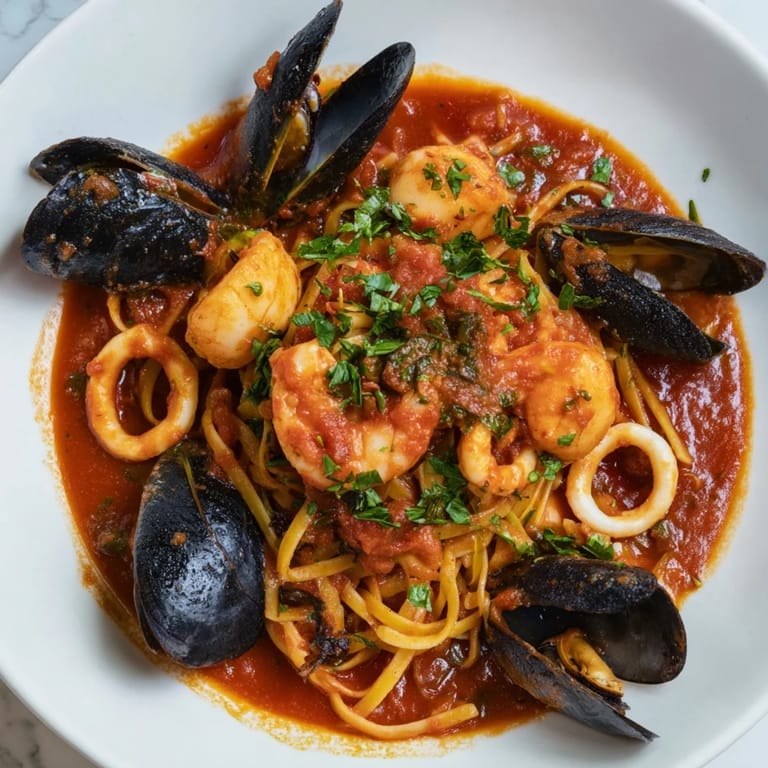
- Start with the squid and scallops because they need a two-minute head start, then add your shrimp and mussels, cover the skillet, and cook until the shrimp turn pink and the mussels crack open. This usually takes three to four minutes, and the cover traps just enough steam to cook everything through without overdoing it.
- Marry pasta and sauce:
- Drain your pasta but save that starchy water, then gently toss the hot pasta into the seafood sauce. If everything feels a bit tight, splash in a little pasta water until you have a silky consistency that coats every strand.
- Taste and serve:
- Give it a final taste, adjust your salt and pepper if needed, and serve immediately while everything is still steaming hot. Garnish with fresh parsley and a squeeze of bright lemon juice.
 Save
Save The first time I really understood this dish was when I served it to someone who claimed they didn't like seafood, and watched their expression change completely with the first bite. Food has this quiet way of teaching us things about ourselves and others.
Timing Is Everything
The actual cooking happens in layers, and understanding that makes all the difference. Your sauce starts building before any seafood touches the pan, which means the flavors are already deeply developed by the time you add proteins that cook in minutes. I used to rush everything, thinking simultaneous meant better, but I learned that patience in the foundational steps means less time needed for the seafood. The pasta cooking alongside everything else means you're not waiting for one component while another goes cold.
Choosing Your Seafood
The specific seafood matters less than the quality and your comfort with cooking it. I've made this with clams instead of mussels, with firm white fish chunks instead of squid, and even with a combination of whatever looked good at the market that day. The key is understanding the cooking times so nothing becomes rubbery or overcooked. Trust your senses too—if something smells off when you buy it, skip it and choose something else that morning.
Making It Your Own
This dish is flexible enough to bend to what you have on hand, which is exactly why I keep making it. Some evenings I add a pinch more red pepper flakes if I'm feeling bold, other times I stir in a handful of fresh spinach at the very end for color and nutrition. A splash of seafood stock instead of water when you need to loosen the sauce elevates everything, but honestly, the basic formula is pretty forgiving.
- If you can't find fresh mussels, clams are a perfect swap with the same cooking time.
- Save that pasta water like it's liquid gold because it's the secret to a silky, cohesive sauce.
- Serve this with crusty bread to soak up every last drop of sauce, which is the best part anyway.
 Save
Save This pasta reminds me why I love cooking at home, where you can make something that tastes like a restaurant meal but means infinitely more because it came from your own hands. It's the kind of dish that brings people to the table and keeps them there talking long after the plates are empty.
Recipe Q&A
- → How do I ensure the seafood cooks perfectly?
Add the seafood in stages, starting with the firmer squid and scallops, followed by shrimp and mussels. Cook until shrimp turn pink and mussels open, discarding any unopened ones.
- → Can I substitute different seafood in this dish?
Yes, firm white fish or clams may be used as substitutes for the shellfish while maintaining the dish's flavor profile.
- → What pasta works best with the sauce?
Spaghetti or linguine are ideal, as their shape and texture hold the sauce well, creating a balanced bite.
- → How can I adjust the sauce consistency?
Reserve some pasta water to loosen the sauce when tossing with pasta for a perfect consistency.
- → What wine pairs well with this dish?
A crisp Italian white wine like Pinot Grigio complements the seafood and tomato elements beautifully.