 Save
Save The kitchen was a mess of cutting boards and rainbow vegetable scraps when my neighbor knocked with an armload of squash from her garden. I hadn't planned dinner, but those bright yellow crescents practically begged to be roasted. I tossed them with whatever else looked good at the market that morning, boiled some pasta, and suddenly had a dish that tasted like summer itself. That impromptu evening taught me that the best meals don't need a plan, just good ingredients and a hot oven.
I started making this every Sunday when my sister went vegetarian and stopped joining us for regular dinners. She'd come over, peek into the oven at the caramelizing vegetables, and suddenly we were talking again over bowls of pasta. It became our standing date, and now she brings the wine and I handle the chopping. Funny how a simple dish can rebuild a routine you didn't know you missed.
Ingredients
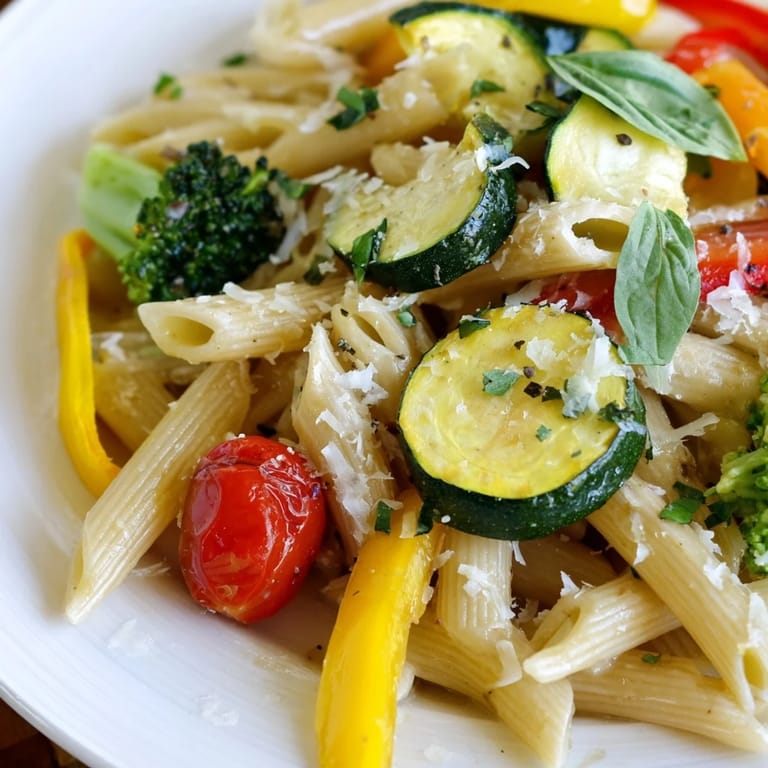
- Penne or fusilli pasta (340 g): The ridges and tubes catch all the olive oil and little bits of roasted garlic, making every bite flavorful instead of letting the sauce pool at the bottom of the bowl.
- Zucchini and yellow squash (1 medium each): Slice them into half moons about a quarter inch thick so they roast evenly without turning mushy or staying raw in the center.
- Red and yellow bell peppers (1 each): The red ones add a hint of sweetness while the yellow ones stay a little grassy and bright, and together they make the dish look like a painting.
- Red onion (1 small): Roasting mellows its sharpness into something almost jammy, and the purple edges char beautifully for a touch of bitterness that balances everything.
- Cherry tomatoes (150 g): They burst in the oven and release their juices, creating little pockets of concentrated tomato flavor that cling to the pasta.
- Broccoli florets (120 g): The tiny florets get crispy tips that taste almost nutty, adding texture contrast against the softer squash and peppers.
- Extra virgin olive oil (3 tbsp, divided): Use the good stuff here since it doesn't get cooked down much, and you'll actually taste the fruitiness in every bite.
- Garlic (3 cloves, minced): Sauté it just until it smells like heaven but before it turns brown and bitter, which happens faster than you think.
- Dried Italian herbs (1 tsp): A mix of oregano, basil, and thyme works like a shortcut to that rustic Italian flavor without hunting down fresh herbs.
- Salt and black pepper (½ tsp and ¼ tsp): Season the vegetables before roasting so the salt draws out moisture and helps them caramelize instead of steam.
- Red pepper flakes (pinch, optional): Just a tiny pinch adds warmth without making it spicy, but skip it entirely if you're feeding cautious eaters.
- Parmesan cheese (50 g, freshly grated): Grate it yourself from a block because the pre shredded kind has coatings that prevent it from melting smoothly into the pasta.
- Fresh basil or parsley (2 tbsp, chopped): Toss this in at the very end so the heat wilts it just enough to release its fragrance without cooking it dead.
- Lemon wedges (optional): A squeeze right before serving wakes up all the flavors and cuts through the richness of the olive oil and cheese.
Tired of Takeout? 🥡
Get 10 meals you can make faster than delivery arrives. Seriously.
One email. No spam. Unsubscribe anytime.
Instructions
- Get the oven ready:
- Preheat your oven to 220°C (425°F) and line a large baking sheet with parchment paper so the vegetables don't stick and cleanup stays easy. This high heat is what gives you those caramelized edges.
- Prep and season the vegetables:
- Arrange the zucchini, yellow squash, bell peppers, red onion, cherry tomatoes, and broccoli in a single layer on the sheet, drizzle with 2 tablespoons of olive oil, then sprinkle with Italian herbs, salt, and pepper. Toss everything with your hands to coat evenly, making sure no piece is naked or the seasoning will be patchy.
- Roast until golden:
- Slide the sheet into the oven and roast for 18 to 20 minutes, giving it a stir halfway through so all sides get some color. You want the edges lightly browned and the vegetables tender but not collapsing into mush.
- Boil the pasta:
- While the vegetables roast, bring a large pot of salted water (it should taste like the sea) to a rolling boil and cook the pasta until al dente according to the package directions. Before draining, scoop out half a cup of that starchy pasta water because it's liquid gold for bringing everything together later.
- Sauté the garlic:
- In a large skillet over medium heat, warm the remaining tablespoon of olive oil and add the minced garlic, stirring constantly for about 30 seconds until it smells incredible. Pull the pan off the heat the moment it turns golden so it doesn't burn and turn bitter.
- Toss everything together:
- Add the roasted vegetables and drained pasta to the skillet with the garlic, then toss gently with tongs or a wooden spoon, adding splashes of reserved pasta water as needed to create a light sauce that coats everything. The starch in the water helps the oil cling instead of sliding off.
- Finish and season:
- Remove the skillet from the heat, stir in half the grated Parmesan and the chopped fresh basil or parsley, then taste and add more salt or pepper if it needs it. Trust your tongue here because every batch of vegetables has different levels of sweetness and salt.
- Serve it hot:
- Divide the pasta among four bowls, top each with the remaining Parmesan and a few extra herb leaves, and offer lemon wedges on the side for anyone who wants that bright citrus kick. Eat it immediately while the cheese is still melting and the vegetables are warm.
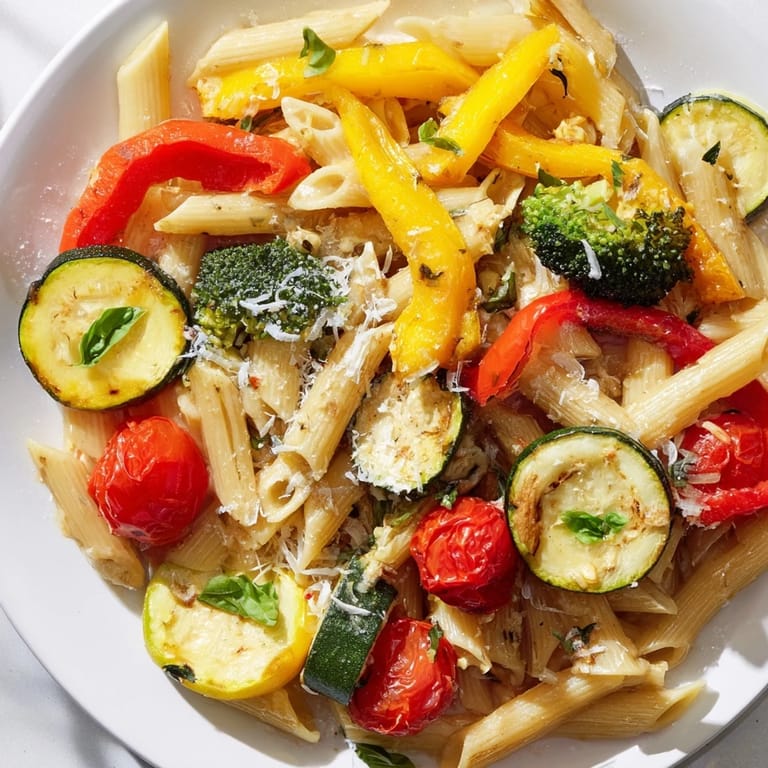 Save
Save One spring evening I made this for a friend who swore she hated vegetables, and she scraped her bowl clean without realizing she'd just eaten an entire garden. She looked up, surprised at herself, and admitted that maybe vegetables weren't the problem, just the way she'd been cooking them. We laughed, poured more wine, and she asked for the recipe on a napkin before she left.
How to Pick Your Vegetables
I learned to choose vegetables by feel and smell rather than just looks. Zucchini and squash should be firm with no soft spots, because those bruises turn to mush in the oven. Bell peppers should feel heavy for their size and have tight, glossy skin without wrinkles. Cherry tomatoes are best when they smell faintly sweet at the stem end, and broccoli crowns should be tight and deep green, not yellowing or flowering.
Timing the Pasta and Vegetables
The trick is starting the pasta water when the vegetables go into the oven, so everything finishes around the same time. If your pasta cooks faster than expected, drain it and toss it with a tiny drizzle of olive oil so it doesn't glue itself into a brick while you wait. I've had to reheat stuck together noodles more than once, and it's never as good as getting the timing right from the start.
Making It Your Own
This recipe is more of a template than a strict rulebook, and I've made it a hundred different ways depending on what's in season or what's about to go bad in the fridge. In the fall, I swap in cubed butternut squash and add a handful of spinach at the end. Spring means asparagus tips and snap peas, and winter is the time for roasted mushrooms and kale.
- Add cooked chicken, shrimp, or chickpeas if you want more protein and a heartier meal.
- Try whole wheat or gluten free pasta if that's what you keep in the pantry, just adjust the cooking time as needed.
- A splash of white wine or vegetable broth in the skillet adds another layer of flavor if you're feeling fancy.
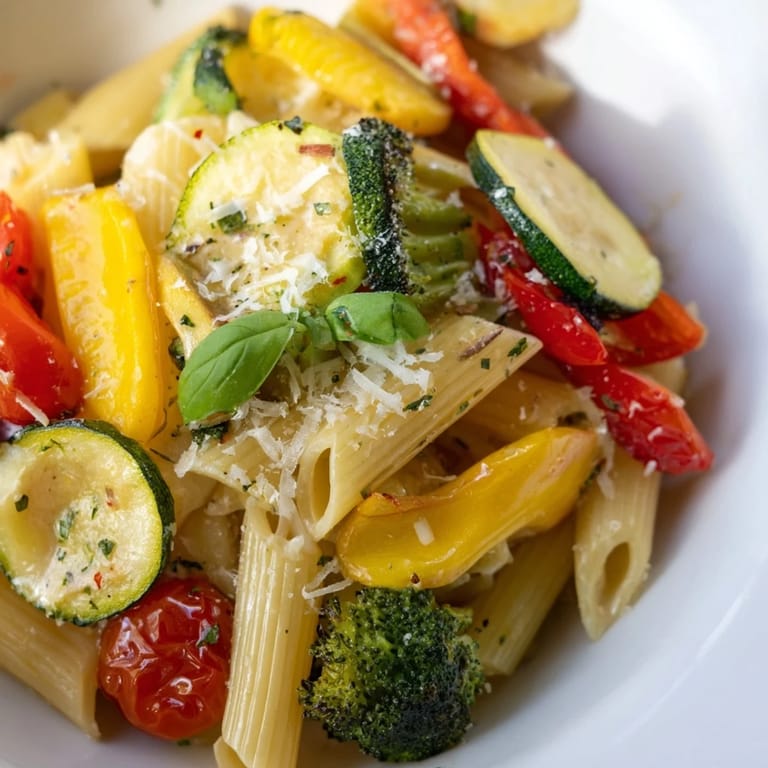 Save
Save This dish has become my answer to almost every occasion, whether it's a Tuesday night alone or a table full of friends who showed up hungry. It never pretends to be more than it is, just honest vegetables and pasta that taste like someone cared enough to cook them right.
Recipe Q&A
- → Can I prepare pasta primavera ahead of time?
Yes, you can roast the vegetables up to 2 days ahead and store them in an airtight container. Cook the pasta fresh just before serving, then combine with the cold vegetables and warm through gently. This makes it convenient for meal prep.
- → What vegetables work best for roasting in this dish?
Summer vegetables like zucchini, yellow squash, bell peppers, cherry tomatoes, and broccoli are ideal. You can also use asparagus, snap peas, mushrooms, or eggplant. Choose vegetables with similar cooking times and cut them uniformly so they roast evenly.
- → How do I make this dish dairy-free?
Simply omit the Parmesan cheese or replace it with a dairy-free Parmesan alternative available at most grocery stores. The dish remains flavorful with the roasted vegetables and garlic-infused olive oil as the main seasoning components.
- → Can I add protein to this vegetarian dish?
Absolutely. Sauté diced chicken breast, shrimp, or canned chickpeas separately and toss with the pasta in the final step. These proteins complement the vegetables beautifully without overpowering the fresh, light character of the dish.
- → Why is reserving pasta water important?
Pasta cooking water contains starch that acts as a natural emulsifier, helping the olive oil coat the pasta and vegetables evenly while creating a silky sauce. It also helps loosen the dish if it becomes too dry during assembly.
- → What pasta shapes work best for this dish?
Penne and fusilli are excellent choices because their ridged surfaces and spiral shapes trap the vegetables and sauce beautifully. You can also use farfalle, rigatoni, or any medium-sized pasta that won't get lost among the roasted vegetables.