 Save
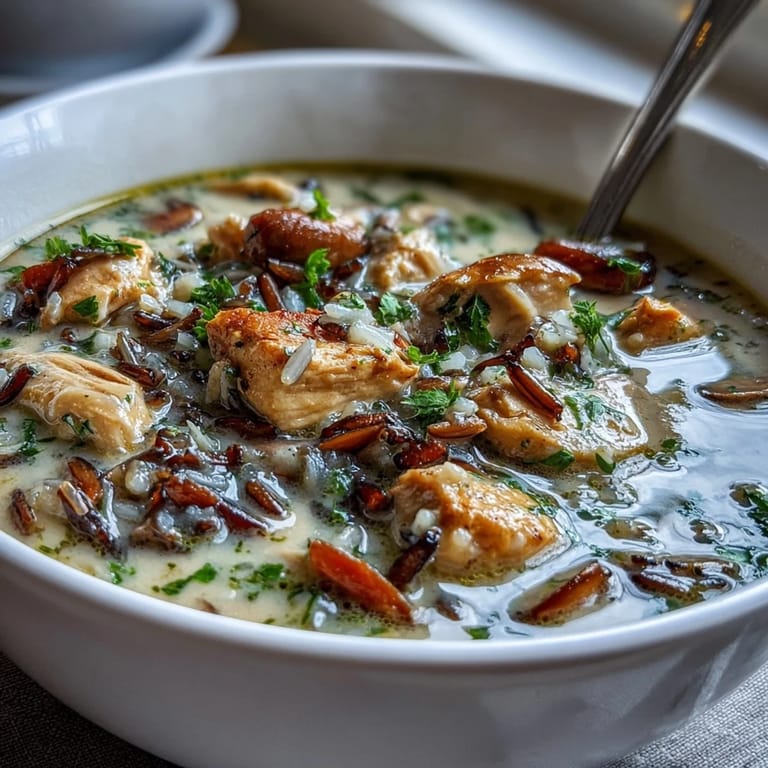
Save There's something about the first genuinely cold evening of the year that makes me want to fill my kitchen with steam and warmth. A few years back, I was standing in front of my pantry on just such a night, staring at a half-empty box of wild rice and wondering what to do with it, when my neighbor stopped by with a bag of fresh mushrooms from the farmer's market. That chance moment led to this soup, which has since become my go-to answer whenever someone asks what I'm making for dinner on a chilly night.
I made this for my sister during her first week in a new apartment with a broken oven, and watching her face light up when she took the first spoonful made me realize that sometimes the best meals are the simplest ones. She's been asking me for the recipe ever since, and I think it's because the soup tastes like someone actually cared enough to spend time on it.
Ingredients
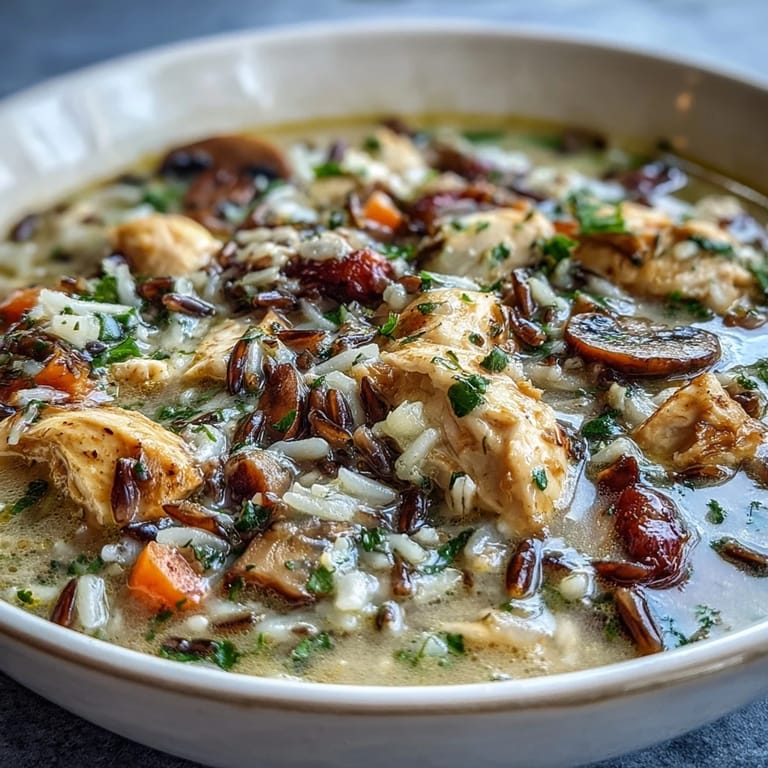
- Boneless, skinless chicken breasts (about 400 g): Dicing them into bite-sized pieces means they cook quickly and distribute evenly throughout the soup—bite for bite, you get chicken in almost every spoonful.
- Cremini or white mushrooms (250 g): These are earthy without being overwhelming, and they release moisture as they cook, which deepens the overall flavor of the broth beautifully.
- Medium onion, carrots, and celery: This trio is the foundation of so many good soups for a reason—they build a savory base that makes everything else taste richer.
- Garlic (3 cloves): Minced fine so it melts into the broth rather than appearing in chunky bites that surprise you midway through eating.
- Wild rice (1 cup, 180 g): Always rinse it first to remove any debris, and don't skip this step no matter how rushed you feel.
- Chicken broth (6 cups): Low sodium is your friend here because you're adding Parmesan at the end, which brings its own saltiness to the party.
- Whole milk or half-and-half (1 cup): This is what makes the soup creamy without feeling heavy—it's poured in near the end so it doesn't break apart during the long simmer.
- Freshly grated Parmesan cheese (1/2 cup plus extra): Freshly grated makes a real difference; pre-shredded varieties contain anti-caking agents that can make the soup look slightly grainy.
- Unsalted butter (3 tbsp): Split between cooking the chicken and sautéing the vegetables, butter adds a silky mouthfeel that oil simply can't match.
- All-purpose flour (2 tbsp): This creates a light thickener once you add the broth, giving the soup body without making it gluey.
- Dried thyme and bay leaf: Thyme brings an almost minty earthiness, while the bay leaf sits quietly in the background, making everything taste more intentional.
- Black pepper and salt: Taste as you go—the final seasoning adjustment before serving makes the difference between good soup and soup that tastes like it knows exactly what it's doing.
- Fresh parsley (optional garnish): A handful of bright green parsley scattered on top wakes up the palate and makes the bowl look like someone actually cared about presentation.
Tired of Takeout? 🥡
Get 10 meals you can make faster than delivery arrives. Seriously.
One email. No spam. Unsubscribe anytime.
Instructions
- Get the chicken going:
- Melt 2 tablespoons of butter in your large pot over medium heat and add the diced chicken. You're looking for a light golden brown on the edges, about 5 to 6 minutes total—the chicken doesn't need to be fully cooked at this stage since it will finish cooking in the broth later. Transfer it to a plate and don't be shy about leaving all those browned bits stuck to the bottom of the pot, because that's flavor you're about to build on.
- Build the aromatic base:
- Add the remaining tablespoon of butter and sauté your onion, carrots, and celery for 4 to 5 minutes until they start to soften and become translucent. This is when you'll notice the kitchen starting to smell intentional and warm. Toss in the mushrooms and garlic and cook for another 4 minutes—the mushrooms will release their moisture and start to brown, which is exactly what you want because that's where the depth comes from.
- Make a light roux:
- Sprinkle the flour over everything and stir for about a minute to cook out the raw flour taste. You're not making a thick paste here—just coating the vegetables lightly so the flour can thicken the broth once the liquid goes in.
- Add the broth carefully:
- Pour in the chicken broth gradually while stirring so no lumps form. Add the wild rice, thyme, bay leaf, black pepper, and a pinch of salt—the rice will absorb liquid as it cooks, so you're generous with broth at this stage.
- The long, gentle simmer:
- Bring everything to a boil, then lower the heat and cover the pot. Let it simmer for 35 to 40 minutes, stirring occasionally so nothing sticks to the bottom. The wild rice will go from chewy to tender, and the broth will develop a richer, more cohesive flavor as everything melds together.
- Bring it all together:
- Return the chicken to the pot along with the milk and Parmesan cheese. Stir gently and let it cook for 3 to 4 minutes until heated through—the cheese will melt and create a subtle creaminess that coats every spoonful. Taste it now and adjust the salt and pepper to your preference.
- Finish and serve:
- Remove the bay leaf, ladle the soup into bowls, and top with extra Parmesan and a scatter of fresh parsley if you have it. Serve it hot with crusty bread on the side.
 Save
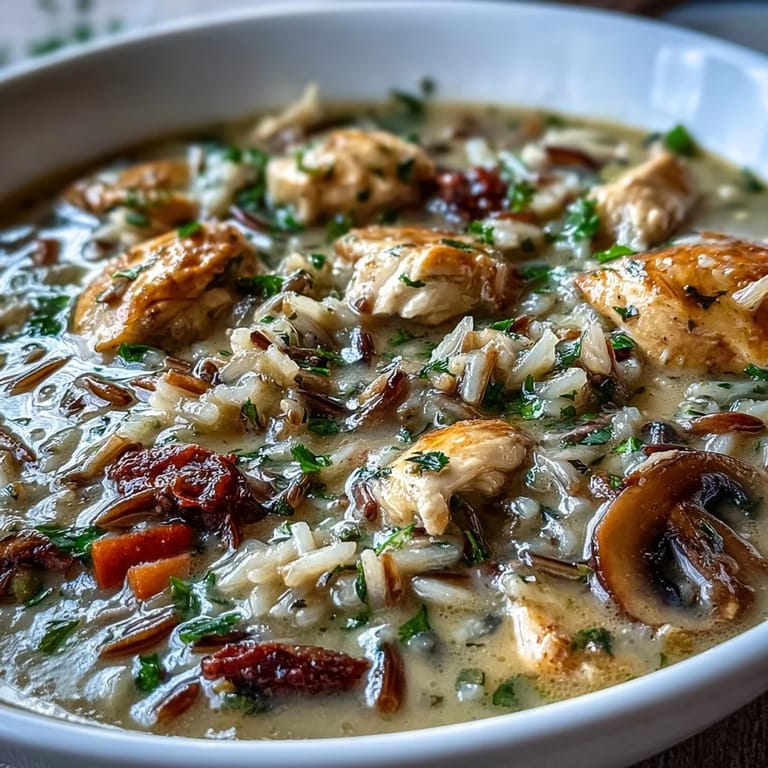
Save My coworker brought this soup to a potluck on the coldest day of winter, and people were asking for the recipe before they'd even finished their first bowl. There's something about a properly made soup that brings people together in a way that fancier dishes sometimes don't.
Why Wild Rice Matters Here
Wild rice isn't just a garnish in this soup—it's the backbone that keeps you coming back for another spoonful. Unlike regular white rice, which can turn mushy and disappear into the broth, wild rice holds its shape and texture even after 40 minutes of simmering. It has this slight nuttiness that plays beautifully against the earthy mushrooms and creamy cheese, and it gives your spoon something to catch on, making each bite feel substantial rather than empty.
The Mushroom Trick I Wish I'd Known Sooner
If you have the time, brown your mushrooms on their own in a separate skillet before adding them to the soup—this concentrates their flavor and gives them a deeper, almost meaty quality that makes the whole soup taste more intentional. I stumbled onto this by accident when I didn't have enough burners and had to cook them separately, and now I do it on purpose every time because the difference is noticeable. It's one of those small moves that separates a good soup from one that makes you pause between spoonfuls and think about what you're tasting.
Making It Your Own
This soup is flexible enough to bend to what you have on hand and what you're in the mood for. Add a handful of fresh spinach or kale in the final minutes if you want something greener, or stir in a splash of white wine after the flour step for a little brightness. Some people swear by a splash of sherry instead of the milk for extra depth, and I won't argue with that—the soup takes suggestions well.
- If you'd rather skip the chicken, vegetable broth and extra mushrooms make a deeply satisfying vegetarian version that nobody will feel like they're missing out on.
- Leftover soup keeps for three days in the fridge and reheats beautifully on the stovetop, though the rice will have absorbed more liquid by day two, so you might want to thin it with a splash of broth.
- This soup pairs unexpectedly well with a simple green salad and crusty bread—it's the kind of meal that feels complete without being heavy.
 Save
Save This is the kind of soup that turns an ordinary evening into something worth remembering, the sort of meal that lingers in people's minds long after the bowl is empty. Make it once, and you'll find yourself making it again and again.
Recipe Q&A
- → Can I make this soup vegetarian?
Yes, simply omit the chicken and substitute vegetable broth for the chicken broth. You may want to add extra vegetables or beans to maintain the protein content.
- → Can I use rotisserie chicken instead of raw chicken breasts?
Absolutely. Use about 2-3 cups of shredded rotisserie chicken and add it during the final 5 minutes of simmering just to heat through. This reduces the active cooking time significantly.
- → How long does this soup keep in the refrigerator?
The soup will keep well in an airtight container for 3-4 days. Note that the rice will continue to absorb liquid, so you may need to add more broth when reheating. The soup also freezes well for up to 3 months.
- → Can I substitute the wild rice?
You can use brown rice, a wild rice blend, or even white rice if that's what you have. Adjust cooking time accordingly—white rice will cook faster (about 15-20 minutes) while brown rice may need slightly longer.
- → How can I make this soup thicker or thinner?
For a thicker consistency, increase the flour to 3 tablespoons or reduce the broth by ½ cup. To make it thinner, simply add more broth or milk until you reach your desired consistency.
- → What wine pairs well with this soup?
A crisp white wine like Sauvignon Blanc, Pinot Grigio, or Chardonnay complements the creamy, savory flavors. For red wine lovers, a light Pinot Noir works well without overpowering the dish.