 Save
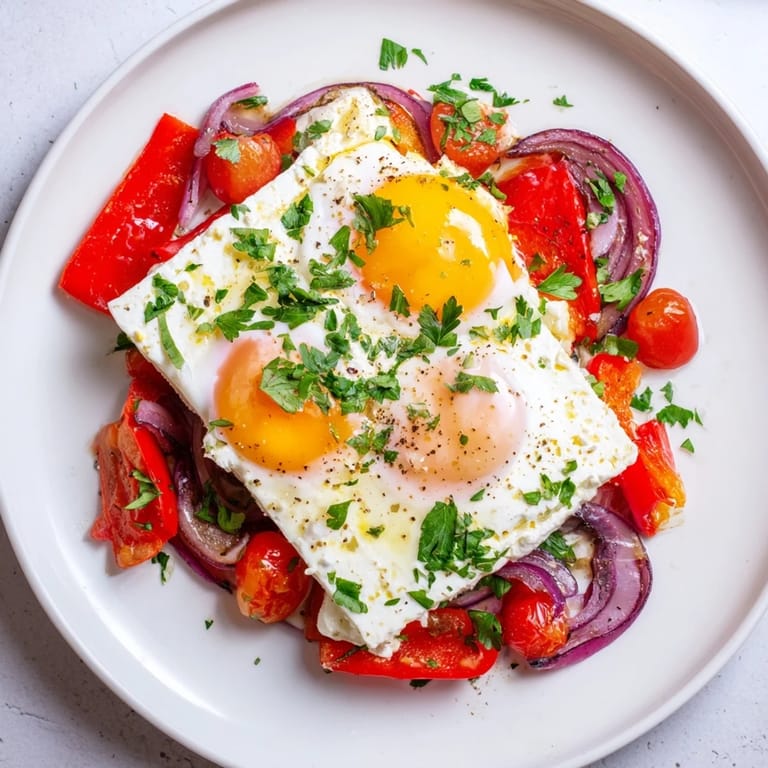
Save There's something about a warm skillet that draws people together, and this baked feta arrived in my life on a lazy Saturday morning when I had four hungry friends and a half-empty fridge. I grabbed what I had—cherry tomatoes still warm from the counter, a block of feta, some eggs—and threw it all into a baking dish with olive oil and whatever dried herbs I could find. Twenty-five minutes later, the kitchen smelled like a Mediterranean coast I'd only read about, and everyone was tearing into it with crusty bread like it was the most natural thing in the world. That's when I realized the simplest dishes often tell the best stories.
I remember my neighbor leaning against my kitchen doorframe, drawn in by the aroma, and asking if she could just watch—then staying to eat three helpings. That moment taught me that food doesn't need to be complicated to feel generous or special. It just needs to smell good and taste better.
Ingredients
- Cherry tomatoes (2 cups, halved): Their natural sweetness balances the salty feta, and halving them helps them release their juices into a quick sauce.
- Red onion (1 small, thinly sliced): Thinly slicing matters here—thicker pieces won't soften enough, and you want that sharp bite to mellow as it bakes.
- Garlic (2 cloves, minced): Mince it fine so it distributes evenly and doesn't overpower the other flavors with raw garlic bites.
- Red bell pepper (1 small, sliced): The color is beautiful, but it also adds sweetness and a gentle crunch that holds up to the heat.
- Feta cheese block (7 oz/200 g): Use a solid block, not crumbles—it'll soften and almost become a sauce as it bakes, creating pockets of creamy goodness.
- Eggs (4 large): Fresh eggs matter because the yolk needs to be glossy and soft when it hits that warm feta.
- Extra virgin olive oil (3 tbsp): Don't skip quality here—it's one of your main flavors, and good olive oil makes a real difference.
- Dried oregano (1 tsp): Mediterranean herbs are the backbone; oregano especially bridges all these ingredients together.
- Dried thyme (1/2 tsp): It adds an earthy note that keeps the dish from feeling one-dimensional.
- Crushed red pepper flakes (1/4 tsp, optional): A pinch adds warmth without heat, but adjust to your preference.
- Salt and black pepper: Taste as you go—the feta is salty, so you'll need less than you think.
- Fresh parsley (2 tbsp, chopped): Save this for the end; it brightens everything and looks intentional scattered on top.
Tired of Takeout? 🥡
Get 10 meals you can make faster than delivery arrives. Seriously.
One email. No spam. Unsubscribe anytime.
Instructions
- Bring your oven to heat:
- Preheat to 400°F (200°C) so the vegetables start cooking the moment they hit the pan. This temperature is hot enough to caramelize edges but gentle enough that the feta won't separate into grease.
- Build your vegetable base:
- Combine the cherry tomatoes, red onion, bell pepper, and garlic in your baking dish. Drizzle with olive oil, sprinkle with oregano, thyme, red pepper flakes if using, salt, and pepper, then toss everything until the vegetables are evenly coated. This coating is what creates flavor as they roast.
- Nestle in the feta:
- Place your feta block right in the center of the vegetables. It might seem stark, but it'll soften and cradle the eggs beautifully.
- Let vegetables soften:
- Bake for 15 minutes until the tomatoes are blistering slightly and the onion edges are tender. You'll start smelling something amazing—that's the herbs and tomato juice beginning their slow dance with heat.
- Create egg wells:
- Remove the dish carefully (use a folded kitchen towel if the handle is hot). Using a spoon, gently push the vegetables aside to create four small spaces around the feta, then crack one egg into each well. Be gentle—you want those yolks unbroken.
- Finish cooking:
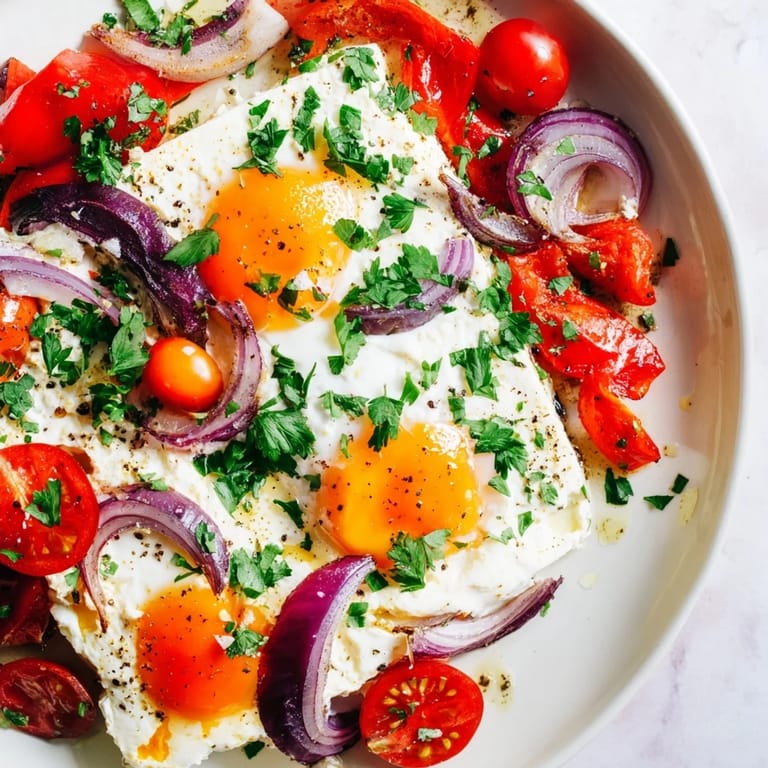
- Return to the oven for 8–10 minutes. The egg whites should turn opaque while the yolks stay just slightly jiggly in the center. Every oven is different, so start checking at 8 minutes and watch for that moment when the whites set but the yolks stay soft.
- Finish and serve:
- Remove from the oven, scatter fresh parsley on top, and bring straight to the table. Serve with crusty bread for soaking up every drop of that incredible tomato-feta juice.
 Save
Save The first time my daughter helped me make this, she was worried the eggs would break when I cracked them, and her face when she saw those perfect yolks sink into the warm vegetables was worth every second of cooking. That's when I knew this wasn't just a recipe anymore—it was something she'd remember.
Why This Dish Feels Special
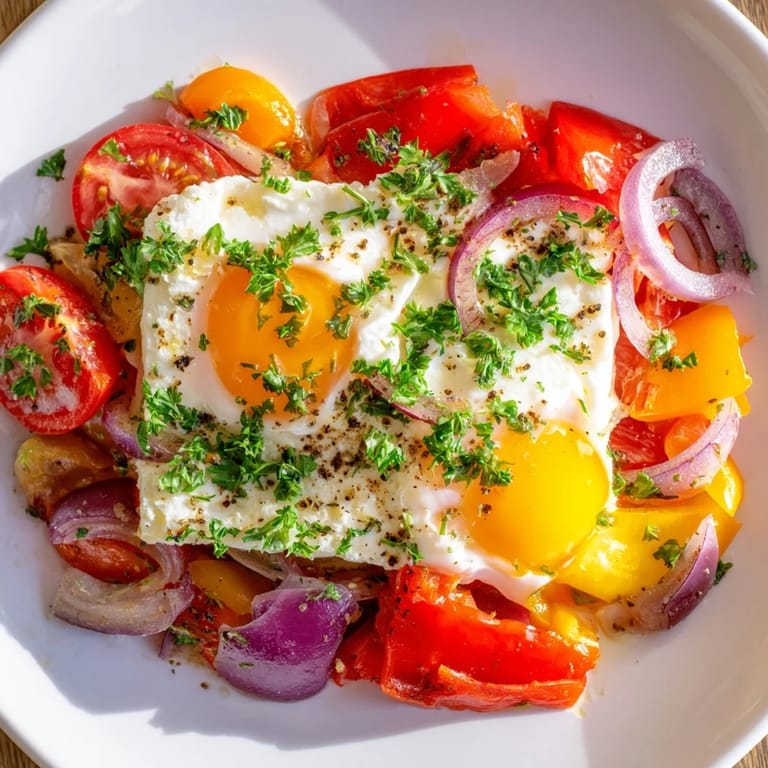
There's an elegance to simplicity that expensive cooking techniques can't touch. This dish proves that five ingredients and twenty-five minutes can taste like you care deeply about the people sitting at your table. The feta melts into a creamy sauce, the tomatoes soften into jammy richness, and those eggs become almost secondary—they're just the lovely punctuation at the end.
Variations That Keep It Fresh
Once you master the basic version, the dish becomes a canvas. I've added handfuls of baby spinach tossed with the vegetables, scattered Kalamata olives for a briny note, and even crumbled fresh chili on top before serving. Each variation feels like a different meal, but the soul remains the same—simplicity with soul.
Wine, Bread, and What Comes Next
Serve this with whatever bread you love most—the crispy, crusty kind that's good for pushing around the plate to catch every bit of tomato juice. A cold glass of Sauvignon Blanc or chilled rosé feels almost ceremonial alongside it, like you're giving yourself permission to slow down and actually taste your food. I've found that the best meals aren't the ones with the longest ingredient lists, but the ones where every flavor tastes intentional.
- Have your bread sliced and ready before you pull the dish from the oven.
- If you prefer a runnier yolk, reduce the final bake time to 7 minutes and check early.
- Leftovers reheat beautifully in a low oven, though honestly, there rarely are any.
 Save
Save This is the kind of recipe that rewards you for showing up in the kitchen without overthinking it. Make it, share it, and let it become part of your own kitchen story.
Recipe Q&A
- → What is the best way to ensure eggs are perfectly cooked in the dish?
Bake eggs until the whites are just set but yolks remain slightly runny, typically 8–10 minutes in a 400°F oven.
- → Can I add other vegetables to this dish?
Yes, pitted Kalamata olives or baby spinach can be added to enrich flavors and textures.
- → Is there a preferred type of feta cheese for this preparation?
A firm block of high-quality feta works best, allowing it to hold shape while baking and develop a golden crust.
- → What herbs complement the flavors in this dish?
Dried oregano and thyme provide a classic Mediterranean aroma that pairs well with feta and tomatoes.
- → What bread pairs well when serving this baked dish?
Crusty bread or gluten-free alternatives offer a nice texture contrast and help soak up the flavorful juices.