 Save
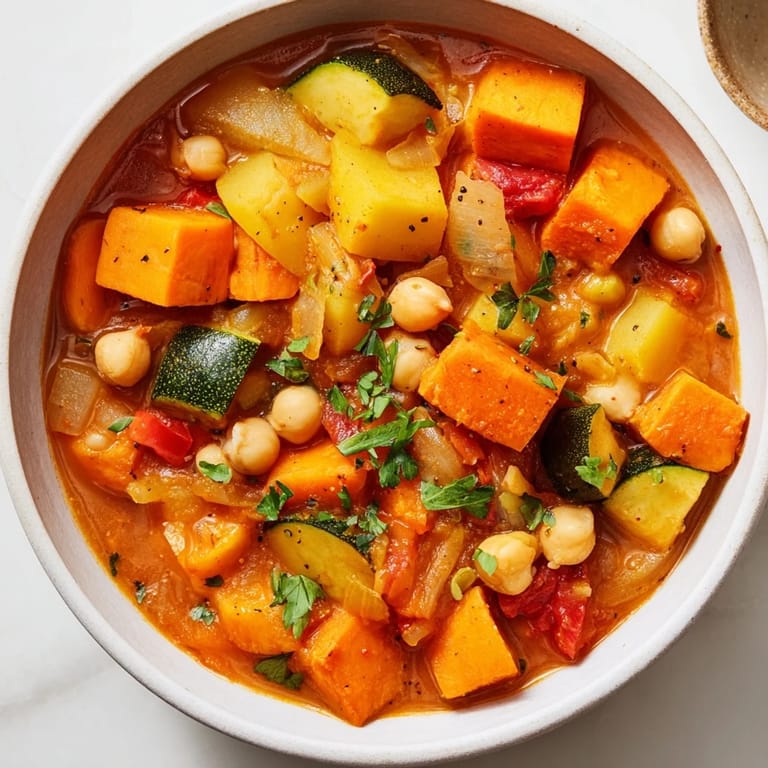
Save There's something about a pot of simmering stew that makes a kitchen feel like home. I discovered this particular combination on a gray afternoon when I had a handful of sweet potatoes left over and an unexpected craving for something warm and deeply satisfying. The smell as it cooks—tomatoes mingling with cumin and thyme—fills the entire space with comfort before you even take the first spoonful.
I made this for a dinner party once when someone mentioned they were vegan, and I wanted to prove that plant-based cooking could be just as comforting and nourishing as anything else. Watching everyone come back for seconds, asking for the recipe—that's when I knew this stew had something special.
Ingredients
- Sweet potatoes: The heart of this stew, they bring natural sweetness and creaminess as they soften.
- Yukon Gold or russet potatoes: These add substance and help thicken the broth slightly as they break down.
- Carrots and celery: The aromatic base that builds flavor from the start.
- Onion and garlic: Essential for depth; don't skip the mincing step or you'll miss their full presence.
- Red bell pepper and zucchini: They add color and brightness without overpowering the earthiness.
- Cannellini or kidney beans: Choose whichever you prefer; they add protein and a subtle creaminess.
- Chickpeas: A second legume that brings texture and makes the stew feel complete.
- Diced tomatoes and tomato paste: The tangy backbone that pulls everything together.
- Vegetable broth: Use the best quality you can find; it makes a noticeable difference.
- Smoked paprika, thyme, cumin: These spices work as a team, each one supporting the others without competing.
- Bay leaf: A quiet contributor that adds subtle complexity you won't identify but will definitely notice if it's missing.
- Olive oil: For sautéing the vegetables and building flavor from the very beginning.
- Fresh parsley and lemon wedges: Optional but recommended; they brighten the final bowl.
Tired of Takeout? 🥡
Get 10 meals you can make faster than delivery arrives. Seriously.
One email. No spam. Unsubscribe anytime.
Instructions
- Build the base:
- Heat olive oil in a large pot over medium heat, then add onion, celery, and carrot. Watch them soften for about 5 minutes, stirring occasionally until they're golden at the edges and fill your kitchen with that foundational aroma.
- Add brightness:
- Stir in garlic, red bell pepper, and zucchini, letting them cook for 3 more minutes until fragrant and slightly tender.
- Toast the spices:
- Add the sweet potatoes, regular potatoes, smoked paprika, thyme, cumin, pepper, and salt. Give it a good stir and let it cook for 2 minutes—you'll actually smell the spices bloom, which is your signal that they're releasing their best flavors.
- Create the broth:
- Stir in tomato paste first, letting it coat the vegetables, then add the diced tomatoes, vegetable broth, and bay leaf. Bring everything to a boil, then lower the heat, cover, and let it simmer for 20 minutes until the potatoes are just tender when pierced with a fork.
- Bring in the beans:
- Add the drained cannellini beans and chickpeas, then simmer uncovered for another 10 to 15 minutes. This is when the flavors truly marry and the broth thickens slightly as the potatoes continue to soften.
- Finish and taste:
- If using spinach, stir it in now and let it wilt for about 2 minutes. Taste the stew and adjust the salt and pepper to your preference, then remove the bay leaf.
- Serve with intention:
- Ladle it into bowls, scatter fresh parsley over the top if you have it, and offer lemon wedges on the side for anyone who wants that final brightness.
 Save
Save One evening, a friend who usually dismissed anything vegetable-forward ate three bowls without noticing it was entirely plant-based. The moment he realized what he'd been enjoying, laughing at his own assumptions, reminded me that good food transcends categories.
Why This Stew Works
The genius of this recipe is its balance. The sweetness of the sweet potatoes plays beautifully against the earthiness of the beans and the subtle tang of the tomato broth. The variety of textures—some vegetables softening completely while others hold their shape—keeps each spoonful interesting. Most importantly, it's forgiving; you can adjust vegetables based on what's in your kitchen, and the core flavors remain solid.
Storage and Reheating
This stew actually improves after a day or two in the refrigerator, as the flavors deepen and settle into one another. It stores beautifully in airtight containers for up to five days, and freezes wonderfully for up to three months if you're planning ahead. Simply reheat gently on the stovetop, adding a splash of broth or water if it's thickened too much.
Ways to Serve It
While this stew stands completely on its own, there are several directions you can take it depending on your mood. Serve it over rice or quinoa for extra heartiness, alongside crusty bread for soaking up the broth, or simply in a deep bowl as a warming meal on its own. Some people add a dollop of coconut cream at the end for richness, though it's hardly necessary.
- Try serving it over creamy polenta or mashed cauliflower for something different.
- A sprinkle of toasted seeds or nuts adds textural contrast if you enjoy that element.
- Leftovers can be thinned with extra broth and served as a warming soup the next day.
 Save
Save This stew proves that plant-based cooking isn't about restriction; it's about celebrating the natural flavors of what grows in the earth. Make it when you need comfort, share it when you want to feed someone well, and enjoy it knowing that every bowl is nourishing in the way that truly matters.
Recipe Q&A
- → What vegetables are used in this dish?
The dish includes sweet potatoes, Yukon Gold or russet potatoes, carrots, onion, celery, garlic, red bell pepper, zucchini, and optional baby spinach.
- → How long does it take to prepare and cook?
Preparation takes about 15 minutes, and cooking time is approximately 40 minutes, totaling 55 minutes.
- → Can the beans be substituted?
Yes, cannellini or kidney beans can be swapped with lentils or other preferred legumes.
- → What spices are used to flavor the stew?
Smoked paprika, dried thyme, ground cumin, black pepper, salt, and a bay leaf provide the primary seasoning.
- → Is this dish suitable for meal prep?
Absolutely, the stew stores well and flavors often improve after resting, making it great for meal prep.