 Save
Save I discovered the magic of a waterfall grazing board by accident at a dinner party when my carefully arranged spread nearly toppled onto a guest's lap—and instead of disaster, everyone gasped in delight at how dramatically abundant it looked. That near-catastrophe taught me that the most memorable boards aren't the neat, contained ones: they're the ones that dare to spill over, that make people feel like they've stumbled into a feast too generous to contain. Now I intentionally design boards this way, letting ingredients cascade off the edge like an edible avalanche, and it's become my secret weapon for turning a simple gathering into something guests talk about for weeks.
The first time I made this intentional waterfall board was for my sister's casual dinner party, and I remember the moment everyone arrived and saw it before anyone even sat down—three people immediately reached for their phones to photograph it, which I'd never experienced with a grazing board before. What struck me most wasn't just the visual impact, but how it changed the entire energy of the gathering: people lingered longer, mixed unexpected flavor combinations, and kept discovering new pairings they hadn't noticed before because they were hunting through the artfully scattered elements.
Ingredients
- Brie, sliced (150 g): Its creamy texture melts beautifully between crackers and plays gorgeously against crisp fruit—slice it just before serving so it stays supple and doesn't dry out.
- Aged Cheddar, cubed (150 g): The sharpness cuts through richer elements and holds its shape beautifully when cascading, making it perfect for stacking.
- Blue cheese, crumbled (100 g): This is your bold statement—just a little goes a long way, so don't be shy with the crumbles as they visually define the board.
- Goat cheese, sliced (100 g): Its tangy brightness bridges sweet and savory moments; I always slice it fresh rather than pre-sliced to keep it from sticking together.
- Prosciutto (100 g): Let these drape and fold naturally—they're not just flavor, they're structural theater, creating graceful lines across the board.
- Salami, sliced (100 g): Choose a quality version you'd actually want to eat alone; the better the meat, the better it looks when artfully arranged.
- Red grapes, in small clusters (1 cup): Their round shape rolls beautifully off edges and their color anchors the visual composition.
- Strawberries, halved (1 cup): Halving them creates visual texture and keeps them from rolling away—cut them just before assembling so they stay fresh-looking.
- Blueberries (1/2 cup): These tiny jewels fill gaps and cascade like edible confetti, so don't skimp on scattering them liberally across levels.
- Pear, thinly sliced (1): Slice moments before serving and toss lightly in lemon juice to prevent browning; the delicate slices add an elegant, fragile quality.
- Dried apricots (1/2 cup): Their chewy texture and bright color add depth; I usually tear them in half to show off their interior color.
- Dried figs, halved (1/2 cup): These are luxe little morsels that signal generosity—their deep color creates visual contrast against lighter cheeses.
- Almonds (1/3 cup): Toast them lightly if you want extra crunch and deeper flavor, but raw works beautifully too for a more delicate profile.
- Walnuts (1/3 cup): Their earthy richness grounds the board and pairs unexpectedly well with blue cheese and figs.
- Baguette, sliced and toasted (1): Toasting ensures they stay crisp throughout the gathering rather than becoming soft and forgettable.
- Assorted crackers (150 g): Mix textures—some thin and crispy, some seeded, some herbed—so guests have varied vehicles for their flavor combinations.
- Honey (1/4 cup): Drizzle it artfully as a finishing touch and let a little pool settle at the board's edge for visual drama.
- Fig jam (1/4 cup): This is your sweet-savory bridge; the deep color creates visual richness when nestled among other elements.
- Mixed olives (1/4 cup): Use a variety of colors and brines for complexity—they're tiny flavor explosions that people hunt for.
- Fresh herbs like rosemary and thyme: These aren't just garnish; they add fragrance that hits guests the moment they approach the board, creating a multisensory experience.
Tired of Takeout? 🥡
Get 10 meals you can make faster than delivery arrives. Seriously.
One email. No spam. Unsubscribe anytime.
Instructions
- Set Your Stage:
- Position your board near the table's edge where it can naturally overflow—about one-third of the board should hang over the boundary. This isn't reckless; it's intentional design that makes the entire presentation feel abundant and slightly daring.
- Create the Cheese Foundation:
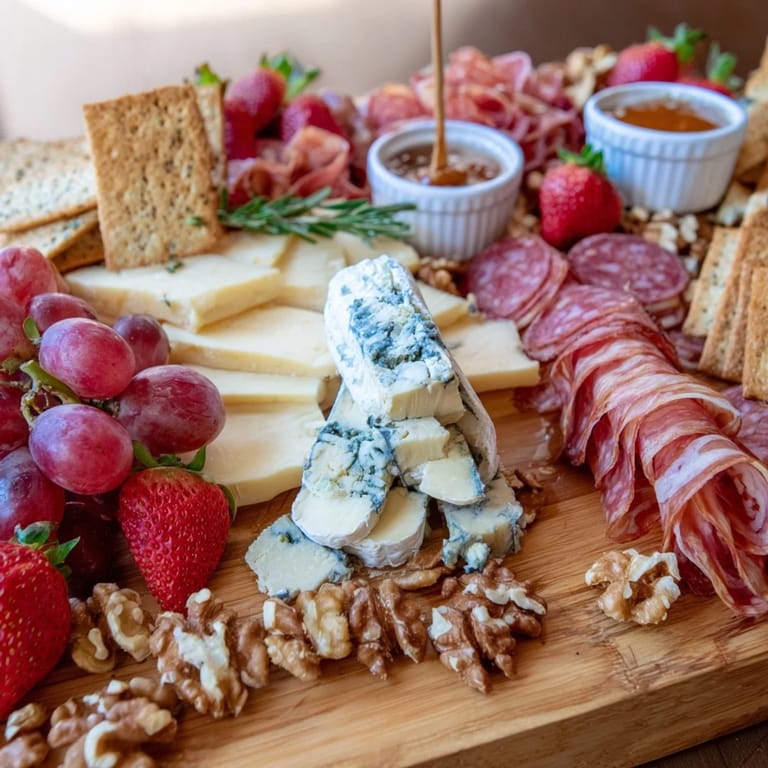
- Arrange your sliced brie and cubed cheddar in overlapping patterns right at the board's edge, deliberately letting several pieces extend past the boundary onto the table below. The contrast between contained and wild elements creates the visual tension that makes this board memorable.
- Drape the Cured Meats:
- Layer prosciutto and salami in gentle folds beside and slightly over the cheeses, allowing them to cascade like delicate fabric tumbling off the edge. Don't worry about perfection—the organic, slightly disheveled look is exactly what you're after.
- Nestle Fresh Fruits Strategically:
- Position grape clusters and strawberry halves so some nestle into crevices on the board while others seem to be rolling or falling onto the table. This creates depth and makes the board feel like a living, dynamic display rather than a static arrangement.
- Scatter Dried Elements:
- Tuck dried apricots and fig halves along the board's surface and extend some onto the table, creating a trail that invites exploration. Scatter almonds and walnuts throughout, letting some settle in corners and others sit prominently on top of cheeses where they catch the light.
- Add Structural Interest with Crackers:
- Position toasted baguette slices and assorted crackers both vertically and horizontally—some standing upright like little pillars, others leaning at angles as if they're mid-tumble. This playful arrangement prevents the board from feeling flat and gives guests easy vehicles for sampling.
- Create Focal Points with Bowls:
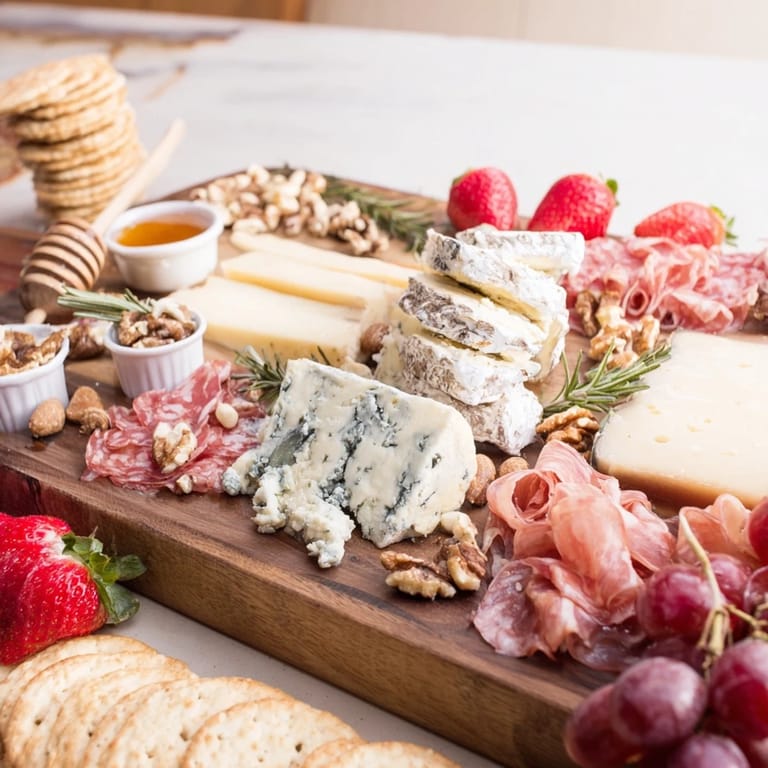
- Place small ramekins of honey, jam, and olives directly on the board, positioning them so a few olives scatter onto the table below and a drizzle of honey leads off the edge. These elements should feel deliberately placed yet natural, like they just happened to settle there.
- Finish with Fragrance and Color:
- Scatter fresh rosemary sprigs and thyme branches across the board's surface and among the fallen elements, tucking some into gaps between cheeses. The herbs add aroma, visual texture, and a sense of occasion.
- Serve with Intention:
- Invite guests to scoop from both the board's arranged elements and the artfully scattered pieces on the table below, encouraging them to embrace the abundant, exploratory nature of the display.
 Save
Save There's a moment that always happens when I serve these boards: guests pause at the table's edge, almost uncertain whether they're allowed to reach for the elements that have tumbled onto the table, then they realize it's intentional and their faces light up with permission to break the rules. That permission to reach beyond the obvious boundaries, to explore and discover, transforms how people interact with the food—it stops being a display to admire and becomes an adventure to participate in.
The Architecture of Abundance
The real trick to a successful waterfall board is understanding that the overhang doesn't have to be precarious to feel dramatic—it's more about the visual suggestion of abundance than actual risk. I learned this after my initial near-disaster; now I strategically place heavier items like nuts and cubed cheese on the board's stable surface while reserving lighter, more delicate elements like sliced meats and berries for the areas that extend beyond the edge. This way, the board stays safe while looking thrillingly wild, and nobody spends the evening anxious about an avalanche.
Creating Your Flavor Journey
What makes this board genuinely special isn't the individual ingredients but the unexpected combinations guests discover when they're hunting through scattered elements and finding pairings that weren't obvious at first glance. The waterfall format actually facilitates this—when things are clustered together and layered, people naturally grab diverse elements on a single cracker or bite, creating flavor combinations they'd never have tried if everything were neatly organized in separate sections. I've had guests discover that blue cheese with dried fig and a walnut is their new favorite combination, and that revelation becomes part of the memory of the gathering itself.
Design and Presentation Secrets
Lighting matters far more than most people realize—a grazing board lit by warm, golden light becomes almost magical, with the meats glistening, the cheeses glowing, and the herbs casting delicate shadows. If you're setting this up for an evening gathering, avoid harsh overhead lights and instead position your board where it catches natural light or candlelight if possible. The board's surface also matters; dark wood provides contrast that makes colors pop, while marble creates elegance through its natural veining. Whatever surface you choose, the waterfall effect makes it part of the composition rather than just a platform.
- Parchment or butcher paper under the table's edge catches scattered elements and makes cleanup almost effortless, letting you focus on enjoying the gathering rather than worrying about crumbs.
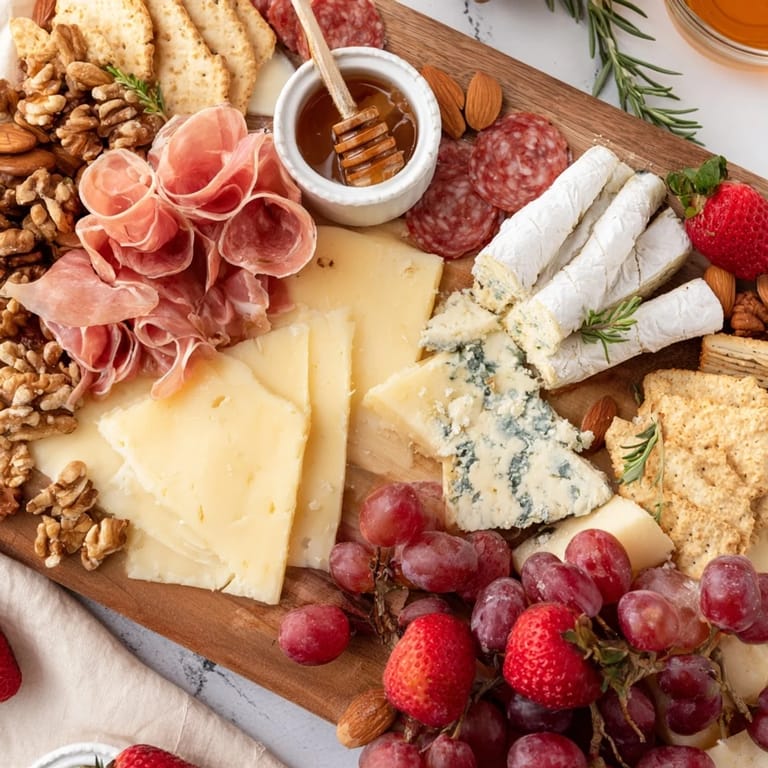
- Arrange elements at varied heights by stacking, nestling, and leaning—this creates visual interest and prevents the board from looking flat or static.
- Fresh herbs scattered throughout don't just add color and fragrance; they signal care and intentionality, transforming an assembled board into a thoughtfully curated experience.
 Save
Save This board has become my go-to for gatherings because it does something few foods accomplish: it makes people feel welcomed, abundant, and free to explore rather than follow rules. That's worth the thirty minutes of thoughtful arrangement.
Recipe Q&A
- → How do I create the cascading effect on the board?
Arrange ingredients in overlapping layers near the board's edge, allowing some pieces to extend beyond the boundary. Position clusters of fruits and scatter nuts to fall gently over the table, enhancing the waterfall appearance.
- → Can this board accommodate vegetarian or vegan preferences?
Yes, omit cured meats and use plant-based cheese alternatives for a vegan-friendly version. Add extras like chocolate or candied nuts to enhance flavor variety.
- → What cheese varieties work best for this presentation?
Choose a mix of textures and flavors such as Brie, aged Cheddar, Blue cheese, and Goat cheese sliced or cubed for visual and taste contrast.
- → How should accompaniments be arranged?
Place small bowls or ramekins of honey, fig jam, and olives on the board with some items dripped or scattered near the edge to continue the flowing theme.
- → What tools are recommended for assembling this board?
Use a large wooden or marble board, cheese knives for slicing, serving tongs for arranging, and small bowls or ramekins for spreads and olives.