 Save
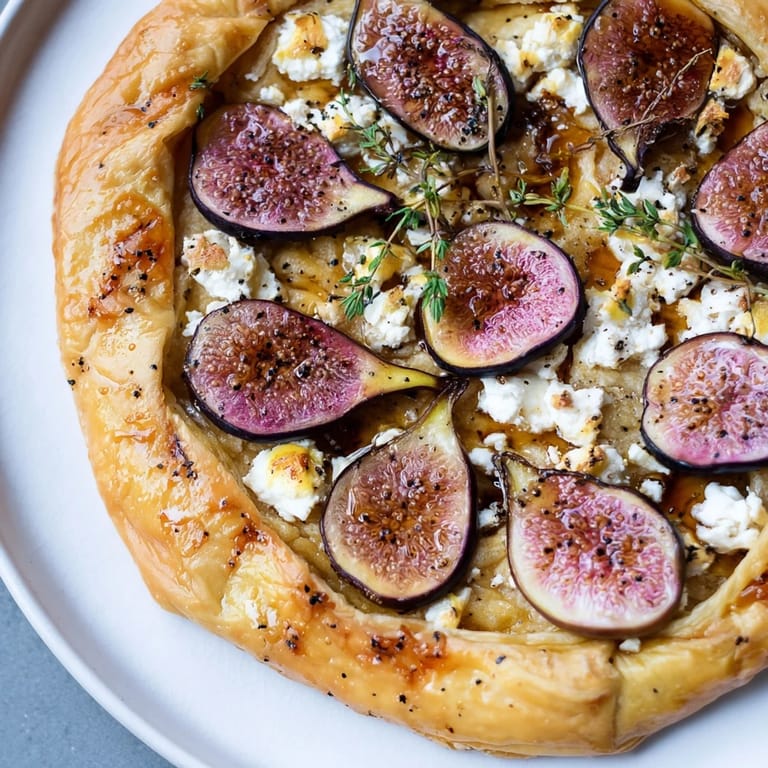
Save There's something about the smell of puff pastry turning golden in the oven that makes you feel like you're about to accomplish something impressive, even if you're just layering bought ingredients on top of it. The first time I made this, I was nervous about whether something this elegant could actually be easy, but that's the magic of it—the pastry does the heavy lifting while you get to play with luxurious toppings. I'd had truffle oil sitting in my pantry for months, waiting for the right moment, and suddenly there it was: the perfect excuse to use it without overthinking.
I remember serving this at a dinner party on a whim, and someone asked if I'd bought it from a fancy bakery—that moment of mild panic followed by relief when I could honestly say I made it is something I chase now. The goat cheese would have been too tart on its own, but paired with the sweet honey and the earthiness of the truffle, it suddenly made sense why people get so animated about food combinations.
Ingredients
- Puff pastry sheet (approx. 250 g): Let it thaw on the counter—forcing it while still cold will crack the edges and ruin the lift.
- Fresh figs (4–5, sliced): Pick ones that are just ripe enough to yield slightly to pressure; underripe ones taste mealy and overripe ones fall apart during baking.
- Goat cheese (120 g, crumbled): Use creamy, tangy goat cheese rather than the crumbly dry kind, or the texture becomes chalky.
- Truffle oil (1 tbsp): This is expensive stuff, so use real truffle oil or a good-quality blend—the cheap synthetic versions taste like chemical regret.
- Honey (2 tbsp): Drizzle it while the pastry is still warm so it seeps into the cracks and doesn't just sit on top like an afterthought.
- Fresh thyme leaves (1 tbsp, optional): If you skip this, the dish still works, but the herb adds a subtle earthiness that whispers rather than shouts.
- Olive oil (1 tbsp): This creates a barrier between the wet toppings and the pastry so the bottom doesn't get soggy.
- Freshly ground black pepper and sea salt: Don't undersalt this; the goat cheese and truffle need seasoning to shine.
Tired of Takeout? 🥡
Get 10 meals you can make faster than delivery arrives. Seriously.
One email. No spam. Unsubscribe anytime.
Instructions
- Heat your oven and prep the stage:
- Preheat to 200°C (400°F) and line a baking sheet with parchment paper so the pastry won't stick and you won't have a pastry-scraping crisis.
- Roll and score the pastry:
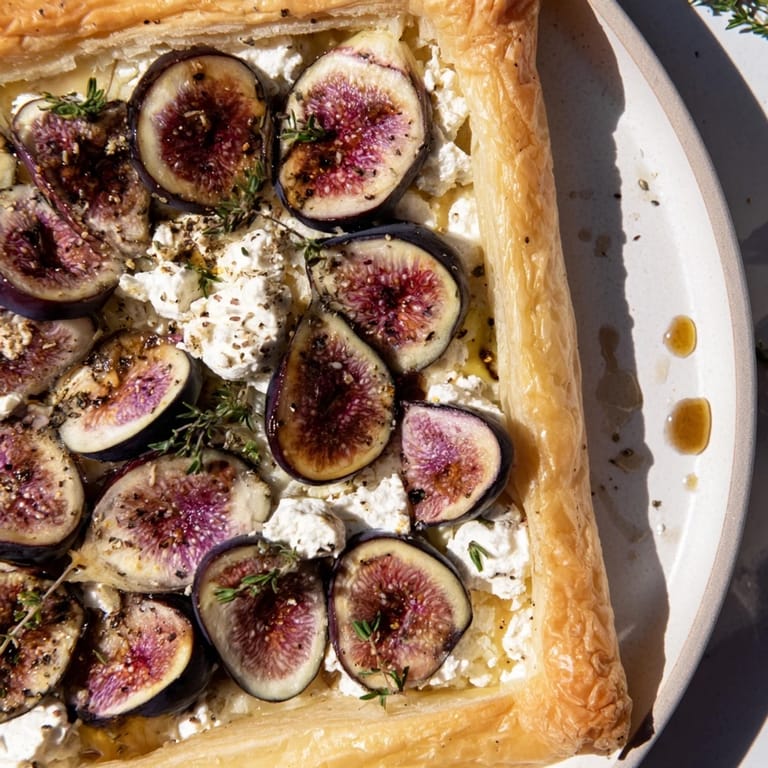
- Lay the sheet out on the parchment and score a 1 cm border around the edges without cutting all the way through—this lets the pastry rise and puff while keeping a frame that holds everything in place.
- Brush with oil:
- Lightly coat the center with olive oil, avoiding that border you just scored, so the toppings have something to cling to and don't slide around mid-bake.
- Arrange the figs:
- Lay the slices out evenly, leaving that border clear so it can puff properly and look deliberately composed rather than haphazard.
- Add the cheese and herbs:
- Scatter the crumbled goat cheese over the figs, then sprinkle thyme if you're using it, distributing everything so no bite is missing either element.
- First drizzle of truffle oil:
- Use half the truffle oil now, seasoning lightly with salt and pepper before it hits the oven, so the flavors meld rather than sitting isolated on the surface.
- Bake until golden:
- Watch it for 18–20 minutes until the pastry edges are deeply golden and you can see the puff happening—the kitchen will smell incredible and that's your signal it's almost done.
- Finish with warmth:
- The moment it comes out, drizzle the remaining truffle oil and the honey while everything is still hot so they seep into the figs and pastry cracks and don't just gloss the surface.
- Slice and serve immediately:
- Cut into portions while it's warm so the pastry is still crackling and the cheese is still yielding, not set and dense.
 Save
Save There was a moment mid-dinner when someone closed their eyes after the first bite, and I realized this dish had stopped being about showing off and started being about the actual experience of eating something that made sense. That's when it became my go-to for when I wanted to feel confident without spending hours cooking.
Why This Works as an Appetizer
Puff pastry is your secret weapon for looking polished without sweating in the kitchen—it does the textural work while you handle the flavor combinations. Figs and goat cheese are a classic pairing that everyone recognizes as sophisticated, and when you add truffle oil and honey, it reads as someone who knows their way around elegant food. The fact that it comes together in thirty minutes means you can focus on your guests instead of being stuck at the stove.
Playing with Variations
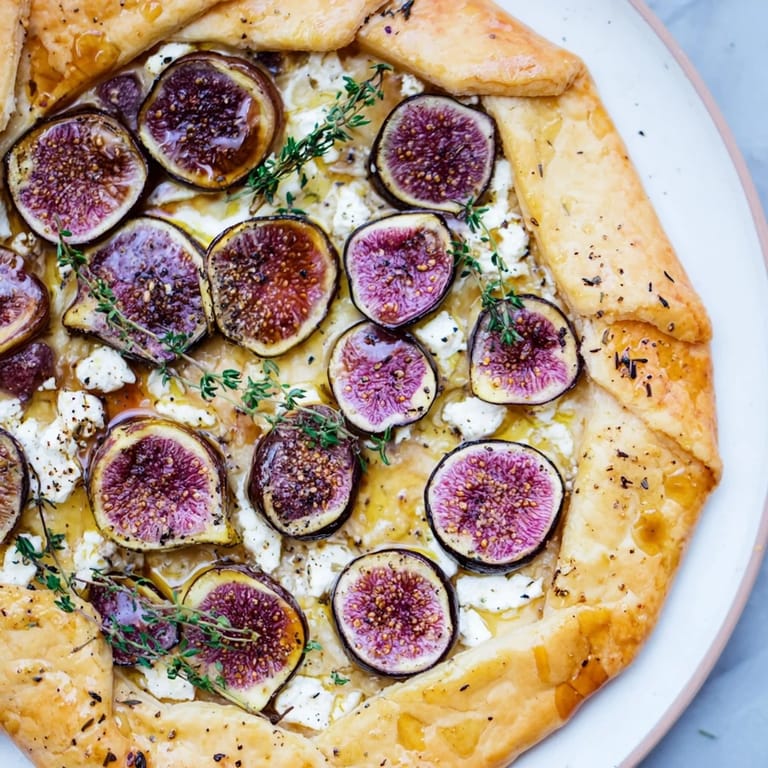
I've swapped the figs for caramelized onions when figs were out of season, and it was completely different but equally good—the sweetness came from the caramel instead of the fruit, and the truffle anchored everything else. Blue cheese instead of goat cheese makes it bolder and less floral, which works if you're feeding people who like strong flavors, but goat cheese feels more refined to me. Sometimes I add toasted walnuts for crunch, scattered before baking, and it adds a nutty undertone that makes the whole thing feel more substantial.
Timing and Serving Strategy
The beauty of this dish is that you can thaw the pastry and prep your ingredients an hour ahead, so you're literally assembling and baking when guests are about to arrive. It's warm and crackling when you slice it, which means the pastry is at its most spectacular, and you'll get those micro-expressions of surprise that make cooking worth the effort. Serve it on a board or platter so people can help themselves without it getting cold too quickly, and pair it with something crisp to drink—a cold Sauvignon Blanc or sparkling wine will cut through the richness and make every bite feel like a celebration.
- Assemble everything on the baking sheet within fifteen minutes of putting it in the oven so the pastry doesn't dry out while waiting.
- If you're making this for a crowd, you can bake two sheets at once on different racks, but rotate them halfway through for even browning.
- Leftover pastry is actually good cold the next day, though it loses the crispness—eat it at room temperature or give it a quick warm-up in a toaster oven.
 Save
Save This recipe exists in that sweet spot where impressive and easy overlap, and once you've made it once, you'll keep coming back to it. It's the kind of thing that makes people think you have your life together in the kitchen, which is always a nice bonus.
Recipe Q&A
- → What type of pastry works best for this dish?
Use a high-quality puff pastry sheet that's fully thawed for easy rolling and crisp, flaky layers when baked.
- → Can I substitute the goat cheese with another cheese?
Yes, blue cheese can be used for a bolder, tangier flavor that balances nicely with the sweet figs and honey.
- → How should I store leftovers?
Store any uneaten portions in an airtight container in the refrigerator for up to two days. Reheat briefly to restore crispiness.
- → Is it necessary to score the pastry border?
Scoring the border creates a raised edge that holds the toppings and prevents them from spilling during baking.
- → What wine pairs well with this dish?
A crisp Sauvignon Blanc or a lightly sparkling wine complements the sweet and savory flavors beautifully.