 Save
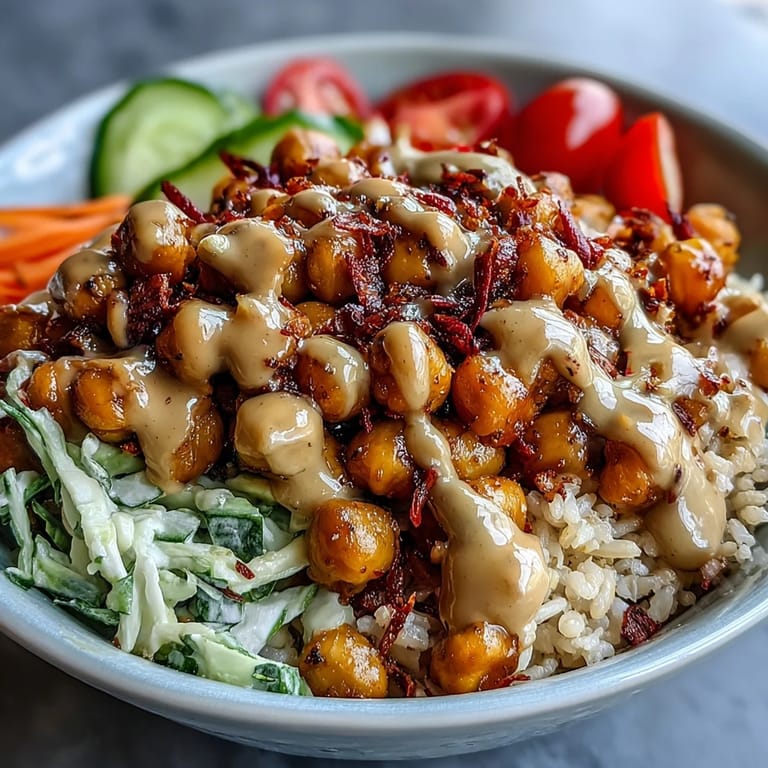
Save I discovered this bowl on a Tuesday when my fridge was overflowing with vegetables I'd bought with good intentions but zero meal plan. Standing there staring at red cabbage, carrots, and a neglected can of chickpeas, I thought: what if I roasted everything until it was golden and crispy, then tied it all together with something creamy and warm? That first bite, with the crunch of charred chickpeas against cool cucumbers and that silky peanut sauce, felt like I'd accidentally invented something I'd been craving without knowing it.
My roommate walked in while I was assembling a bowl and immediately asked for one without even tasting it—something about the colors just looked right. We sat on the kitchen counter eating straight from our bowls, drizzling extra peanut sauce and squeezing lime over everything, talking about nothing important. That's when I knew this wasn't just another vegetarian bowl; it was the kind of thing people actually want to eat.
Ingredients
- Chickpeas (2 cans, drained and rinsed): The foundation of your protein—rinsing them removes the starchy liquid that would keep them from crisping up, and that matters more than you'd think.
- Olive oil (1 tbsp): Just enough to coat without making them greasy; anything more and they steam instead of roast.
- Smoked paprika, cumin, garlic powder, salt, and pepper: These spices work together to add depth without overwhelming the other flavors—the smoked paprika especially gives everything a subtle warmth.
- Brown rice or quinoa (2 cups cooked): Choose based on your mood and what you have; brown rice is earthier, quinoa is lighter and naturally complete protein.
- Fresh vegetables (red cabbage, carrots, cucumber, cherry tomatoes, edamame): The raw and lightly cooked vegetables create contrast in texture and keep everything vibrant and fresh.
- Creamy peanut butter (1/3 cup): Use the natural kind without added sugar if you can—it blends into a silkier sauce.
- Soy sauce (2 tbsp), maple syrup (1 tbsp), rice vinegar (1 tbsp): This trio balances umami, sweetness, and tang into something irresistible; the maple syrup grounds the earthiness of the peanut butter.
- Minced garlic (1 clove) and optional sriracha: Garlic rounds out the sauce while sriracha adds a gentle heat—skip it if you prefer mild.
- Warm water (2–4 tbsp): This is how you control the sauce consistency; add it slowly and you'll nail that perfect drizzle.
- Roasted peanuts, lime wedges, and sesame seeds: Toppings that add final crunch, brightness, and visual appeal.
Tired of Takeout? 🥡
Get 10 meals you can make faster than delivery arrives. Seriously.
One email. No spam. Unsubscribe anytime.
Instructions
- Heat your oven and prep the pan:
- Set it to 425°F and line a baking sheet with parchment paper so cleanup is effortless and nothing sticks.
- Season and spread the chickpeas:
- Toss your drained chickpeas with olive oil and all those spices—the paprika will turn everything a warm golden color even before it hits the oven. Spread them in a single layer and shake the pan halfway through the 20–25 minute roast; you're looking for them to be golden and making a quiet crackling sound when you move them around.
- Make the sauce while everything roasts:
- Whisk peanut butter with soy sauce, maple syrup, rice vinegar, garlic, and sriracha if you're using it, then add warm water a tablespoon at a time until it's pourable but still creamy. Taste it and adjust—this is your moment to make it yours.
- Prepare your vegetables and grains:
- If your rice or quinoa isn't ready yet, now's the time to finish it. Julienne those carrots, slice the cucumber, halve the tomatoes, and shred the cabbage; you're building layers of texture and color here.
- Assemble your bowls:
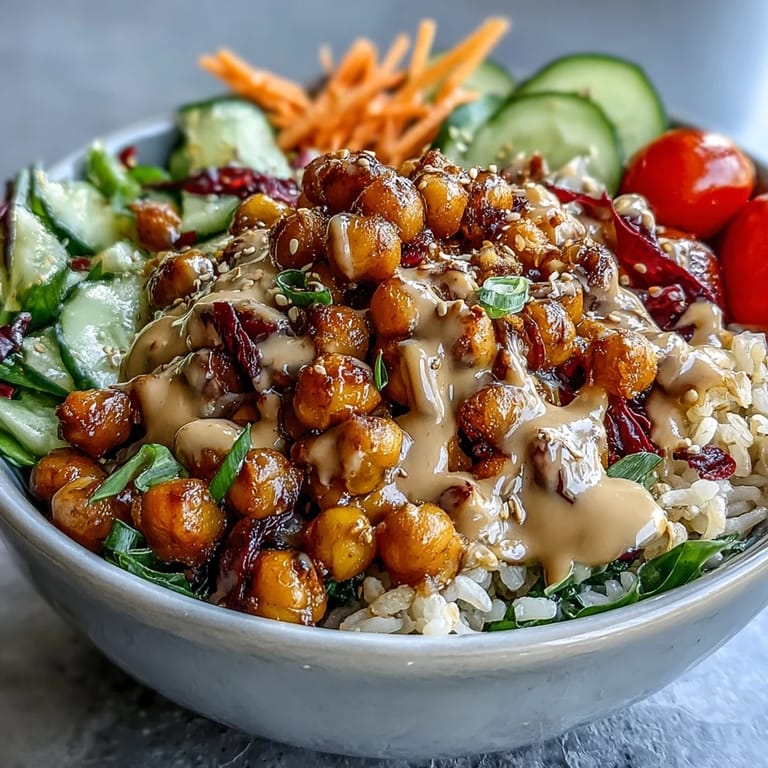
- Start with a bed of warm grains, then arrange the chickpeas, vegetables, and edamame on top so everything looks intentional and appealing.
- Finish and serve:
- Drizzle that peanut sauce generously, scatter peanuts and sesame seeds across the top, and serve with lime wedges for squeezing over everything.
 Save
Save There's something quietly satisfying about a bowl that looks this good and tastes this good without requiring any animal products or special techniques. It's the kind of meal that makes you feel nourished rather than just full, and somehow that matters.
The Magic of Roasted Chickpeas
The moment those chickpeas came out of the oven with edges that were almost charred and centers still creamy, I realized they could stand on their own as a snack or become part of something bigger. That transformation from canned beans to something crispy and complex is what elevates this entire bowl—it's not just a vehicle for vegetables anymore, it's an actual dish with texture and personality.
Customizing Without Losing the Soul
The beauty of this bowl is that you can change almost everything except the peanut sauce and chickpeas without it falling apart. I've made it with roasted broccoli instead of raw cabbage, added mint alongside cilantro, swapped in lime juice for rice vinegar when that's what I had—and somehow it always works. The structure is forgiving enough that your kitchen intuition can take over.
Pairing and Storage Wisdom
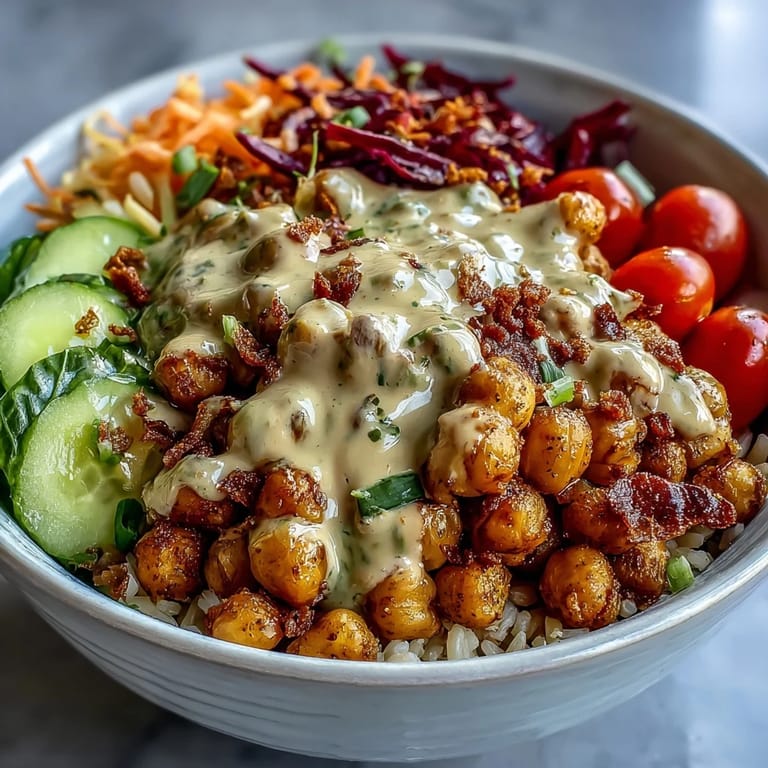
This bowl is equally good served immediately while the chickpeas are still warm and crispy, or assembled cold the next day if you pack the sauce separately. I've found that drinking something with a slight sweetness and acidity—think iced green tea or a crisp white wine if you're in that mood—lets the peanut sauce and spices really sing. The vegetables keep for three days if stored properly, the sauce lasts about a week in the fridge, and the roasted chickpeas are best eaten the same day but won't judge you if you save them for tomorrow.
- Store sauce and chickpeas in separate containers from fresh vegetables to prevent sogginess.
- If you're meal-prepping, roast a double batch of chickpeas and use them throughout the week in different bowls or salads.
- The peanut sauce thickens as it cools, so reheat gently with a splash of water if you're eating leftovers.
 Save
Save This bowl taught me that vegetarian eating doesn't mean settling for something light or one-note—it means building layers of flavor and texture until something genuinely satisfying emerges. Every time I make it, I find myself tweaking something small, and it never stops being good.
Recipe Q&A
- → Can I make this bowl ahead of time?
Yes, you can prepare components in advance. Roast chickpeas and store separately for up to 3 days. Keep chopped vegetables in airtight containers. Make the peanut sauce ahead and refrigerate—just whisk with a splash of warm water before serving to restore consistency.
- → What can I use instead of peanut butter?
Almond butter, cashew butter, or sunflower butter work well as substitutes. Tahini also creates a delicious creamy sauce, though you may want to add extra sweetener to balance its natural bitterness.
- → Is this bowl gluten-free?
Yes, simply substitute tamari for the soy sauce in the peanut sauce. Ensure all other ingredients, especially the chickpeas and any packaged seasonings, are certified gluten-free.
- → How can I add more protein?
Consider adding grilled tofu, tempeh, or shredded chicken. Extra edamame, hemp seeds sprinkled on top, or a hard-boiled egg also boost protein content naturally.
- → Can I use canned chickpeas?
Absolutely. Canned chickpeas work perfectly—just drain and rinse thoroughly before roasting. The roasting process transforms them from soft to crispy, creating excellent texture contrast.
- → How long does the peanut sauce keep?
The sauce refrigerates well for up to one week. Store in a sealed jar and bring to room temperature before using. If it thickens, simply whisk in warm water one tablespoon at a time until pourable.