 Save
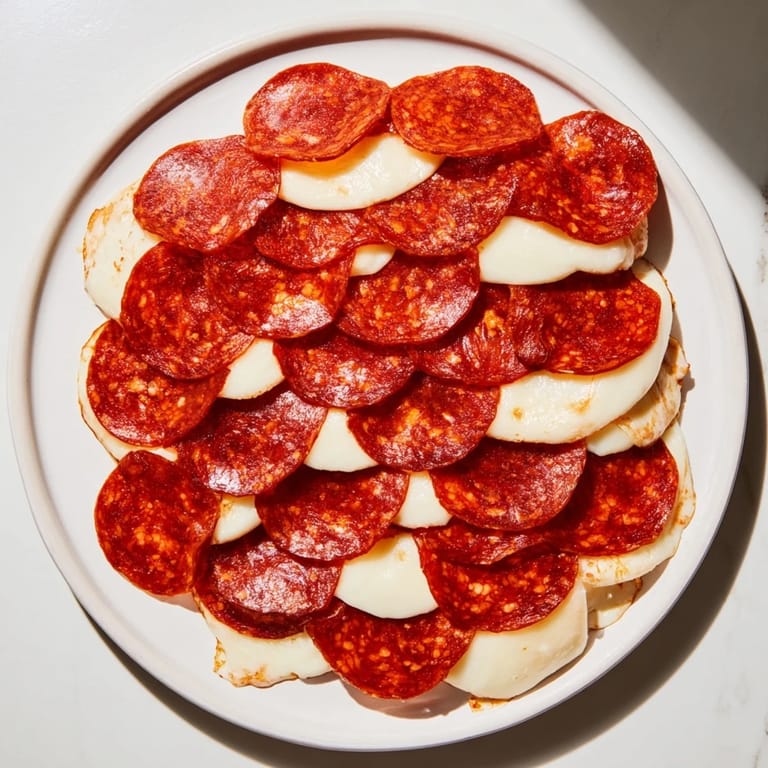
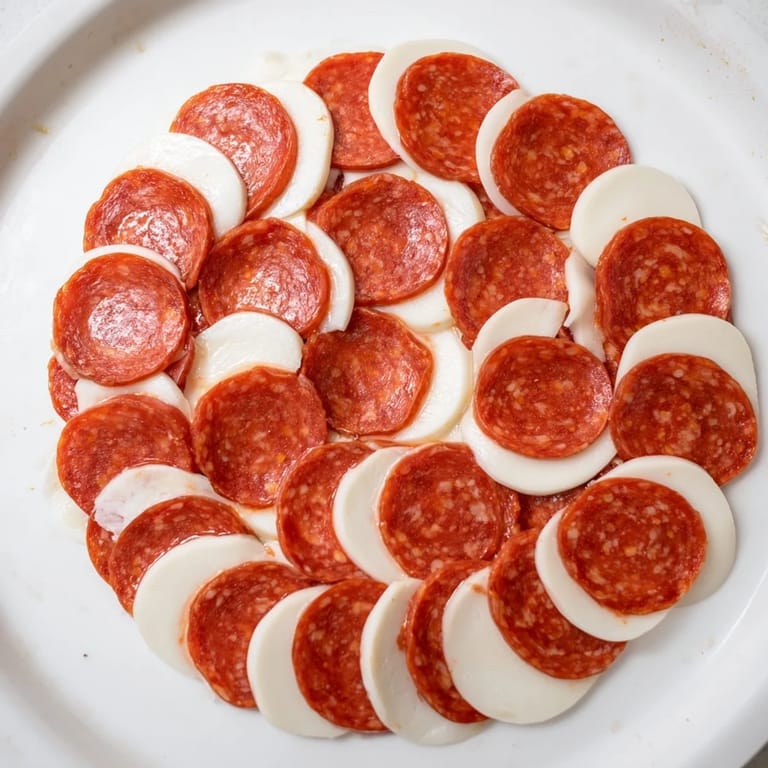
Save I discovered dragon scales by accident at a dinner party when I ran out of traditional appetizers and started playing with leftover pepperoni and cheese. My friend watched me arrange overlapping slices on a platter and said, "That looks like something from a fantasy movie," and suddenly what was meant to be simple snacking became this show-stopping dish that people still ask me about. The beauty of it is that it takes almost no skill, just a willingness to layer things slightly offset and let the visual magic happen on its own.
The first time I served these warm was during a chaotic holiday party when someone brought their new partner who was apparently a picky eater. I threw the assembled platter in the oven nervous it would fall apart, and when I pulled it out, the cheese had melted just enough to hold everything together while the pepperoni edges had curled and crisped into little flavor bombs. Their partner went back for seconds without hesitation, and I stopped worrying about impressing people with complicated food.
Ingredients
- Thinly sliced pepperoni (150g): The thinner you slice it, the more elegantly it curves, so ask the deli counter to slice it paper-thin if you're not doing it yourself; thicker slices look chunky instead of delicate.
- Semi-firm cheese in thin rounds (150g): Provolone gives you a mild, creamy backdrop, but mozzarella melts more dramatically and cheddar adds sharpness; whatever you choose, slice it about the thickness of a coin so it bends without cracking.
- Baguette or crackers (1 baguette, optional): Use this as your foundation if you want individual bites, but honestly, a piled platter without a base looks even more dramatic and saves you a step.
- Fresh basil or parsley (optional garnish): A few small leaves tucked between scales adds color and a whisper of freshness that cuts through the richness.
Tired of Takeout? 🥡
Get 10 meals you can make faster than delivery arrives. Seriously.
One email. No spam. Unsubscribe anytime.
Instructions
- Set your stage:
- If you're baking these, preheat your oven to 200°C (400°F) so it's ready when you finish layering. Arrange your baguette slices on a baking sheet if using them, or just grab a platter that makes you happy to look at.
- Start your first scale:
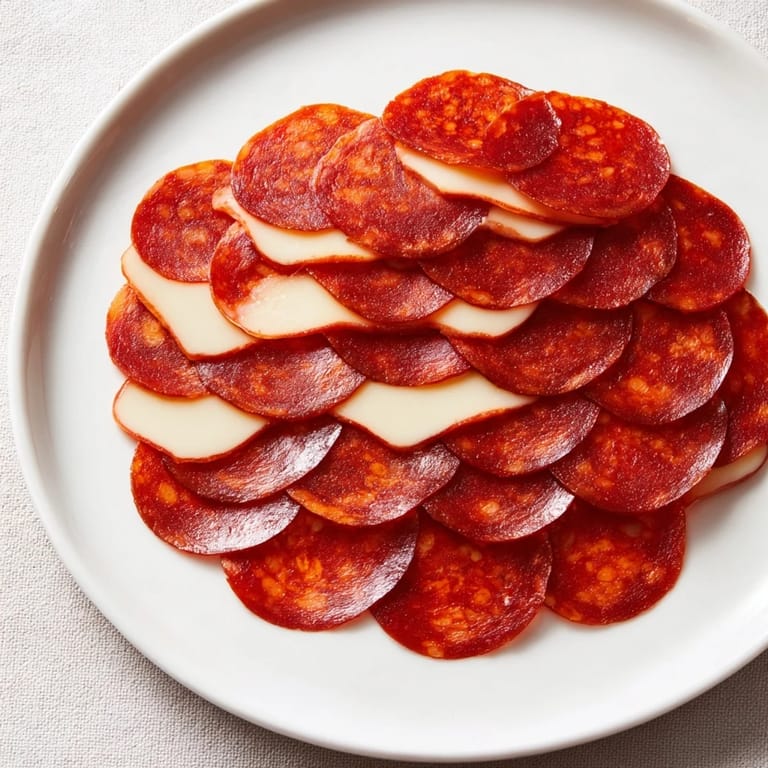
- Take a cheese semi-circle and position it so the flat edge sits at the base, then lay a pepperoni slice slightly overlapping the curved part of the cheese; the edges won't line up perfectly, and that's exactly what makes it look like a real scale.
- Build your pattern:
- Keep layering, alternating cheese and pepperoni, each piece slightly offset from the one below it so you see that beautiful overlapping effect. Work your way across your base or platter in whatever direction feels natural.
- Cover and complete:
- Keep going until your base is completely covered or your platter is as full as you want it; don't overthink the spacing, as slight irregularities make it look organic instead of manufactured.
- Warm if you want:
- Pop the assembled dish in the oven for 5-7 minutes if you prefer warm cheese and slightly crisped pepperoni edges; otherwise, serve it cold straight from the fridge. Finish with a small scatter of fresh herbs if you have them.
 Save
Save One afternoon, a friend's kid watched me arrange these and asked if I was making dragon food, and then insisted on helping me place each scale. We turned it into this little ritual where she'd hand me pieces and narrate a story about the dragon they were building, and suddenly this appetizer had become a whole moment of connection instead of just food on a platter.
When to Serve This
Dragon scales work for almost any gathering where you want something that looks impressive without requiring last-minute cooking. I've made them for casual weeknight snacks, fancy dinner parties, holiday potlucks, and even packed them cold in containers for office gatherings. The key is that they're as happy sitting out on a board for grazing as they are plated individually, which means you can adjust how you present them based on your vibe that day.
Playing with Flavor
Once you understand the basic pattern, the fun is in switching up what you layer. I've made vegetarian versions using thin slices of roasted red pepper and grilled zucchini in place of pepperoni, and the visual effect is just as stunning because you're working with the principle of contrast and overlap, not the specific ingredients. Different cheeses will completely change the personality of the dish; sharp cheddar versus creamy mozzarella versus tangy provolone each tell a different story.
Small Details That Matter
The magic of this dish lives in the tiny decisions that make it feel intentional. Whether you serve it warm with melted cheese or cold and firm, whether you add herbs or leave it stark, whether you use a bread base or go full platter—all of these choices shift what the dish becomes. I always have marinara or a pesto sauce nearby because the richness of cheese and pepperoni sometimes wants a sharp, acidic companion, and people appreciate having options without you needing to ask.
- Room-temperature ingredients bend without resistance, so pull everything out of the fridge 10 minutes before you start if you want smooth, graceful curves.
- If your cheese or pepperoni tears while layering, just overlap the next piece slightly more and no one will ever know.
- Leftover dragon scales keep in the fridge for a couple of days and taste just as good cold as they do freshly made.
 Save
Save Dragon scales taught me that sometimes the most memorable food is the stuff that looks like it took hours but actually came together in your hands in under 20 minutes. There's something deeply satisfying about transforming simple ingredients into something that makes people pause and actually look at their appetizer before eating it.
Recipe Q&A
- → What cheeses work best for this appetizer?
Semi-firm cheeses like provolone, mozzarella, or cheddar slice well and melt nicely for this dish.
- → Can I prepare this dish gluten-free?
Yes, substituting baguette with gluten-free crackers or cucumber rounds provides a gluten-free option.
- → How can I serve this warm?
Bake the assembled layers at 200°C (400°F) for 5-7 minutes until cheese melts and pepperoni crisps slightly.
- → Are there vegetarian alternatives for the pepperoni?
Grilled zucchini or roasted red pepper slices can replace pepperoni for a vegetarian version.
- → What garnishes complement this dish?
Fresh basil or parsley leaves add color and a fresh note to the layered appetizer.
- → What dips pair well with this appetizer?
Marinara sauce or pesto dips enhance the flavors and make for a delicious accompaniment.