 Save
Save The first time I made these, I was chasing a TikTok trend at midnight, convinced I could master crispy rice paper dumplings without waking anyone. My kitchen filled with steam from the water bowl, and I learned quickly that patiently softening rice paper is nothing like rushing through it. These dumplings became my secret weapon for impressing people, the kind of appetizer that disappears before you can plate the rest of dinner.
I remember my friend Sarah biting into one at a dinner party and getting that shocked, satisfied look people get when they taste something restaurant-quality at a home table. She asked if I'd ordered them, and honestly, that moment made every careful fold worth it. Now they're what people request when I ask what to bring to potlucks.
Ingredients
- Shredded green cabbage: The backbone of your filling, providing structure and a subtle sweetness that grounds everything else.
- Grated carrot: Adds natural sweetness and helps the filling hold together beautifully when cooked.
- Shiitake mushrooms, finely chopped: These bring an earthy depth that makes people wonder what your secret ingredient is, even though it's just mushrooms.
- Green onions, thinly sliced: A bright note of freshness that cuts through the richness of the sesame oil.
- Garlic, minced: Don't skip this; it's the backbone of flavor that ties everything together.
- Soy sauce or tamari: Your umami anchor, choose tamari if gluten-free matters to you.
- Sesame oil: Just a teaspoon is enough to make people taste something special without being able to identify what it is.
- Fresh ginger, grated: A whisper of warmth that makes the filling feel complete.
- Rice paper sheets: The thinner they are, the crispier they'll become, so look for delicate ones at Asian markets if you can.
- Neutral oil for frying: Canola or avocado oil both work beautifully; save your fancy olive oil for other things.
Tired of Takeout? 🥡
Get 10 meals you can make faster than delivery arrives. Seriously.
One email. No spam. Unsubscribe anytime.
Instructions
- Gather and combine your filling:
- Throw your cabbage, carrot, mushrooms, green onions, and garlic into a large bowl and toss everything together like you're making a slaw. Add the soy sauce, sesame oil, and ginger, then mix until every piece of vegetable is coated with flavor.
- Cook the filling lightly:
- Heat oil in a nonstick skillet over medium heat and add your filling mixture, stirring it around for 3 to 4 minutes until the veggies soften just slightly but still have some character. Let it cool for a few minutes; warm filling is harder to work with and might tear your rice paper.
- Prepare your rice paper:
- Fill a shallow dish with warm water and keep it nearby. Dip one sheet of rice paper in for just 5 to 10 seconds, long enough for it to soften but not so long that it becomes mushy and impossible to handle.
- Roll like you mean it:
- Lay the softened rice paper on a damp kitchen towel, place 2 tablespoons of filling in the center, fold in the sides, and roll it up tightly like you're making a burrito. The tension you create here is what gives you structure for frying.
- Get your oil ready:
- Heat oil in a large nonstick skillet over medium heat until it shimmers slightly. You want medium heat, not screaming hot, so your dumplings can get golden without the outside burning.
- Fry with patience:
- Place your dumplings seam side down in the pan with a little space between each one, then let them be for 2 to 3 minutes until the bottom is deeply golden and crispy. Flip gently using tongs or a spatula, then cook the other side until it matches.
- Make your dipping sauce:
- While dumplings cool slightly, mix soy sauce, rice vinegar, maple syrup, and chili flakes in a small bowl. Taste it and adjust; the balance between salty, sour, and sweet should feel right to you.
- Serve immediately:
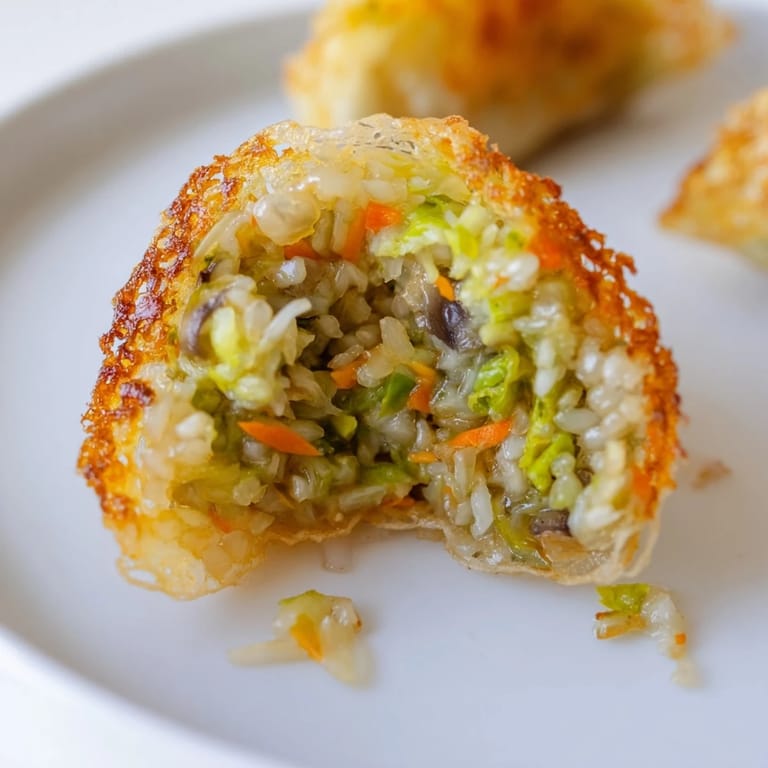
- These are best eaten the moment they come out of the pan, when the rice paper is still crackling and the filling is hot inside.
 Save
Save There's something almost meditative about rolling these dumplings, the repetition of fold and roll becoming a kind of kitchen rhythm. By the twelfth one, your hands know what to do, and suddenly you've made something that tastes like you've been doing this for years.
Why Rice Paper Works Magic
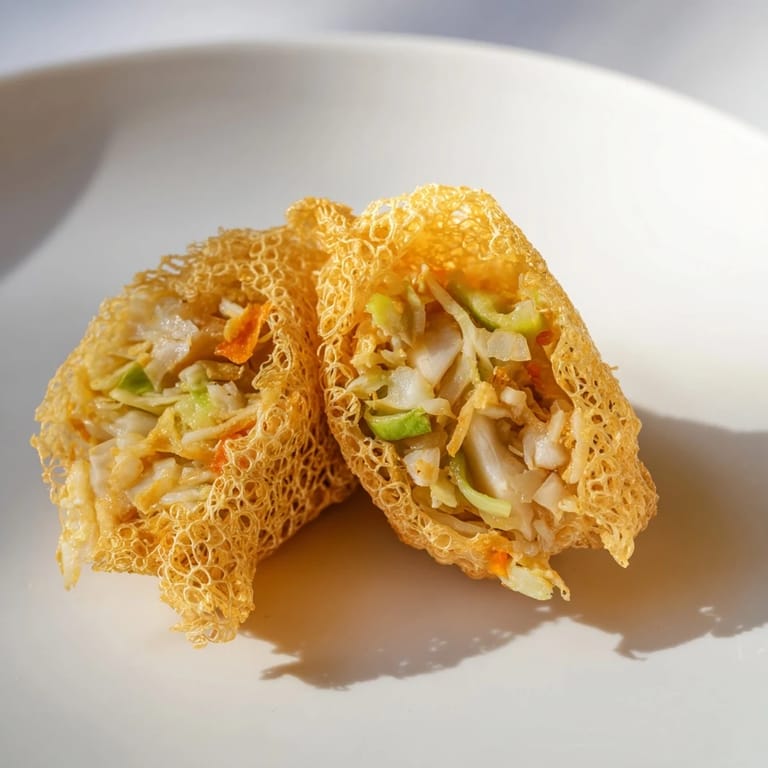
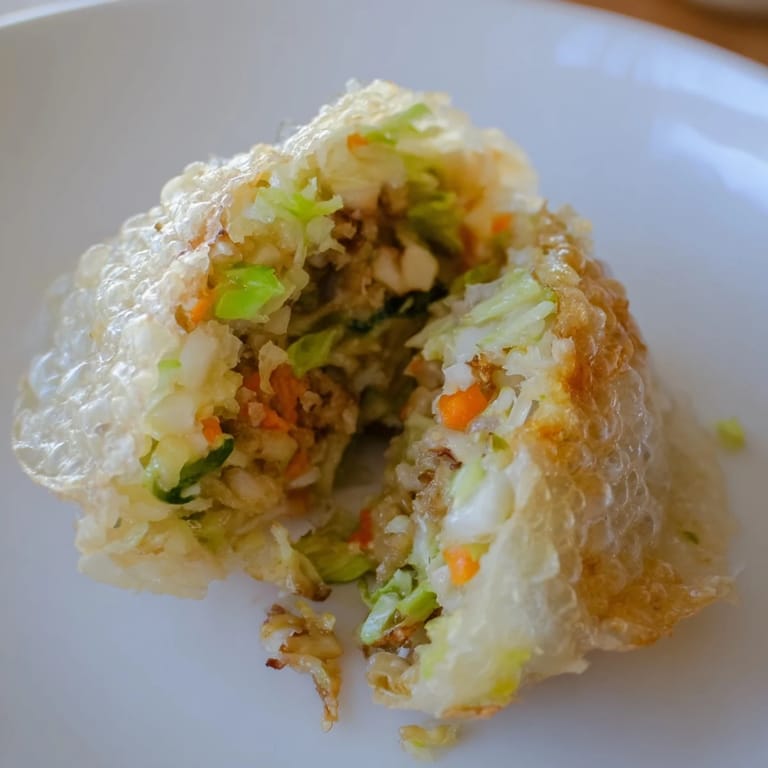
Rice paper is the secret to why these dumplings feel so special compared to regular dumpling wrapper versions. When it hits hot oil, it transforms into something impossibly crispy, almost like a delicate shell, while the inside stays tender. Most people expect chewy wrappers and are shocked by how the rice paper shatters when you bite it.
Playing With Your Filling
The filling I've given you is a solid base, but it's also forgiving enough to adapt based on what's in your fridge. I've added finely chopped tofu for extra protein without changing the texture, and once I threw in some finely minced cooked chicken and nobody missed the vegetarian version. The key is keeping everything finely chopped so it holds together and stays easy to work with.
Serving and Storage Thoughts
These are at their absolute best eaten fresh, within minutes of coming out of the pan. If you need to make them ahead, you can fill and roll them up to 4 hours before cooking, keeping them on a parchment-lined plate uncovered in the fridge so the rice paper doesn't stick to itself. They don't really reheat well, so cook only what you'll eat right away unless you're okay with a slightly softer texture.
- Double wrapping in rice paper if you want extra crunch is totally worth the few minutes of effort it takes.
- The dipping sauce is flexible too; swap maple syrup for honey, add more chili if you like heat, or even try a drizzle of sriracha mixed in.
- Serve these with confidence because they look elegant and taste impressive, and nobody needs to know how simple they actually are.
 Save
Save These dumplings have become my answer to the question of what to bring somewhere and what to make when I want to feel like I've done something special in the kitchen. They're proof that simple ingredients, a little patience, and the willingness to roll something up twelve times can turn into something genuinely memorable.
Recipe Q&A
- → What type of filling is used inside the dumplings?
The filling is a mix of shredded green cabbage, grated carrot, finely chopped shiitake mushrooms, green onions, garlic, soy sauce, sesame oil, and fresh ginger, sautéed until just softened.
- → How do I make the rice paper pliable without tearing?
Dip the rice paper sheets in warm water for 5–10 seconds until just soft. Avoid soaking them too long to prevent tearing during wrapping.
- → What is the best method to achieve a crispy exterior?
Pan-fry the filled dumplings in a neutral oil over medium heat, cooking 2–3 minutes per side until golden and crunchy.
- → Can these dumplings be made gluten-free?
Yes, use tamari instead of regular soy sauce and confirm the rice paper wrappers are gluten-free to maintain the diet-friendly profile.
- → Is there a recommended dipping sauce for these dumplings?
A simple dipping sauce made from soy sauce, rice vinegar, maple syrup or honey, and optional chili flakes complements the savory flavors well.
- → What tools do I need to prepare these dumplings?
You will need a large bowl, grater, nonstick skillet, shallow dish for soaking rice paper, kitchen towel, and tongs or spatula for frying.