 Save
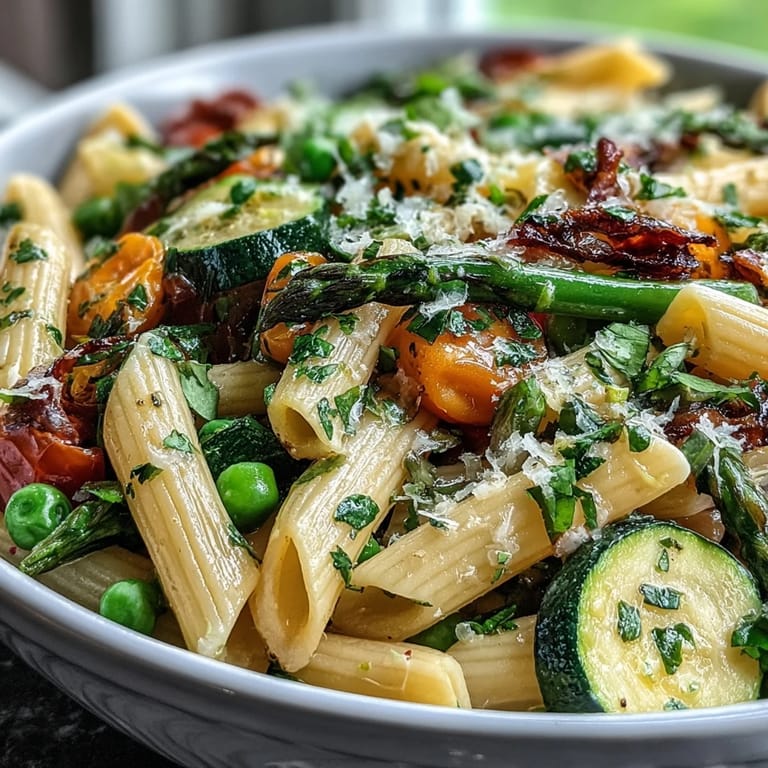
Save The first spring I moved into my apartment, the kitchen windows opened wide to afternoon sunlight and the sound of distant laughter in the courtyard. That was the season I started making pasta primavera, chasing that fresh, green taste after long winter meals. My curiosity kicked in after seeing baskets of asparagus and bell peppers at the market, their colors impossible to ignore. Tossing veggies with pasta felt almost playful—and the aroma of garlic and lemon rising from the pan made the kitchen feel lively. Sometimes, cooking this dish feels like hitting refresh, as if spring itself could be invited in with each stir.
I remember making this for a friend after a rainy hike—neither of us cared that we were still slightly damp, because the kitchen steamed up with the scent of basil and lemon zest. Sitting at the table, we kept laughing about how the cherry tomatoes seemed to burst just at the right moment. The meal disappeared faster than expected, and every forkful was a little celebration of surviving another spring storm. No one minded the bits of Parmesan clinging to the plates. Afterwards, the kitchen looked like a flower patch, vegetables scattered everywhere in bright, messy beauty.
Ingredients
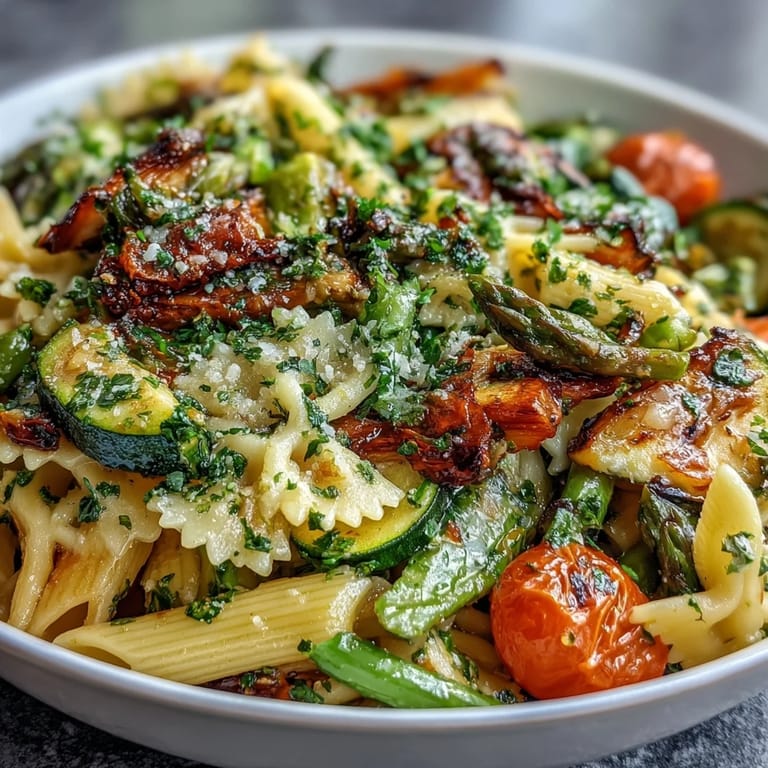
- Pasta: Penne or farfalle hold all the veggies and sauce beautifully—don't forget to cook it just until al dente for perfect texture.
- Zucchini & Yellow Squash: Cutting them into half-moons gives each bite a tender, juicy note; avoid overcooking to keep them crisp.
- Asparagus: Snap the ends and slice into pieces just before cooking for peak freshness.
- Cherry Tomatoes: Halving them lets their juices mingle into the sauce and adds a burst of color.
- Red Bell Pepper: Thin slices are easy to toss in the pan and add sweet crunch.
- Peas: Fresh or frozen, they lend a pop of sweetness and color; grab them right at the end for tenderness.
- Garlic: Freshly minced is best for that signature aroma—don't let it brown.
- Shallot: Provides delicate flavor that blends well with the lemon and herbs.
- Basil & Parsley: Chop just before using for brightest flavor and aroma.
- Lemon Zest & Juice: Brings a vibrant kick and lifts the whole dish; zest first, then juice.
- Extra-Virgin Olive Oil: Use the best you have, since it ties all the flavors together.
- Parmesan Cheese: Freshly grated melts perfectly and finishes the pasta; add more at the table if you're feeling generous.
- Salt, Black Pepper, Red Pepper Flakes: Season to taste; red pepper flakes give a gentle tingle but can be skipped.
Tired of Takeout? 🥡
Get 10 meals you can make faster than delivery arrives. Seriously.
One email. No spam. Unsubscribe anytime.
Instructions
- Pasta Prep:
- Fill the largest pot you have with water and a big pinch of salt, letting it bubble rapidly before adding pasta; stir once and cook until just al dente, then reserve some water before draining.
- Sauté Aromatics:
- In your wide skillet, swirl olive oil and then drop in garlic and shallot, letting their scent fill the room as they soften—don’t let them brown!
- Toss in Veggies:
- Add zucchini, squash, asparagus, and bell pepper, stirring gently as they sizzle and brighten, just until the edges begin to soften.
- Add Tomatoes & Peas:
- Scatter in cherry tomatoes and peas, watching the tomatoes begin to collapse and peas stay bright green, cooking for a couple of minutes.
- Combine with Pasta:
- Return the drained pasta to the skillet, using a wooden spoon to mix it all together, letting the veggies coat each piece.
- Create the Sauce:
- Pour in reserved pasta water, lemon zest and juice, chopped herbs, and another drizzle of olive oil, stirring until the whole pan glistens; season with salt, pepper, and red pepper flakes if you like a little warmth.
- Finish & Serve:
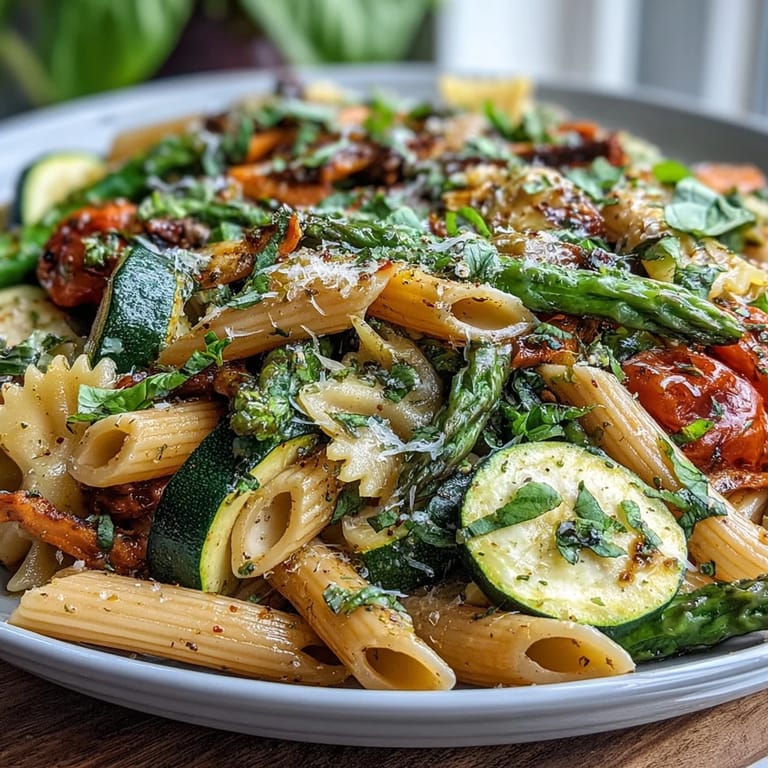
- Turn off the heat, fold in Parmesan until creamy, and serve in big bowls topped with more cheese and fresh basil leaves.
 Save
Save One quiet spring evening, after a long workday, I found myself savoring this pasta while sitting by the open window, the city humming in the background. The dish became more than supper: with every forkful, it felt like I was carving out a pause, letting freshness and color remind me to breathe and linger a little.
Make It Your Own
Experimenting with veggies has turned this recipe into a kitchen ritual—sometimes I throw in snap peas or handfuls of baby spinach if they're in the fridge. Swapping in different pasta shapes keeps things playful. Changing herbs, like mixing in mint, adds another layer of brightness.
Serving Suggestions
This pasta pairs happily with crusty bread and a glass of chilled Pinot Grigio, but it also works well alongside a simple arugula salad tossed in lemon vinaigrette. Leftovers taste fantastic the next day, especially sprinkled with extra Parmesan. Enjoy it outdoors if you can—spring is always best shared.
Troubleshooting & Last Minute Help
I've learned that if the sauce seems watery at first, give it a minute—the pasta will soak up the excess and the flavors will come together. Don't be afraid to taste for seasoning, and if the veggies look too soft, try cooking them less next time. Cleaning up is easier with a spatula—those little bits stuck to the pan are the tastiest.
- A splash of extra lemon juice right before serving wakes everything up.
- You can prep all the veggies ahead for a faster cook.
- If you forget to reserve pasta water, hot tap water works in a pinch.
 Save
Save Enjoy this Primavera as a fresh start that fits any day. Sometimes a bowl of spring pasta is exactly the nudge you need to savor what's in season and make the moment yours.
Recipe Q&A
- → Which pasta types work best for primavera?
Penne and farfalle hold the sauce and vegetables well, but fusilli or spaghetti can be used for different textures.
- → Can I substitute vegetables in the dish?
Yes, try snap peas, spinach, or carrots. Use seasonal produce for freshness and color.
- → Is a vegan version possible?
Simply skip Parmesan cheese or use plant-based alternatives for a vegan-friendly meal.
- → How can I enhance the flavor?
Add more fresh herbs, a pinch of red pepper flakes, or a splash of extra lemon juice for brightness.
- → What wine pairs well with this pasta?
Crisp white wines like Pinot Grigio or Sauvignon Blanc complement the light and fresh flavors.
- → How do I keep vegetables crisp?
Cook vegetables just until tender to preserve their texture and vibrant color.